
16 为 VMware 创建自定义性能计数器名称
概述
VMware 性能计数器路径具有group/counter[rollup] 格式,其中:
group- 性能计数器组,例如 cpucounter- 性能计数器名称,例如 usagemhzrollup- 性能计数器汇总类型,例如 平均
所以上面的例子会给出以下计数器路径:
cpu/usagemhz[average]
性能计数器组描述、计数器名称和汇总类型可以在 VMware文档中找到。
可以通过使用 Zabbix 中的脚本监控项来获取内部名称并创建自定义性能计数器名称。
配置
- 使用以下参数在主要的VMware主机(存在eventlog[]监控项的地方)上创建禁用的脚本监控项:
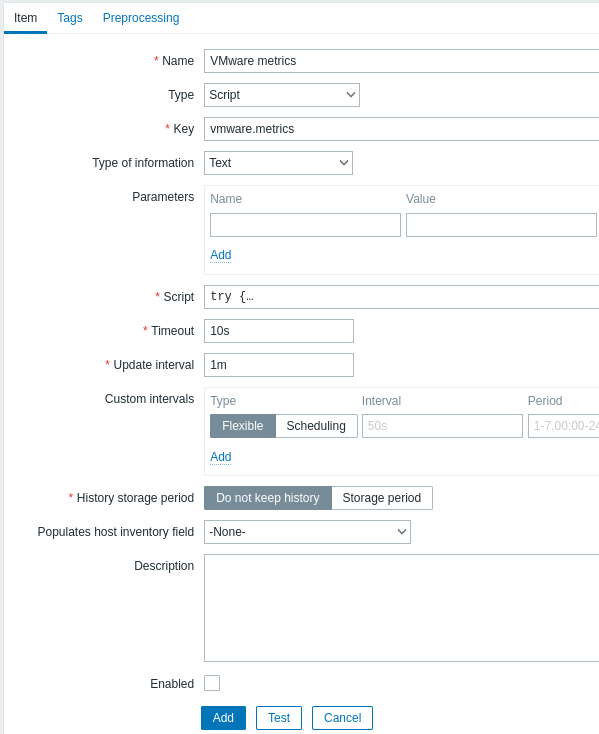
- Name: · VMware 指标
- Type: 脚本
- Key: vmware.metrics
- Type of information: 文本
- Script: 复制并粘贴下面提供的脚本
- Timeout: 10
- History storage period: 不保留历史数据
- Enabled: 未标记
脚本
· try { · Zabbix.log(4, 'vmware metrics script');
· var result, resp, · req = new HttpRequest(); · req.addHeader('Content-Type: application/xml'); · req.addHeader('SOAPAction: "urn:vim25/6.0"');
· login = '<soapenv:Envelope xmlns:soapenv="http://schemas.xmlsoap.org/soap/envelope/" xmlns:urn="urn:vim25">
· <soapenv:Header/>
· <soapenv:Body>
· <urn:Login>
· <urn:_this type="SessionManager">SessionManager</urn:_this>
· <urn:userName>{$VMWARE.USERNAME}</urn:userName>
· <urn:password>{$VMWARE.PASSWORD}</urn:password>
· </urn:Login>
· </soapenv:Body>
· </soapenv:Envelope>'
· resp = req.post("{$VMWARE.URL}", login);
· if (req.getStatus() != 200) {
· throw 'Response code: '+req.getStatus();
· }
· query = '<soapenv:Envelope xmlns:soapenv="http://schemas.xmlsoap.org/soap/envelope/" xmlns:urn="urn:vim25">
· <soapenv:Header/>
· <soapenv:Body>
· <urn:RetrieveProperties>
· <urn:_this type="PropertyCollector">propertyCollector</urn:_this>
· <urn:specSet>
· <urn:propSet>
· <urn:type>PerformanceManager</urn:type>
· <urn:pathSet>perfCounter</urn:pathSet>
· </urn:propSet>
· <urn:objectSet>
· <urn:obj type="PerformanceManager">PerfMgr</urn:obj>
· </urn:objectSet>
· </urn:specSet>
· </urn:RetrieveProperties>
· </soapenv:Body>
· </soapenv:Envelope>'
· resp = req.post("{$VMWARE.URL}", query);
· if (req.getStatus() != 200) {
· throw 'Response code: '+req.getStatus();
· }
· Zabbix.log(4, 'vmware metrics=' + resp);
· result = resp;
· logout = '<soapenv:Envelope xmlns:soapenv="http://schemas.xmlsoap.org/soap/envelope/" xmlns:urn="urn:vim25">
· <soapenv:Header/>
· <soapenv:Body>
· <urn:Logout>
· <urn:_this type="SessionManager">SessionManager</urn:_this>
· </urn:Logout>
· </soapenv:Body>
· </soapenv:Envelope>'
· resp = req.post("{$VMWARE.URL}",logout); · · if (req.getStatus() != 200) { · throw 'Response code: '+req.getStatus(); · }
· } catch (error) { · Zabbix.log(4, 'vmware call failed : '+error); · result = {}; · }
· 返回结果;
配置监控项后,点击 Test 按钮,然后点击 Get value。
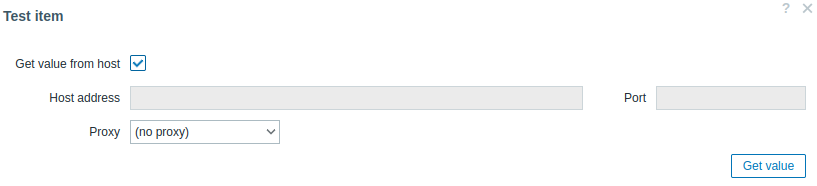
将收到的 XML 复制到任何 XML 格式化程序并找到所需的指标。
一个指标的 XML 示例:
· <PerfCounterInfo xsi:type="PerfCounterInfo"> · <key>6</key> · <nameInfo> · <label>Usage in MHz</label> · <summary>CPU usage in megahertz during the interval</summary> · <key>usagemhz</key> · </nameInfo> · <groupInfo> · <label>CPU</label> · <summary>CPU</summary> · <key>cpu</key> · </groupInfo> · <unitInfo> · <label>MHz</label> · <summary>Megahertz</summary> · <key>megaHertz</key> · </unitInfo> · <rollupType>average</rollupType> · <statsType>rate</statsType> · <level>1</level> · <perDeviceLevel>3</perDeviceLevel> · </PerfCounterInfo>
使用 XPath 从收到的 XML 中提取计数器路径。对于上面的示例,XPath 将是:
| 字段 | xPath | 值 |
|---|---|---|
| group | //groupInfo[../key=6]/key | cpu |
| counter | //nameInfo[../key=6]/key | usagemhz |
| rollup | //rollupType[../key=6] | average |
在这个例子中性能计数器路径是:cpu/usagemhz[average]