
Cisco Catalyst 3750V2-24FS by SNMP
Overview
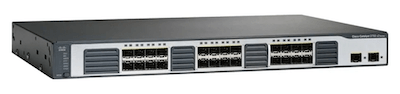
Courtesy of Cisco Systems, Inc. Unauthorized use not permitted.
The Cisco Catalyst 3750 Series switches are a premier line of enterprise-class, stackable, multilayer switches that provide high availability, security, and quality of service (QoS) to enhance the operation of the network. Its innovative unified stack management raises the bar in stack management, redundancy, and failover.
https://www.cisco.com/c/en/us/support/switches/catalyst-3750v2-24fs-switch/model.html
Requirements
Zabbix version: 7.4 and higher.
Tested versions
This template has been tested on:
- Cisco Catalyst 3750V2-24FS
Configuration
Zabbix should be configured according to the instructions in the Templates out of the box section.
Setup
Refer to the vendor documentation.
Macros used
| Name | Description | Default |
|---|---|---|
| {$CPU.UTIL.CRIT} | Critical threshold of CPU utilization in %. |
90 |
| {$ICMP_LOSS_WARN} | Warning threshold of ICMP packet loss in %. |
20 |
| {$ICMP_RESPONSE_TIME_WARN} | Threshold of the average ICMP response time in seconds. |
0.15 |
| {$IF.ERRORS.WARN} | Threshold for the warning level of the interface error packet rate. |
2 |
| {$IF.UTIL.MAX} | Maximum threshold of interface bandwidth utilization in %. Can be used with the interface name as context. |
90 |
| {$IFCONTROL} | Macro for the operational state of the interface for the link down trigger. Can be used with the interface name as context. |
1 |
| {$MEMORY.UTIL.MAX} | Threshold for maximum memory utilization in %. |
90 |
| {$NET.IF.IFADMINSTATUS.MATCHES} | This macro is used to include network interfaces by their administrative status. |
^.* |
| {$NET.IF.IFADMINSTATUS.NOT_MATCHES} | Ignore down(2) administrative status |
^2$ |
| {$NET.IF.IFALIAS.MATCHES} | This macro is used to include network interfaces by their alias. |
.* |
| {$NET.IF.IFALIAS.NOT_MATCHES} | This macro is used to exclude network interfaces by their alias. |
CHANGE_IF_NEEDED |
| {$NET.IF.IFDESCR.MATCHES} | This macro is used to include network interfaces by their description. |
.* |
| {$NET.IF.IFDESCR.NOT_MATCHES} | This macro is used to exclude network interfaces by their description. |
CHANGE_IF_NEEDED |
| {$NET.IF.IFNAME.MATCHES} | This macro is used to include network interfaces by their name. |
^.*$ |
| {$NET.IF.IFNAME.NOT_MATCHES} | Filter out loopbacks, nulls, docker veth links and docker0 bridge by default |
Macro too long. Please see the template. |
| {$NET.IF.IFOPERSTATUS.MATCHES} | This macro is used to include network interfaces by their operational status. |
^.*$ |
| {$NET.IF.IFOPERSTATUS.NOT_MATCHES} | Ignore notPresent(6) |
^6$ |
| {$NET.IF.IFTYPE.MATCHES} | This macro is used to include network interfaces by their type. |
.* |
| {$NET.IF.IFTYPE.NOT_MATCHES} | This macro is used to exclude network interfaces by their type. |
CHANGE_IF_NEEDED |
| {$SNMP.TIMEOUT} | The time interval for the SNMP availability trigger. |
5m |
| {$TEMP_CRIT} | Critical threshold of the temperature in °C. |
60 |
| {$TEMP_CRIT_LOW} | Critical threshold of the low temperature in °C. |
5 |
| {$TEMP_WARN} | Warning threshold of the temperature in °C. |
50 |
Items
| Name | Description | Type | Key and additional info |
|---|---|---|---|
| ICMP ping | Simple check | icmpping | |
| ICMP loss | Simple check | icmppingloss | |
| ICMP response time | Simple check | icmppingsec | |
| SNMP traps (fallback) | Item is used to collect all SNMP traps unmatched by other snmptrap items |
SNMP trap | snmptrap.fallback |
| System contact details | MIB: SNMPv2-MIB The textual identification of the contact person for this managed node, together with information on how to contact this person. If no contact information is known, the value is the zero-length string. |
SNMP agent | system.contact Preprocessing
|
| System description | MIB: SNMPv2-MIB A textual description of the entity. This value should include the full name and version identification of the system's hardware type, software operating-system, and networking software. |
SNMP agent | system.descr Preprocessing
|
| Hardware model name | MIB: ENTITY-MIB |
SNMP agent | system.hw.model Preprocessing
|
| Hardware serial number | MIB: ENTITY-MIB |
SNMP agent | system.hw.serialnumber Preprocessing
|
| System location | MIB: SNMPv2-MIB The physical location of this node (e.g., `telephone closet, 3rd floor'). If the location is unknown, the value is the zero-length string. |
SNMP agent | system.location Preprocessing
|
| System name | MIB: SNMPv2-MIB An administratively-assigned name for this managed node.By convention, this is the node's fully-qualified domain name. If the name is unknown, the value is the zero-length string. |
SNMP agent | system.name Preprocessing
|
| System object ID | MIB: SNMPv2-MIB The vendor's authoritative identification of the network management subsystem contained in the entity. This value is allocated within the SMI enterprises subtree (1.3.6.1.4.1) and provides an easy and unambiguous means for determining |
SNMP agent | system.objectid Preprocessing
|
| Operating system | MIB: SNMPv2-MIB |
SNMP agent | system.sw.os Preprocessing
|
| Uptime (network) | MIB: SNMPv2-MIB The time (in hundredths of a second) since the network management portion of the system was last re-initialized. |
SNMP agent | system.net.uptime Preprocessing
|
| Uptime (hardware) | MIB: HOST-RESOURCES-MIB The amount of time since this host was last initialized. Note that this is different from sysUpTime in the SNMPv2-MIB [RFC1907] because sysUpTime is the uptime of the network management portion of the system. |
SNMP agent | system.hw.uptime Preprocessing
|
| SNMP agent availability | Zabbix internal | zabbix[host,snmp,available] |
Triggers
| Name | Description | Expression | Severity | Dependencies and additional info |
|---|---|---|---|---|
| Cisco Catalyst 3750V2-24FS: Unavailable by ICMP ping | Last three attempts returned timeout. Please check device connectivity. |
max(/Cisco Catalyst 3750V2-24FS by SNMP/icmpping,#3)=0 |
High | |
| Cisco Catalyst 3750V2-24FS: High ICMP ping loss | min(/Cisco Catalyst 3750V2-24FS by SNMP/icmppingloss,5m)>{$ICMP_LOSS_WARN} and min(/Cisco Catalyst 3750V2-24FS by SNMP/icmppingloss,5m)<100 |
Warning | Depends on:
|
|
| Cisco Catalyst 3750V2-24FS: High ICMP ping response time | avg(/Cisco Catalyst 3750V2-24FS by SNMP/icmppingsec,5m)>{$ICMP_RESPONSE_TIME_WARN} |
Warning | Depends on:
|
|
| Cisco Catalyst 3750V2-24FS: Device has been replaced | The device serial number has changed. Acknowledge to close the problem manually. |
last(/Cisco Catalyst 3750V2-24FS by SNMP/system.hw.serialnumber,#1)<>last(/Cisco Catalyst 3750V2-24FS by SNMP/system.hw.serialnumber,#2) and length(last(/Cisco Catalyst 3750V2-24FS by SNMP/system.hw.serialnumber))>0 |
Info | Manual close: Yes |
| Cisco Catalyst 3750V2-24FS: System name has changed | The name of the system has changed. Acknowledge to close the problem manually. |
last(/Cisco Catalyst 3750V2-24FS by SNMP/system.name,#1)<>last(/Cisco Catalyst 3750V2-24FS by SNMP/system.name,#2) and length(last(/Cisco Catalyst 3750V2-24FS by SNMP/system.name))>0 |
Info | Manual close: Yes |
| Cisco Catalyst 3750V2-24FS: Operating system description has changed | The description of the operating system has changed. Possible reasons are that the system has been updated or replaced. Acknowledge to close the problem manually. |
last(/Cisco Catalyst 3750V2-24FS by SNMP/system.sw.os,#1)<>last(/Cisco Catalyst 3750V2-24FS by SNMP/system.sw.os,#2) and length(last(/Cisco Catalyst 3750V2-24FS by SNMP/system.sw.os))>0 |
Info | Manual close: Yes Depends on:
|
| Cisco Catalyst 3750V2-24FS: Host has been restarted | Uptime is less than 10 minutes. |
(last(/Cisco Catalyst 3750V2-24FS by SNMP/system.hw.uptime)>0 and last(/Cisco Catalyst 3750V2-24FS by SNMP/system.hw.uptime)<10m) or (last(/Cisco Catalyst 3750V2-24FS by SNMP/system.hw.uptime)=0 and last(/Cisco Catalyst 3750V2-24FS by SNMP/system.net.uptime)<10m) |
Warning | Manual close: Yes |
| Cisco Catalyst 3750V2-24FS: No SNMP data collection | SNMP is not available for polling. Please check device connectivity and SNMP settings. |
max(/Cisco Catalyst 3750V2-24FS by SNMP/zabbix[host,snmp,available],{$SNMP.TIMEOUT})=0 |
Warning |
LLD rule CPU discovery
| Name | Description | Type | Key and additional info |
|---|---|---|---|
| CPU discovery | If your IOS device has several CPUs, you must use CISCO-PROCESS-MIB and its object cpmCPUTotal5minRev from the table called cpmCPUTotalTable , indexed with cpmCPUTotalIndex . This table allows CISCO-PROCESS-MIB to keep CPU statistics for different physical entities in the router, like different CPU chips, group of CPUs, or CPUs in different modules/cards. In case of a single CPU, cpmCPUTotalTable has only one entry. |
SNMP agent | cpu.discovery |
Item prototypes for CPU discovery
| Name | Description | Type | Key and additional info |
|---|---|---|---|
| #{#SNMPINDEX}: CPU utilization | MIB: CISCO-PROCESS-MIB Object name: cpmCPUTotal5minRev The cpmCPUTotal5minRev MIB object provides a more accurate view of the performance of the router over time than the MIB objects cpmCPUTotal1minRev and cpmCPUTotal5secRev . These MIB objects are not accurate because they look at CPU at one minute and five second intervals, respectively. These MIBs enable you to monitor the trends and plan the capacity of your network. The recommended baseline rising threshold for cpmCPUTotal5minRev is 90 percent. Depending on the platform, some routers that run at 90 percent, for example, 2500s, can exhibit performance degradation versus a high-end router, for example, the 7500 series, which can operate fine. |
SNMP agent | system.cpu.util[{#SNMPINDEX}] |
Trigger prototypes for CPU discovery
| Name | Description | Expression | Severity | Dependencies and additional info |
|---|---|---|---|---|
| Cisco Catalyst 3750V2-24FS: #{#SNMPINDEX}: High CPU utilization | The CPU utilization is too high. The system might be slow to respond. |
min(/Cisco Catalyst 3750V2-24FS by SNMP/system.cpu.util[{#SNMPINDEX}],5m)>{$CPU.UTIL.CRIT} |
Warning |
LLD rule Entity Serial Numbers discovery
| Name | Description | Type | Key and additional info |
|---|---|---|---|
| Entity Serial Numbers discovery | SNMP agent | entity_sn.discovery |
Item prototypes for Entity Serial Numbers discovery
| Name | Description | Type | Key and additional info |
|---|---|---|---|
| {#ENT_NAME}: Hardware serial number | MIB: ENTITY-MIB Object name: entPhysicalSerialNum |
SNMP agent | system.hw.serialnumber[{#SNMPINDEX}] Preprocessing
|
Trigger prototypes for Entity Serial Numbers discovery
| Name | Description | Expression | Severity | Dependencies and additional info |
|---|---|---|---|---|
| Cisco Catalyst 3750V2-24FS: {#ENT_NAME}: Device has been replaced | Device serial number has changed. Acknowledge to close the problem manually. |
last(/Cisco Catalyst 3750V2-24FS by SNMP/system.hw.serialnumber[{#SNMPINDEX}],#1)<>last(/Cisco Catalyst 3750V2-24FS by SNMP/system.hw.serialnumber[{#SNMPINDEX}],#2) and length(last(/Cisco Catalyst 3750V2-24FS by SNMP/system.hw.serialnumber[{#SNMPINDEX}]))>0 |
Info |
LLD rule FAN discovery
| Name | Description | Type | Key and additional info |
|---|---|---|---|
| FAN discovery | The table of fan status maintained by the environmental monitor. |
SNMP agent | fan.discovery |
Item prototypes for FAN discovery
| Name | Description | Type | Key and additional info |
|---|---|---|---|
| {#SNMPVALUE}: Fan status | MIB: CISCO-ENVMON-MIB Object name: ciscoEnvMonFanState |
SNMP agent | sensor.fan.status[{#SNMPINDEX}] |
Trigger prototypes for FAN discovery
| Name | Description | Expression | Severity | Dependencies and additional info |
|---|---|---|---|---|
| Cisco Catalyst 3750V2-24FS: {#SNMPVALUE}: Fan is in critical state | Please check the fan unit |
last(/Cisco Catalyst 3750V2-24FS by SNMP/sensor.fan.status[{#SNMPINDEX}])=3 or last(/Cisco Catalyst 3750V2-24FS by SNMP/sensor.fan.status[{#SNMPINDEX}])=4 |
Average | |
| Cisco Catalyst 3750V2-24FS: {#SNMPVALUE}: Fan is in warning state | Please check the fan unit |
last(/Cisco Catalyst 3750V2-24FS by SNMP/sensor.fan.status[{#SNMPINDEX}])=2 |
Warning | Depends on:
|
LLD rule Memory discovery
| Name | Description | Type | Key and additional info |
|---|---|---|---|
| Memory discovery | Discovery of ciscoMemoryPoolTable, a table of memory pool monitoring entries. http://www.cisco.com/c/en/us/support/docs/ip/simple-network-management-protocol-snmp/15216-contiguous-memory.html |
SNMP agent | memory.discovery |
Item prototypes for Memory discovery
| Name | Description | Type | Key and additional info |
|---|---|---|---|
| {#SNMPVALUE}: Free memory | MIB: CISCO-MEMORY-POOL-MIB Object name: ciscoMemoryPoolFree Indicates the number of bytes from the memory pool that are currently unused on the managed device. Note that the sum of ciscoMemoryPoolUsed and ciscoMemoryPoolFree is the total amount of memory in the pool |
SNMP agent | vm.memory.free[{#SNMPINDEX}] |
| {#SNMPVALUE}: Used memory | MIB: CISCO-MEMORY-POOL-MIB Object name: ciscoMemoryPoolUsed Indicates the number of bytes from the memory pool that are currently in use by applications on the managed device. |
SNMP agent | vm.memory.used[{#SNMPINDEX}] |
| {#SNMPVALUE}: Memory utilization | Memory utilization in % |
Calculated | vm.memory.util[{#SNMPINDEX}] |
Trigger prototypes for Memory discovery
| Name | Description | Expression | Severity | Dependencies and additional info |
|---|---|---|---|---|
| Cisco Catalyst 3750V2-24FS: {#SNMPVALUE}: High memory utilization | The system is running out of free memory. |
min(/Cisco Catalyst 3750V2-24FS by SNMP/vm.memory.util[{#SNMPINDEX}],5m)>{$MEMORY.UTIL.MAX} |
Average |
LLD rule Network interfaces discovery
| Name | Description | Type | Key and additional info |
|---|---|---|---|
| Network interfaces discovery | Discovering interfaces from IF-MIB. |
SNMP agent | net.if.discovery |
Item prototypes for Network interfaces discovery
| Name | Description | Type | Key and additional info |
|---|---|---|---|
| Interface {#IFNAME}({#IFALIAS}): Inbound packets discarded | MIB: IF-MIB The number of inbound packets which were chosen to be discarded even though no errors had been detected to prevent their being deliverable to a higher-layer protocol. One possible reason for discarding such a packet could be to free up buffer space. Discontinuities in the value of this counter can occur at re-initialization of the management system, and at other times as indicated by the value of ifCounterDiscontinuityTime. |
SNMP agent | net.if.in.discards[{#SNMPINDEX}] Preprocessing
|
| Interface {#IFNAME}({#IFALIAS}): Inbound packets with errors | MIB: IF-MIB For packet-oriented interfaces, the number of inbound packets that contained errors preventing them from being deliverable to a higher-layer protocol. For character-oriented or fixed-length interfaces, the number of inbound transmission units that contained errors preventing them from being deliverable to a higher-layer protocol. Discontinuities in the value of this counter can occur at re-initialization of the management system, and at other times as indicated by the value of ifCounterDiscontinuityTime. |
SNMP agent | net.if.in.errors[{#SNMPINDEX}] Preprocessing
|
| Interface {#IFNAME}({#IFALIAS}): Bits received | MIB: IF-MIB The total number of octets received on the interface, including framing characters. This object is a 64-bit version of ifInOctets. Discontinuities in the value of this counter can occur at re-initialization of the management system, and at other times as indicated by the value of ifCounterDiscontinuityTime. |
SNMP agent | net.if.in[{#SNMPINDEX}] Preprocessing
|
| Interface {#IFNAME}({#IFALIAS}): Outbound packets discarded | MIB: IF-MIB The number of outbound packets which were chosen to be discarded even though no errors had been detected to prevent their being deliverable to a higher-layer protocol. One possible reason for discarding such a packet could be to free up buffer space. Discontinuities in the value of this counter can occur at re-initialization of the management system, and at other times as indicated by the value of ifCounterDiscontinuityTime. |
SNMP agent | net.if.out.discards[{#SNMPINDEX}] Preprocessing
|
| Interface {#IFNAME}({#IFALIAS}): Outbound packets with errors | MIB: IF-MIB For packet-oriented interfaces, the number of outbound packets that contained errors preventing them from being deliverable to a higher-layer protocol. For character-oriented or fixed-length interfaces, the number of outbound transmission units that contained errors preventing them from being deliverable to a higher-layer protocol. Discontinuities in the value of this counter can occur at re-initialization of the management system, and at other times as indicated by the value of ifCounterDiscontinuityTime. |
SNMP agent | net.if.out.errors[{#SNMPINDEX}] Preprocessing
|
| Interface {#IFNAME}({#IFALIAS}): Bits sent | MIB: IF-MIB The total number of octets transmitted out of the interface, including framing characters. This object is a 64-bit version of ifOutOctets.Discontinuities in the value of this counter can occur at re-initialization of the management system, and at other times as indicated by the value of ifCounterDiscontinuityTime. |
SNMP agent | net.if.out[{#SNMPINDEX}] Preprocessing
|
| Interface {#IFNAME}({#IFALIAS}): Speed | MIB: IF-MIB An estimate of the interface's current bandwidth in units of 1,000,000 bits per second. If this object reports a value of |
SNMP agent | net.if.speed[{#SNMPINDEX}] Preprocessing
|
| Interface {#IFNAME}({#IFALIAS}): Operational status | MIB: IF-MIB The current operational state of the interface. - The testing(3) state indicates that no operational packet scan be passed - If ifAdminStatus is down(2) then ifOperStatus should be down(2) - If ifAdminStatus is changed to up(1) then ifOperStatus should change to up(1) if the interface is ready to transmit and receive network traffic - It should change todormant(5) if the interface is waiting for external actions (such as a serial line waiting for an incoming connection) - It should remain in the down(2) state if and only if there is a fault that prevents it from going to the up(1) state - It should remain in the notPresent(6) state if the interface has missing(typically, hardware) components. |
SNMP agent | net.if.status[{#SNMPINDEX}] Preprocessing
|
| Interface {#IFNAME}({#IFALIAS}): Interface type | MIB: IF-MIB The type of interface. Additional values for ifType are assigned by the Internet Assigned Numbers Authority (IANA), through updating the syntax of the IANAifType textual convention. |
SNMP agent | net.if.type[{#SNMPINDEX}] Preprocessing
|
Trigger prototypes for Network interfaces discovery
| Name | Description | Expression | Severity | Dependencies and additional info |
|---|---|---|---|---|
| Cisco Catalyst 3750V2-24FS: Interface {#IFNAME}({#IFALIAS}): High input error rate | It recovers when it is below 80% of the |
min(/Cisco Catalyst 3750V2-24FS by SNMP/net.if.in.errors[{#SNMPINDEX}],5m)>{$IF.ERRORS.WARN:"{#IFNAME}"} |
Warning | Depends on:
|
| Cisco Catalyst 3750V2-24FS: Interface {#IFNAME}({#IFALIAS}): High inbound bandwidth usage | The utilization of the network interface is close to its estimated maximum bandwidth. |
(avg(/Cisco Catalyst 3750V2-24FS by SNMP/net.if.in[{#SNMPINDEX}],15m)>({$IF.UTIL.MAX:"{#IFNAME}"}/100)*last(/Cisco Catalyst 3750V2-24FS by SNMP/net.if.speed[{#SNMPINDEX}])) and last(/Cisco Catalyst 3750V2-24FS by SNMP/net.if.speed[{#SNMPINDEX}])>0 |
Warning | Depends on:
|
| Cisco Catalyst 3750V2-24FS: Interface {#IFNAME}({#IFALIAS}): High output error rate | It recovers when it is below 80% of the |
min(/Cisco Catalyst 3750V2-24FS by SNMP/net.if.out.errors[{#SNMPINDEX}],5m)>{$IF.ERRORS.WARN:"{#IFNAME}"} |
Warning | Depends on:
|
| Cisco Catalyst 3750V2-24FS: Interface {#IFNAME}({#IFALIAS}): High outbound bandwidth usage | The utilization of the network interface is close to its estimated maximum bandwidth. |
(avg(/Cisco Catalyst 3750V2-24FS by SNMP/net.if.out[{#SNMPINDEX}],15m)>({$IF.UTIL.MAX:"{#IFNAME}"}/100)*last(/Cisco Catalyst 3750V2-24FS by SNMP/net.if.speed[{#SNMPINDEX}])) and last(/Cisco Catalyst 3750V2-24FS by SNMP/net.if.speed[{#SNMPINDEX}])>0 |
Warning | Depends on:
|
| Cisco Catalyst 3750V2-24FS: Interface {#IFNAME}({#IFALIAS}): Ethernet has changed to lower speed than it was before | This Ethernet connection has transitioned down from its known maximum speed. This might be a sign of autonegotiation issues. Acknowledge to close the problem manually. |
change(/Cisco Catalyst 3750V2-24FS by SNMP/net.if.speed[{#SNMPINDEX}])<0 and last(/Cisco Catalyst 3750V2-24FS by SNMP/net.if.speed[{#SNMPINDEX}])>0 and ( last(/Cisco Catalyst 3750V2-24FS by SNMP/net.if.type[{#SNMPINDEX}])=6 or last(/Cisco Catalyst 3750V2-24FS by SNMP/net.if.type[{#SNMPINDEX}])=7 or last(/Cisco Catalyst 3750V2-24FS by SNMP/net.if.type[{#SNMPINDEX}])=11 or last(/Cisco Catalyst 3750V2-24FS by SNMP/net.if.type[{#SNMPINDEX}])=62 or last(/Cisco Catalyst 3750V2-24FS by SNMP/net.if.type[{#SNMPINDEX}])=69 or last(/Cisco Catalyst 3750V2-24FS by SNMP/net.if.type[{#SNMPINDEX}])=117 ) and (last(/Cisco Catalyst 3750V2-24FS by SNMP/net.if.status[{#SNMPINDEX}])<>2) |
Info | Depends on:
|
| Cisco Catalyst 3750V2-24FS: Interface {#IFNAME}({#IFALIAS}): Link down | This trigger expression works as follows: |
{$IFCONTROL:"{#IFNAME}"}=1 and (last(/Cisco Catalyst 3750V2-24FS by SNMP/net.if.status[{#SNMPINDEX}])=2) |
Average |
LLD rule EtherLike discovery
| Name | Description | Type | Key and additional info |
|---|---|---|---|
| EtherLike discovery | Discovering interfaces from IF-MIB and EtherLike-MIB. Interfaces with up(1) Operational Status are discovered. |
SNMP agent | net.if.duplex.discovery |
Item prototypes for EtherLike discovery
| Name | Description | Type | Key and additional info |
|---|---|---|---|
| Interface {#IFNAME}({#IFALIAS}): Duplex status | MIB: EtherLike-MIB Object name: dot3StatsDuplexStatus The current mode of operation of the MAC entity. 'unknown' indicates that the current duplex mode could not be determined. Management control of the duplex mode is accomplished through the MAU MIB. When an interface does not support autonegotiation, or when autonegotiation is not enabled, the duplex mode is controlled using ifMauDefaultType. When autonegotiation is supported and enabled, duplex mode is controlled using ifMauAutoNegAdvertisedBits. In either case, the currently operating duplex mode is reflected both in this object and in ifMauType. Note that this object provides redundant information with ifMauType. Normally, redundant objects are discouraged. However, in this instance, it allows a management application to determine the duplex status of an interface without having to know every possible value of ifMauType. This was felt to be sufficiently valuable to justify the redundancy. Reference: [IEEE 802.3 Std.], 30.3.1.1.32,aDuplexStatus. |
SNMP agent | net.if.duplex[{#SNMPINDEX}] |
Trigger prototypes for EtherLike discovery
| Name | Description | Expression | Severity | Dependencies and additional info |
|---|---|---|---|---|
| Cisco Catalyst 3750V2-24FS: Interface {#IFNAME}({#IFALIAS}): In half-duplex mode | Please check autonegotiation settings and cabling |
last(/Cisco Catalyst 3750V2-24FS by SNMP/net.if.duplex[{#SNMPINDEX}])=2 |
Warning |
LLD rule PSU discovery
| Name | Description | Type | Key and additional info |
|---|---|---|---|
| PSU discovery | The table of power supply status maintained by the environmental monitor card. |
SNMP agent | psu.discovery |
Item prototypes for PSU discovery
| Name | Description | Type | Key and additional info |
|---|---|---|---|
| {#SNMPVALUE}: Power supply status | MIB: CISCO-ENVMON-MIB Object name: ciscoEnvMonSupplyState |
SNMP agent | sensor.psu.status[{#SNMPINDEX}] |
Trigger prototypes for PSU discovery
| Name | Description | Expression | Severity | Dependencies and additional info |
|---|---|---|---|---|
| Cisco Catalyst 3750V2-24FS: {#SNMPVALUE}: Power supply is in critical state | Please check the power supply unit for errors |
last(/Cisco Catalyst 3750V2-24FS by SNMP/sensor.psu.status[{#SNMPINDEX}])=3 or last(/Cisco Catalyst 3750V2-24FS by SNMP/sensor.psu.status[{#SNMPINDEX}])=4 |
Average | |
| Cisco Catalyst 3750V2-24FS: {#SNMPVALUE}: Power supply is in warning state | Please check the power supply unit for errors |
last(/Cisco Catalyst 3750V2-24FS by SNMP/sensor.psu.status[{#SNMPINDEX}])=2 |
Warning | Depends on:
|
LLD rule Temperature discovery
| Name | Description | Type | Key and additional info |
|---|---|---|---|
| Temperature discovery | Discovery of ciscoEnvMonTemperatureTable (ciscoEnvMonTemperatureDescr), a table of ambient temperature status maintained by the environmental monitor. |
SNMP agent | temperature.discovery |
Item prototypes for Temperature discovery
| Name | Description | Type | Key and additional info |
|---|---|---|---|
| {#SNMPVALUE}: Temperature status | MIB: CISCO-ENVMON-MIB Object name: ciscoEnvMonTemperatureState The current state of the test point being instrumented. |
SNMP agent | sensor.temp.status[{#SNMPINDEX}] |
| {#SNMPVALUE}: Temperature | MIB: CISCO-ENVMON-MIB Object name: ciscoEnvMonTemperatureValue The current measurement of the test point being instrumented. |
SNMP agent | sensor.temp.value[{#SNMPINDEX}] |
Trigger prototypes for Temperature discovery
| Name | Description | Expression | Severity | Dependencies and additional info |
|---|---|---|---|---|
| Cisco Catalyst 3750V2-24FS: {#SNMPVALUE}: Temperature is in critical state | This trigger uses temperature sensor state |
last(/Cisco Catalyst 3750V2-24FS by SNMP/sensor.temp.status[{#SNMPINDEX}])=3 or last(/Cisco Catalyst 3750V2-24FS by SNMP/sensor.temp.status[{#SNMPINDEX}])=4 |
High | |
| Cisco Catalyst 3750V2-24FS: {#SNMPVALUE}: Temperature is in warning state | This trigger uses temperature sensor state |
last(/Cisco Catalyst 3750V2-24FS by SNMP/sensor.temp.status[{#SNMPINDEX}])=2 |
Warning | Depends on:
|
| Cisco Catalyst 3750V2-24FS: {#SNMPVALUE}: Temperature is above critical threshold | This trigger uses temperature sensor values as well as temperature sensor status if available |
avg(/Cisco Catalyst 3750V2-24FS by SNMP/sensor.temp.value[{#SNMPINDEX}],5m)>{$TEMP_CRIT:"{#SNMPVALUE}"} |
High | |
| Cisco Catalyst 3750V2-24FS: {#SNMPVALUE}: Temperature is above warning threshold | This trigger uses temperature sensor values as well as temperature sensor status if available |
avg(/Cisco Catalyst 3750V2-24FS by SNMP/sensor.temp.value[{#SNMPINDEX}],5m)>{$TEMP_WARN:"{#SNMPVALUE}"} |
Warning | Depends on:
|
| Cisco Catalyst 3750V2-24FS: {#SNMPVALUE}: Temperature is too low | avg(/Cisco Catalyst 3750V2-24FS by SNMP/sensor.temp.value[{#SNMPINDEX}],5m)<{$TEMP_CRIT_LOW:"{#SNMPVALUE}"} |
Average |
Feedback
Please report any issues with the template at https://support.zabbix.com
You can also provide feedback, discuss the template, or ask for help at ZABBIX forums
Cisco Catalyst 3750V2-24FS by SNMP
Overview
Courtesy of Cisco Systems, Inc. Unauthorized use not permitted.
The Cisco Catalyst 3750 Series switches are a premier line of enterprise-class, stackable, multilayer switches that provide high availability, security, and quality of service (QoS) to enhance the operation of the network. Its innovative unified stack management raises the bar in stack management, redundancy, and failover.
https://www.cisco.com/c/en/us/support/switches/catalyst-3750v2-24fs-switch/model.html
Requirements
Zabbix version: 7.2 and higher.
Tested versions
This template has been tested on:
- Cisco Catalyst 3750V2-24FS
Configuration
Zabbix should be configured according to the instructions in the Templates out of the box section.
Setup
Refer to the vendor documentation.
Macros used
| Name | Description | Default |
|---|---|---|
| {$CPU.UTIL.CRIT} | 90 |
|
| {$ICMP_LOSS_WARN} | 20 |
|
| {$ICMP_RESPONSE_TIME_WARN} | 0.15 |
|
| {$IF.ERRORS.WARN} | 2 |
|
| {$IF.UTIL.MAX} | 90 |
|
| {$IFCONTROL} | 1 |
|
| {$MEMORY.UTIL.MAX} | 90 |
|
| {$NET.IF.IFADMINSTATUS.MATCHES} | ^.* |
|
| {$NET.IF.IFADMINSTATUS.NOT_MATCHES} | Ignore down(2) administrative status |
^2$ |
| {$NET.IF.IFALIAS.MATCHES} | .* |
|
| {$NET.IF.IFALIAS.NOT_MATCHES} | CHANGE_IF_NEEDED |
|
| {$NET.IF.IFDESCR.MATCHES} | .* |
|
| {$NET.IF.IFDESCR.NOT_MATCHES} | CHANGE_IF_NEEDED |
|
| {$NET.IF.IFNAME.MATCHES} | ^.*$ |
|
| {$NET.IF.IFNAME.NOT_MATCHES} | Filter out loopbacks, nulls, docker veth links and docker0 bridge by default |
Macro too long. Please see the template. |
| {$NET.IF.IFOPERSTATUS.MATCHES} | ^.*$ |
|
| {$NET.IF.IFOPERSTATUS.NOT_MATCHES} | Ignore notPresent(6) |
^6$ |
| {$NET.IF.IFTYPE.MATCHES} | .* |
|
| {$NET.IF.IFTYPE.NOT_MATCHES} | CHANGE_IF_NEEDED |
|
| {$SNMP.TIMEOUT} | 5m |
|
| {$TEMP_CRIT} | 60 |
|
| {$TEMP_CRIT_LOW} | 5 |
|
| {$TEMP_WARN} | 50 |
Items
| Name | Description | Type | Key and additional info |
|---|---|---|---|
| ICMP ping | Simple check | icmpping | |
| ICMP loss | Simple check | icmppingloss | |
| ICMP response time | Simple check | icmppingsec | |
| SNMP traps (fallback) | Item is used to collect all SNMP traps unmatched by other snmptrap items |
SNMP trap | snmptrap.fallback |
| System contact details | MIB: SNMPv2-MIB The textual identification of the contact person for this managed node, together with information on how to contact this person. If no contact information is known, the value is the zero-length string. |
SNMP agent | system.contact Preprocessing
|
| System description | MIB: SNMPv2-MIB A textual description of the entity. This value should include the full name and version identification of the system's hardware type, software operating-system, and networking software. |
SNMP agent | system.descr Preprocessing
|
| Hardware model name | MIB: ENTITY-MIB |
SNMP agent | system.hw.model Preprocessing
|
| Hardware serial number | MIB: ENTITY-MIB |
SNMP agent | system.hw.serialnumber Preprocessing
|
| System location | MIB: SNMPv2-MIB The physical location of this node (e.g., `telephone closet, 3rd floor'). If the location is unknown, the value is the zero-length string. |
SNMP agent | system.location Preprocessing
|
| System name | MIB: SNMPv2-MIB An administratively-assigned name for this managed node.By convention, this is the node's fully-qualified domain name. If the name is unknown, the value is the zero-length string. |
SNMP agent | system.name Preprocessing
|
| System object ID | MIB: SNMPv2-MIB The vendor's authoritative identification of the network management subsystem contained in the entity. This value is allocated within the SMI enterprises subtree (1.3.6.1.4.1) and provides an easy and unambiguous means for determining |
SNMP agent | system.objectid Preprocessing
|
| Operating system | MIB: SNMPv2-MIB |
SNMP agent | system.sw.os Preprocessing
|
| Uptime (network) | MIB: SNMPv2-MIB The time (in hundredths of a second) since the network management portion of the system was last re-initialized. |
SNMP agent | system.net.uptime Preprocessing
|
| Uptime (hardware) | MIB: HOST-RESOURCES-MIB The amount of time since this host was last initialized. Note that this is different from sysUpTime in the SNMPv2-MIB [RFC1907] because sysUpTime is the uptime of the network management portion of the system. |
SNMP agent | system.hw.uptime Preprocessing
|
| SNMP agent availability | Zabbix internal | zabbix[host,snmp,available] |
Triggers
| Name | Description | Expression | Severity | Dependencies and additional info |
|---|---|---|---|---|
| Cisco Catalyst 3750V2-24FS: Unavailable by ICMP ping | Last three attempts returned timeout. Please check device connectivity. |
max(/Cisco Catalyst 3750V2-24FS by SNMP/icmpping,#3)=0 |
High | |
| Cisco Catalyst 3750V2-24FS: High ICMP ping loss | min(/Cisco Catalyst 3750V2-24FS by SNMP/icmppingloss,5m)>{$ICMP_LOSS_WARN} and min(/Cisco Catalyst 3750V2-24FS by SNMP/icmppingloss,5m)<100 |
Warning | Depends on:
|
|
| Cisco Catalyst 3750V2-24FS: High ICMP ping response time | avg(/Cisco Catalyst 3750V2-24FS by SNMP/icmppingsec,5m)>{$ICMP_RESPONSE_TIME_WARN} |
Warning | Depends on:
|
|
| Cisco Catalyst 3750V2-24FS: Device has been replaced | The device serial number has changed. Acknowledge to close the problem manually. |
last(/Cisco Catalyst 3750V2-24FS by SNMP/system.hw.serialnumber,#1)<>last(/Cisco Catalyst 3750V2-24FS by SNMP/system.hw.serialnumber,#2) and length(last(/Cisco Catalyst 3750V2-24FS by SNMP/system.hw.serialnumber))>0 |
Info | Manual close: Yes |
| Cisco Catalyst 3750V2-24FS: System name has changed | The name of the system has changed. Acknowledge to close the problem manually. |
last(/Cisco Catalyst 3750V2-24FS by SNMP/system.name,#1)<>last(/Cisco Catalyst 3750V2-24FS by SNMP/system.name,#2) and length(last(/Cisco Catalyst 3750V2-24FS by SNMP/system.name))>0 |
Info | Manual close: Yes |
| Cisco Catalyst 3750V2-24FS: Operating system description has changed | The description of the operating system has changed. Possible reasons are that the system has been updated or replaced. Acknowledge to close the problem manually. |
last(/Cisco Catalyst 3750V2-24FS by SNMP/system.sw.os,#1)<>last(/Cisco Catalyst 3750V2-24FS by SNMP/system.sw.os,#2) and length(last(/Cisco Catalyst 3750V2-24FS by SNMP/system.sw.os))>0 |
Info | Manual close: Yes Depends on:
|
| Cisco Catalyst 3750V2-24FS: Host has been restarted | Uptime is less than 10 minutes. |
(last(/Cisco Catalyst 3750V2-24FS by SNMP/system.hw.uptime)>0 and last(/Cisco Catalyst 3750V2-24FS by SNMP/system.hw.uptime)<10m) or (last(/Cisco Catalyst 3750V2-24FS by SNMP/system.hw.uptime)=0 and last(/Cisco Catalyst 3750V2-24FS by SNMP/system.net.uptime)<10m) |
Warning | Manual close: Yes |
| Cisco Catalyst 3750V2-24FS: No SNMP data collection | SNMP is not available for polling. Please check device connectivity and SNMP settings. |
max(/Cisco Catalyst 3750V2-24FS by SNMP/zabbix[host,snmp,available],{$SNMP.TIMEOUT})=0 |
Warning |
LLD rule CPU discovery
| Name | Description | Type | Key and additional info |
|---|---|---|---|
| CPU discovery | If your IOS device has several CPUs, you must use CISCO-PROCESS-MIB and its object cpmCPUTotal5minRev from the table called cpmCPUTotalTable , indexed with cpmCPUTotalIndex . This table allows CISCO-PROCESS-MIB to keep CPU statistics for different physical entities in the router, like different CPU chips, group of CPUs, or CPUs in different modules/cards. In case of a single CPU, cpmCPUTotalTable has only one entry. |
SNMP agent | cpu.discovery |
Item prototypes for CPU discovery
| Name | Description | Type | Key and additional info |
|---|---|---|---|
| #{#SNMPINDEX}: CPU utilization | MIB: CISCO-PROCESS-MIB Object name: cpmCPUTotal5minRev The cpmCPUTotal5minRev MIB object provides a more accurate view of the performance of the router over time than the MIB objects cpmCPUTotal1minRev and cpmCPUTotal5secRev . These MIB objects are not accurate because they look at CPU at one minute and five second intervals, respectively. These MIBs enable you to monitor the trends and plan the capacity of your network. The recommended baseline rising threshold for cpmCPUTotal5minRev is 90 percent. Depending on the platform, some routers that run at 90 percent, for example, 2500s, can exhibit performance degradation versus a high-end router, for example, the 7500 series, which can operate fine. |
SNMP agent | system.cpu.util[{#SNMPINDEX}] |
Trigger prototypes for CPU discovery
| Name | Description | Expression | Severity | Dependencies and additional info |
|---|---|---|---|---|
| Cisco Catalyst 3750V2-24FS: #{#SNMPINDEX}: High CPU utilization | The CPU utilization is too high. The system might be slow to respond. |
min(/Cisco Catalyst 3750V2-24FS by SNMP/system.cpu.util[{#SNMPINDEX}],5m)>{$CPU.UTIL.CRIT} |
Warning |
LLD rule Entity Serial Numbers discovery
| Name | Description | Type | Key and additional info |
|---|---|---|---|
| Entity Serial Numbers discovery | SNMP agent | entity_sn.discovery |
Item prototypes for Entity Serial Numbers discovery
| Name | Description | Type | Key and additional info |
|---|---|---|---|
| {#ENT_NAME}: Hardware serial number | MIB: ENTITY-MIB Object name: entPhysicalSerialNum |
SNMP agent | system.hw.serialnumber[{#SNMPINDEX}] Preprocessing
|
Trigger prototypes for Entity Serial Numbers discovery
| Name | Description | Expression | Severity | Dependencies and additional info |
|---|---|---|---|---|
| Cisco Catalyst 3750V2-24FS: {#ENT_NAME}: Device has been replaced | Device serial number has changed. Acknowledge to close the problem manually. |
last(/Cisco Catalyst 3750V2-24FS by SNMP/system.hw.serialnumber[{#SNMPINDEX}],#1)<>last(/Cisco Catalyst 3750V2-24FS by SNMP/system.hw.serialnumber[{#SNMPINDEX}],#2) and length(last(/Cisco Catalyst 3750V2-24FS by SNMP/system.hw.serialnumber[{#SNMPINDEX}]))>0 |
Info |
LLD rule FAN discovery
| Name | Description | Type | Key and additional info |
|---|---|---|---|
| FAN discovery | The table of fan status maintained by the environmental monitor. |
SNMP agent | fan.discovery |
Item prototypes for FAN discovery
| Name | Description | Type | Key and additional info |
|---|---|---|---|
| {#SNMPVALUE}: Fan status | MIB: CISCO-ENVMON-MIB Object name: ciscoEnvMonFanState |
SNMP agent | sensor.fan.status[{#SNMPINDEX}] |
Trigger prototypes for FAN discovery
| Name | Description | Expression | Severity | Dependencies and additional info |
|---|---|---|---|---|
| Cisco Catalyst 3750V2-24FS: {#SNMPVALUE}: Fan is in critical state | Please check the fan unit |
last(/Cisco Catalyst 3750V2-24FS by SNMP/sensor.fan.status[{#SNMPINDEX}])=3 or last(/Cisco Catalyst 3750V2-24FS by SNMP/sensor.fan.status[{#SNMPINDEX}])=4 |
Average | |
| Cisco Catalyst 3750V2-24FS: {#SNMPVALUE}: Fan is in warning state | Please check the fan unit |
last(/Cisco Catalyst 3750V2-24FS by SNMP/sensor.fan.status[{#SNMPINDEX}])=2 |
Warning | Depends on:
|
LLD rule Memory discovery
| Name | Description | Type | Key and additional info |
|---|---|---|---|
| Memory discovery | Discovery of ciscoMemoryPoolTable, a table of memory pool monitoring entries. http://www.cisco.com/c/en/us/support/docs/ip/simple-network-management-protocol-snmp/15216-contiguous-memory.html |
SNMP agent | memory.discovery |
Item prototypes for Memory discovery
| Name | Description | Type | Key and additional info |
|---|---|---|---|
| {#SNMPVALUE}: Free memory | MIB: CISCO-MEMORY-POOL-MIB Object name: ciscoMemoryPoolFree Indicates the number of bytes from the memory pool that are currently unused on the managed device. Note that the sum of ciscoMemoryPoolUsed and ciscoMemoryPoolFree is the total amount of memory in the pool |
SNMP agent | vm.memory.free[{#SNMPINDEX}] |
| {#SNMPVALUE}: Used memory | MIB: CISCO-MEMORY-POOL-MIB Object name: ciscoMemoryPoolUsed Indicates the number of bytes from the memory pool that are currently in use by applications on the managed device. |
SNMP agent | vm.memory.used[{#SNMPINDEX}] |
| {#SNMPVALUE}: Memory utilization | Memory utilization in % |
Calculated | vm.memory.util[{#SNMPINDEX}] |
Trigger prototypes for Memory discovery
| Name | Description | Expression | Severity | Dependencies and additional info |
|---|---|---|---|---|
| Cisco Catalyst 3750V2-24FS: {#SNMPVALUE}: High memory utilization | The system is running out of free memory. |
min(/Cisco Catalyst 3750V2-24FS by SNMP/vm.memory.util[{#SNMPINDEX}],5m)>{$MEMORY.UTIL.MAX} |
Average |
LLD rule Network interfaces discovery
| Name | Description | Type | Key and additional info |
|---|---|---|---|
| Network interfaces discovery | Discovering interfaces from IF-MIB. |
SNMP agent | net.if.discovery |
Item prototypes for Network interfaces discovery
| Name | Description | Type | Key and additional info |
|---|---|---|---|
| Interface {#IFNAME}({#IFALIAS}): Inbound packets discarded | MIB: IF-MIB The number of inbound packets which were chosen to be discarded even though no errors had been detected to prevent their being deliverable to a higher-layer protocol. One possible reason for discarding such a packet could be to free up buffer space. Discontinuities in the value of this counter can occur at re-initialization of the management system, and at other times as indicated by the value of ifCounterDiscontinuityTime. |
SNMP agent | net.if.in.discards[{#SNMPINDEX}] Preprocessing
|
| Interface {#IFNAME}({#IFALIAS}): Inbound packets with errors | MIB: IF-MIB For packet-oriented interfaces, the number of inbound packets that contained errors preventing them from being deliverable to a higher-layer protocol. For character-oriented or fixed-length interfaces, the number of inbound transmission units that contained errors preventing them from being deliverable to a higher-layer protocol. Discontinuities in the value of this counter can occur at re-initialization of the management system, and at other times as indicated by the value of ifCounterDiscontinuityTime. |
SNMP agent | net.if.in.errors[{#SNMPINDEX}] Preprocessing
|
| Interface {#IFNAME}({#IFALIAS}): Bits received | MIB: IF-MIB The total number of octets received on the interface, including framing characters. This object is a 64-bit version of ifInOctets. Discontinuities in the value of this counter can occur at re-initialization of the management system, and at other times as indicated by the value of ifCounterDiscontinuityTime. |
SNMP agent | net.if.in[{#SNMPINDEX}] Preprocessing
|
| Interface {#IFNAME}({#IFALIAS}): Outbound packets discarded | MIB: IF-MIB The number of outbound packets which were chosen to be discarded even though no errors had been detected to prevent their being deliverable to a higher-layer protocol. One possible reason for discarding such a packet could be to free up buffer space. Discontinuities in the value of this counter can occur at re-initialization of the management system, and at other times as indicated by the value of ifCounterDiscontinuityTime. |
SNMP agent | net.if.out.discards[{#SNMPINDEX}] Preprocessing
|
| Interface {#IFNAME}({#IFALIAS}): Outbound packets with errors | MIB: IF-MIB For packet-oriented interfaces, the number of outbound packets that contained errors preventing them from being deliverable to a higher-layer protocol. For character-oriented or fixed-length interfaces, the number of outbound transmission units that contained errors preventing them from being deliverable to a higher-layer protocol. Discontinuities in the value of this counter can occur at re-initialization of the management system, and at other times as indicated by the value of ifCounterDiscontinuityTime. |
SNMP agent | net.if.out.errors[{#SNMPINDEX}] Preprocessing
|
| Interface {#IFNAME}({#IFALIAS}): Bits sent | MIB: IF-MIB The total number of octets transmitted out of the interface, including framing characters. This object is a 64-bit version of ifOutOctets.Discontinuities in the value of this counter can occur at re-initialization of the management system, and at other times as indicated by the value of ifCounterDiscontinuityTime. |
SNMP agent | net.if.out[{#SNMPINDEX}] Preprocessing
|
| Interface {#IFNAME}({#IFALIAS}): Speed | MIB: IF-MIB An estimate of the interface's current bandwidth in units of 1,000,000 bits per second. If this object reports a value of |
SNMP agent | net.if.speed[{#SNMPINDEX}] Preprocessing
|
| Interface {#IFNAME}({#IFALIAS}): Operational status | MIB: IF-MIB The current operational state of the interface. - The testing(3) state indicates that no operational packet scan be passed - If ifAdminStatus is down(2) then ifOperStatus should be down(2) - If ifAdminStatus is changed to up(1) then ifOperStatus should change to up(1) if the interface is ready to transmit and receive network traffic - It should change todormant(5) if the interface is waiting for external actions (such as a serial line waiting for an incoming connection) - It should remain in the down(2) state if and only if there is a fault that prevents it from going to the up(1) state - It should remain in the notPresent(6) state if the interface has missing(typically, hardware) components. |
SNMP agent | net.if.status[{#SNMPINDEX}] Preprocessing
|
| Interface {#IFNAME}({#IFALIAS}): Interface type | MIB: IF-MIB The type of interface. Additional values for ifType are assigned by the Internet Assigned Numbers Authority (IANA), through updating the syntax of the IANAifType textual convention. |
SNMP agent | net.if.type[{#SNMPINDEX}] Preprocessing
|
Trigger prototypes for Network interfaces discovery
| Name | Description | Expression | Severity | Dependencies and additional info |
|---|---|---|---|---|
| Cisco Catalyst 3750V2-24FS: Interface {#IFNAME}({#IFALIAS}): High input error rate | It recovers when it is below 80% of the |
min(/Cisco Catalyst 3750V2-24FS by SNMP/net.if.in.errors[{#SNMPINDEX}],5m)>{$IF.ERRORS.WARN:"{#IFNAME}"} |
Warning | Depends on:
|
| Cisco Catalyst 3750V2-24FS: Interface {#IFNAME}({#IFALIAS}): High inbound bandwidth usage | The utilization of the network interface is close to its estimated maximum bandwidth. |
(avg(/Cisco Catalyst 3750V2-24FS by SNMP/net.if.in[{#SNMPINDEX}],15m)>({$IF.UTIL.MAX:"{#IFNAME}"}/100)*last(/Cisco Catalyst 3750V2-24FS by SNMP/net.if.speed[{#SNMPINDEX}])) and last(/Cisco Catalyst 3750V2-24FS by SNMP/net.if.speed[{#SNMPINDEX}])>0 |
Warning | Depends on:
|
| Cisco Catalyst 3750V2-24FS: Interface {#IFNAME}({#IFALIAS}): High output error rate | It recovers when it is below 80% of the |
min(/Cisco Catalyst 3750V2-24FS by SNMP/net.if.out.errors[{#SNMPINDEX}],5m)>{$IF.ERRORS.WARN:"{#IFNAME}"} |
Warning | Depends on:
|
| Cisco Catalyst 3750V2-24FS: Interface {#IFNAME}({#IFALIAS}): High outbound bandwidth usage | The utilization of the network interface is close to its estimated maximum bandwidth. |
(avg(/Cisco Catalyst 3750V2-24FS by SNMP/net.if.out[{#SNMPINDEX}],15m)>({$IF.UTIL.MAX:"{#IFNAME}"}/100)*last(/Cisco Catalyst 3750V2-24FS by SNMP/net.if.speed[{#SNMPINDEX}])) and last(/Cisco Catalyst 3750V2-24FS by SNMP/net.if.speed[{#SNMPINDEX}])>0 |
Warning | Depends on:
|
| Cisco Catalyst 3750V2-24FS: Interface {#IFNAME}({#IFALIAS}): Ethernet has changed to lower speed than it was before | This Ethernet connection has transitioned down from its known maximum speed. This might be a sign of autonegotiation issues. Acknowledge to close the problem manually. |
change(/Cisco Catalyst 3750V2-24FS by SNMP/net.if.speed[{#SNMPINDEX}])<0 and last(/Cisco Catalyst 3750V2-24FS by SNMP/net.if.speed[{#SNMPINDEX}])>0 and ( last(/Cisco Catalyst 3750V2-24FS by SNMP/net.if.type[{#SNMPINDEX}])=6 or last(/Cisco Catalyst 3750V2-24FS by SNMP/net.if.type[{#SNMPINDEX}])=7 or last(/Cisco Catalyst 3750V2-24FS by SNMP/net.if.type[{#SNMPINDEX}])=11 or last(/Cisco Catalyst 3750V2-24FS by SNMP/net.if.type[{#SNMPINDEX}])=62 or last(/Cisco Catalyst 3750V2-24FS by SNMP/net.if.type[{#SNMPINDEX}])=69 or last(/Cisco Catalyst 3750V2-24FS by SNMP/net.if.type[{#SNMPINDEX}])=117 ) and (last(/Cisco Catalyst 3750V2-24FS by SNMP/net.if.status[{#SNMPINDEX}])<>2) |
Info | Depends on:
|
| Cisco Catalyst 3750V2-24FS: Interface {#IFNAME}({#IFALIAS}): Link down | This trigger expression works as follows: |
{$IFCONTROL:"{#IFNAME}"}=1 and (last(/Cisco Catalyst 3750V2-24FS by SNMP/net.if.status[{#SNMPINDEX}])=2) |
Average |
LLD rule EtherLike discovery
| Name | Description | Type | Key and additional info |
|---|---|---|---|
| EtherLike discovery | Discovering interfaces from IF-MIB and EtherLike-MIB. Interfaces with up(1) Operational Status are discovered. |
SNMP agent | net.if.duplex.discovery |
Item prototypes for EtherLike discovery
| Name | Description | Type | Key and additional info |
|---|---|---|---|
| Interface {#IFNAME}({#IFALIAS}): Duplex status | MIB: EtherLike-MIB Object name: dot3StatsDuplexStatus The current mode of operation of the MAC entity. 'unknown' indicates that the current duplex mode could not be determined. Management control of the duplex mode is accomplished through the MAU MIB. When an interface does not support autonegotiation, or when autonegotiation is not enabled, the duplex mode is controlled using ifMauDefaultType. When autonegotiation is supported and enabled, duplex mode is controlled using ifMauAutoNegAdvertisedBits. In either case, the currently operating duplex mode is reflected both in this object and in ifMauType. Note that this object provides redundant information with ifMauType. Normally, redundant objects are discouraged. However, in this instance, it allows a management application to determine the duplex status of an interface without having to know every possible value of ifMauType. This was felt to be sufficiently valuable to justify the redundancy. Reference: [IEEE 802.3 Std.], 30.3.1.1.32,aDuplexStatus. |
SNMP agent | net.if.duplex[{#SNMPINDEX}] |
Trigger prototypes for EtherLike discovery
| Name | Description | Expression | Severity | Dependencies and additional info |
|---|---|---|---|---|
| Cisco Catalyst 3750V2-24FS: Interface {#IFNAME}({#IFALIAS}): In half-duplex mode | Please check autonegotiation settings and cabling |
last(/Cisco Catalyst 3750V2-24FS by SNMP/net.if.duplex[{#SNMPINDEX}])=2 |
Warning |
LLD rule PSU discovery
| Name | Description | Type | Key and additional info |
|---|---|---|---|
| PSU discovery | The table of power supply status maintained by the environmental monitor card. |
SNMP agent | psu.discovery |
Item prototypes for PSU discovery
| Name | Description | Type | Key and additional info |
|---|---|---|---|
| {#SNMPVALUE}: Power supply status | MIB: CISCO-ENVMON-MIB Object name: ciscoEnvMonSupplyState |
SNMP agent | sensor.psu.status[{#SNMPINDEX}] |
Trigger prototypes for PSU discovery
| Name | Description | Expression | Severity | Dependencies and additional info |
|---|---|---|---|---|
| Cisco Catalyst 3750V2-24FS: {#SNMPVALUE}: Power supply is in critical state | Please check the power supply unit for errors |
last(/Cisco Catalyst 3750V2-24FS by SNMP/sensor.psu.status[{#SNMPINDEX}])=3 or last(/Cisco Catalyst 3750V2-24FS by SNMP/sensor.psu.status[{#SNMPINDEX}])=4 |
Average | |
| Cisco Catalyst 3750V2-24FS: {#SNMPVALUE}: Power supply is in warning state | Please check the power supply unit for errors |
last(/Cisco Catalyst 3750V2-24FS by SNMP/sensor.psu.status[{#SNMPINDEX}])=2 |
Warning | Depends on:
|
LLD rule Temperature discovery
| Name | Description | Type | Key and additional info |
|---|---|---|---|
| Temperature discovery | Discovery of ciscoEnvMonTemperatureTable (ciscoEnvMonTemperatureDescr), a table of ambient temperature status maintained by the environmental monitor. |
SNMP agent | temperature.discovery |
Item prototypes for Temperature discovery
| Name | Description | Type | Key and additional info |
|---|---|---|---|
| {#SNMPVALUE}: Temperature status | MIB: CISCO-ENVMON-MIB Object name: ciscoEnvMonTemperatureState The current state of the test point being instrumented. |
SNMP agent | sensor.temp.status[{#SNMPINDEX}] |
| {#SNMPVALUE}: Temperature | MIB: CISCO-ENVMON-MIB Object name: ciscoEnvMonTemperatureValue The current measurement of the test point being instrumented. |
SNMP agent | sensor.temp.value[{#SNMPINDEX}] |
Trigger prototypes for Temperature discovery
| Name | Description | Expression | Severity | Dependencies and additional info |
|---|---|---|---|---|
| Cisco Catalyst 3750V2-24FS: {#SNMPVALUE}: Temperature is in critical state | This trigger uses temperature sensor state |
last(/Cisco Catalyst 3750V2-24FS by SNMP/sensor.temp.status[{#SNMPINDEX}])=3 or last(/Cisco Catalyst 3750V2-24FS by SNMP/sensor.temp.status[{#SNMPINDEX}])=4 |
High | |
| Cisco Catalyst 3750V2-24FS: {#SNMPVALUE}: Temperature is in warning state | This trigger uses temperature sensor state |
last(/Cisco Catalyst 3750V2-24FS by SNMP/sensor.temp.status[{#SNMPINDEX}])=2 |
Warning | Depends on:
|
| Cisco Catalyst 3750V2-24FS: {#SNMPVALUE}: Temperature is above critical threshold | This trigger uses temperature sensor values as well as temperature sensor status if available |
avg(/Cisco Catalyst 3750V2-24FS by SNMP/sensor.temp.value[{#SNMPINDEX}],5m)>{$TEMP_CRIT:"{#SNMPVALUE}"} |
High | |
| Cisco Catalyst 3750V2-24FS: {#SNMPVALUE}: Temperature is above warning threshold | This trigger uses temperature sensor values as well as temperature sensor status if available |
avg(/Cisco Catalyst 3750V2-24FS by SNMP/sensor.temp.value[{#SNMPINDEX}],5m)>{$TEMP_WARN:"{#SNMPVALUE}"} |
Warning | Depends on:
|
| Cisco Catalyst 3750V2-24FS: {#SNMPVALUE}: Temperature is too low | avg(/Cisco Catalyst 3750V2-24FS by SNMP/sensor.temp.value[{#SNMPINDEX}],5m)<{$TEMP_CRIT_LOW:"{#SNMPVALUE}"} |
Average |
Feedback
Please report any issues with the template at https://support.zabbix.com
You can also provide feedback, discuss the template, or ask for help at ZABBIX forums
Cisco Catalyst 3750V2-24FS by SNMP
Overview
Courtesy of Cisco Systems, Inc. Unauthorized use not permitted.
The Cisco Catalyst 3750 Series switches are a premier line of enterprise-class, stackable, multilayer switches that provide high availability, security, and quality of service (QoS) to enhance the operation of the network. Its innovative unified stack management raises the bar in stack management, redundancy, and failover.
https://www.cisco.com/c/en/us/support/switches/catalyst-3750v2-24fs-switch/model.html
Requirements
Zabbix version: 7.0 and higher.
Tested versions
This template has been tested on:
- Cisco Catalyst 3750V2-24FS
Configuration
Zabbix should be configured according to the instructions in the Templates out of the box section.
Setup
Refer to the vendor documentation.
Macros used
| Name | Description | Default |
|---|---|---|
| {$CPU.UTIL.CRIT} | Critical threshold of CPU utilization in %. |
90 |
| {$ICMP_LOSS_WARN} | Warning threshold of ICMP packet loss in %. |
20 |
| {$ICMP_RESPONSE_TIME_WARN} | Threshold of the average ICMP response time in seconds. |
0.15 |
| {$IF.ERRORS.WARN} | Threshold for the warning level of the interface error packet rate. |
2 |
| {$IF.UTIL.MAX} | Maximum threshold of interface bandwidth utilization in %. Can be used with the interface name as context. |
90 |
| {$IFCONTROL} | Macro for the operational state of the interface for the link down trigger. Can be used with the interface name as context. |
1 |
| {$MEMORY.UTIL.MAX} | Threshold for maximum memory utilization in %. |
90 |
| {$NET.IF.IFADMINSTATUS.MATCHES} | This macro is used to include network interfaces by their administrative status. |
^.* |
| {$NET.IF.IFADMINSTATUS.NOT_MATCHES} | Ignore down(2) administrative status |
^2$ |
| {$NET.IF.IFALIAS.MATCHES} | This macro is used to include network interfaces by their alias. |
.* |
| {$NET.IF.IFALIAS.NOT_MATCHES} | This macro is used to exclude network interfaces by their alias. |
CHANGE_IF_NEEDED |
| {$NET.IF.IFDESCR.MATCHES} | This macro is used to include network interfaces by their description. |
.* |
| {$NET.IF.IFDESCR.NOT_MATCHES} | This macro is used to exclude network interfaces by their description. |
CHANGE_IF_NEEDED |
| {$NET.IF.IFNAME.MATCHES} | This macro is used to include network interfaces by their name. |
^.*$ |
| {$NET.IF.IFNAME.NOT_MATCHES} | Filter out loopbacks, nulls, docker veth links and docker0 bridge by default |
Macro too long. Please see the template. |
| {$NET.IF.IFOPERSTATUS.MATCHES} | This macro is used to include network interfaces by their operational status. |
^.*$ |
| {$NET.IF.IFOPERSTATUS.NOT_MATCHES} | Ignore notPresent(6) |
^6$ |
| {$NET.IF.IFTYPE.MATCHES} | This macro is used to include network interfaces by their type. |
.* |
| {$NET.IF.IFTYPE.NOT_MATCHES} | This macro is used to exclude network interfaces by their type. |
CHANGE_IF_NEEDED |
| {$SNMP.TIMEOUT} | The time interval for the SNMP availability trigger. |
5m |
| {$TEMP_CRIT} | Critical threshold of the temperature in °C. |
60 |
| {$TEMP_CRIT_LOW} | Critical threshold of the low temperature in °C. |
5 |
| {$TEMP_WARN} | Warning threshold of the temperature in °C. |
50 |
Items
| Name | Description | Type | Key and additional info |
|---|---|---|---|
| ICMP ping | Simple check | icmpping | |
| ICMP loss | Simple check | icmppingloss | |
| ICMP response time | Simple check | icmppingsec | |
| SNMP traps (fallback) | Item is used to collect all SNMP traps unmatched by other snmptrap items |
SNMP trap | snmptrap.fallback |
| System contact details | MIB: SNMPv2-MIB The textual identification of the contact person for this managed node, together with information on how to contact this person. If no contact information is known, the value is the zero-length string. |
SNMP agent | system.contact Preprocessing
|
| System description | MIB: SNMPv2-MIB A textual description of the entity. This value should include the full name and version identification of the system's hardware type, software operating-system, and networking software. |
SNMP agent | system.descr Preprocessing
|
| Hardware model name | MIB: ENTITY-MIB |
SNMP agent | system.hw.model Preprocessing
|
| Hardware serial number | MIB: ENTITY-MIB |
SNMP agent | system.hw.serialnumber Preprocessing
|
| System location | MIB: SNMPv2-MIB The physical location of this node (e.g., `telephone closet, 3rd floor'). If the location is unknown, the value is the zero-length string. |
SNMP agent | system.location Preprocessing
|
| System name | MIB: SNMPv2-MIB An administratively-assigned name for this managed node.By convention, this is the node's fully-qualified domain name. If the name is unknown, the value is the zero-length string. |
SNMP agent | system.name Preprocessing
|
| System object ID | MIB: SNMPv2-MIB The vendor's authoritative identification of the network management subsystem contained in the entity. This value is allocated within the SMI enterprises subtree (1.3.6.1.4.1) and provides an easy and unambiguous means for determining |
SNMP agent | system.objectid Preprocessing
|
| Operating system | MIB: SNMPv2-MIB |
SNMP agent | system.sw.os Preprocessing
|
| Uptime (network) | MIB: SNMPv2-MIB The time (in hundredths of a second) since the network management portion of the system was last re-initialized. |
SNMP agent | system.net.uptime Preprocessing
|
| Uptime (hardware) | MIB: HOST-RESOURCES-MIB The amount of time since this host was last initialized. Note that this is different from sysUpTime in the SNMPv2-MIB [RFC1907] because sysUpTime is the uptime of the network management portion of the system. |
SNMP agent | system.hw.uptime Preprocessing
|
| SNMP agent availability | Zabbix internal | zabbix[host,snmp,available] |
Triggers
| Name | Description | Expression | Severity | Dependencies and additional info |
|---|---|---|---|---|
| Cisco Catalyst 3750V2-24FS: Unavailable by ICMP ping | Last three attempts returned timeout. Please check device connectivity. |
max(/Cisco Catalyst 3750V2-24FS by SNMP/icmpping,#3)=0 |
High | |
| Cisco Catalyst 3750V2-24FS: High ICMP ping loss | min(/Cisco Catalyst 3750V2-24FS by SNMP/icmppingloss,5m)>{$ICMP_LOSS_WARN} and min(/Cisco Catalyst 3750V2-24FS by SNMP/icmppingloss,5m)<100 |
Warning | Depends on:
|
|
| Cisco Catalyst 3750V2-24FS: High ICMP ping response time | avg(/Cisco Catalyst 3750V2-24FS by SNMP/icmppingsec,5m)>{$ICMP_RESPONSE_TIME_WARN} |
Warning | Depends on:
|
|
| Cisco Catalyst 3750V2-24FS: Device has been replaced | The device serial number has changed. Acknowledge to close the problem manually. |
last(/Cisco Catalyst 3750V2-24FS by SNMP/system.hw.serialnumber,#1)<>last(/Cisco Catalyst 3750V2-24FS by SNMP/system.hw.serialnumber,#2) and length(last(/Cisco Catalyst 3750V2-24FS by SNMP/system.hw.serialnumber))>0 |
Info | Manual close: Yes |
| Cisco Catalyst 3750V2-24FS: System name has changed | The name of the system has changed. Acknowledge to close the problem manually. |
last(/Cisco Catalyst 3750V2-24FS by SNMP/system.name,#1)<>last(/Cisco Catalyst 3750V2-24FS by SNMP/system.name,#2) and length(last(/Cisco Catalyst 3750V2-24FS by SNMP/system.name))>0 |
Info | Manual close: Yes |
| Cisco Catalyst 3750V2-24FS: Operating system description has changed | The description of the operating system has changed. Possible reasons are that the system has been updated or replaced. Acknowledge to close the problem manually. |
last(/Cisco Catalyst 3750V2-24FS by SNMP/system.sw.os,#1)<>last(/Cisco Catalyst 3750V2-24FS by SNMP/system.sw.os,#2) and length(last(/Cisco Catalyst 3750V2-24FS by SNMP/system.sw.os))>0 |
Info | Manual close: Yes Depends on:
|
| Cisco Catalyst 3750V2-24FS: Host has been restarted | Uptime is less than 10 minutes. |
(last(/Cisco Catalyst 3750V2-24FS by SNMP/system.hw.uptime)>0 and last(/Cisco Catalyst 3750V2-24FS by SNMP/system.hw.uptime)<10m) or (last(/Cisco Catalyst 3750V2-24FS by SNMP/system.hw.uptime)=0 and last(/Cisco Catalyst 3750V2-24FS by SNMP/system.net.uptime)<10m) |
Warning | Manual close: Yes |
| Cisco Catalyst 3750V2-24FS: No SNMP data collection | SNMP is not available for polling. Please check device connectivity and SNMP settings. |
max(/Cisco Catalyst 3750V2-24FS by SNMP/zabbix[host,snmp,available],{$SNMP.TIMEOUT})=0 |
Warning |
LLD rule CPU discovery
| Name | Description | Type | Key and additional info |
|---|---|---|---|
| CPU discovery | If your IOS device has several CPUs, you must use CISCO-PROCESS-MIB and its object cpmCPUTotal5minRev from the table called cpmCPUTotalTable , indexed with cpmCPUTotalIndex . This table allows CISCO-PROCESS-MIB to keep CPU statistics for different physical entities in the router, like different CPU chips, group of CPUs, or CPUs in different modules/cards. In case of a single CPU, cpmCPUTotalTable has only one entry. |
SNMP agent | cpu.discovery |
Item prototypes for CPU discovery
| Name | Description | Type | Key and additional info |
|---|---|---|---|
| #{#SNMPINDEX}: CPU utilization | MIB: CISCO-PROCESS-MIB Object name: cpmCPUTotal5minRev The cpmCPUTotal5minRev MIB object provides a more accurate view of the performance of the router over time than the MIB objects cpmCPUTotal1minRev and cpmCPUTotal5secRev . These MIB objects are not accurate because they look at CPU at one minute and five second intervals, respectively. These MIBs enable you to monitor the trends and plan the capacity of your network. The recommended baseline rising threshold for cpmCPUTotal5minRev is 90 percent. Depending on the platform, some routers that run at 90 percent, for example, 2500s, can exhibit performance degradation versus a high-end router, for example, the 7500 series, which can operate fine. |
SNMP agent | system.cpu.util[{#SNMPINDEX}] |
Trigger prototypes for CPU discovery
| Name | Description | Expression | Severity | Dependencies and additional info |
|---|---|---|---|---|
| Cisco Catalyst 3750V2-24FS: #{#SNMPINDEX}: High CPU utilization | The CPU utilization is too high. The system might be slow to respond. |
min(/Cisco Catalyst 3750V2-24FS by SNMP/system.cpu.util[{#SNMPINDEX}],5m)>{$CPU.UTIL.CRIT} |
Warning |
LLD rule Entity Serial Numbers discovery
| Name | Description | Type | Key and additional info |
|---|---|---|---|
| Entity Serial Numbers discovery | SNMP agent | entity_sn.discovery |
Item prototypes for Entity Serial Numbers discovery
| Name | Description | Type | Key and additional info |
|---|---|---|---|
| {#ENT_NAME}: Hardware serial number | MIB: ENTITY-MIB Object name: entPhysicalSerialNum |
SNMP agent | system.hw.serialnumber[{#SNMPINDEX}] Preprocessing
|
Trigger prototypes for Entity Serial Numbers discovery
| Name | Description | Expression | Severity | Dependencies and additional info |
|---|---|---|---|---|
| Cisco Catalyst 3750V2-24FS: {#ENT_NAME}: Device has been replaced | Device serial number has changed. Acknowledge to close the problem manually. |
last(/Cisco Catalyst 3750V2-24FS by SNMP/system.hw.serialnumber[{#SNMPINDEX}],#1)<>last(/Cisco Catalyst 3750V2-24FS by SNMP/system.hw.serialnumber[{#SNMPINDEX}],#2) and length(last(/Cisco Catalyst 3750V2-24FS by SNMP/system.hw.serialnumber[{#SNMPINDEX}]))>0 |
Info |
LLD rule FAN discovery
| Name | Description | Type | Key and additional info |
|---|---|---|---|
| FAN discovery | The table of fan status maintained by the environmental monitor. |
SNMP agent | fan.discovery |
Item prototypes for FAN discovery
| Name | Description | Type | Key and additional info |
|---|---|---|---|
| {#SNMPVALUE}: Fan status | MIB: CISCO-ENVMON-MIB Object name: ciscoEnvMonFanState |
SNMP agent | sensor.fan.status[{#SNMPINDEX}] |
Trigger prototypes for FAN discovery
| Name | Description | Expression | Severity | Dependencies and additional info |
|---|---|---|---|---|
| Cisco Catalyst 3750V2-24FS: {#SNMPVALUE}: Fan is in critical state | Please check the fan unit |
last(/Cisco Catalyst 3750V2-24FS by SNMP/sensor.fan.status[{#SNMPINDEX}])=3 or last(/Cisco Catalyst 3750V2-24FS by SNMP/sensor.fan.status[{#SNMPINDEX}])=4 |
Average | |
| Cisco Catalyst 3750V2-24FS: {#SNMPVALUE}: Fan is in warning state | Please check the fan unit |
last(/Cisco Catalyst 3750V2-24FS by SNMP/sensor.fan.status[{#SNMPINDEX}])=2 |
Warning | Depends on:
|
LLD rule Memory discovery
| Name | Description | Type | Key and additional info |
|---|---|---|---|
| Memory discovery | Discovery of ciscoMemoryPoolTable, a table of memory pool monitoring entries. http://www.cisco.com/c/en/us/support/docs/ip/simple-network-management-protocol-snmp/15216-contiguous-memory.html |
SNMP agent | memory.discovery |
Item prototypes for Memory discovery
| Name | Description | Type | Key and additional info |
|---|---|---|---|
| {#SNMPVALUE}: Free memory | MIB: CISCO-MEMORY-POOL-MIB Object name: ciscoMemoryPoolFree Indicates the number of bytes from the memory pool that are currently unused on the managed device. Note that the sum of ciscoMemoryPoolUsed and ciscoMemoryPoolFree is the total amount of memory in the pool |
SNMP agent | vm.memory.free[{#SNMPINDEX}] |
| {#SNMPVALUE}: Used memory | MIB: CISCO-MEMORY-POOL-MIB Object name: ciscoMemoryPoolUsed Indicates the number of bytes from the memory pool that are currently in use by applications on the managed device. |
SNMP agent | vm.memory.used[{#SNMPINDEX}] |
| {#SNMPVALUE}: Memory utilization | Memory utilization in % |
Calculated | vm.memory.util[{#SNMPINDEX}] |
Trigger prototypes for Memory discovery
| Name | Description | Expression | Severity | Dependencies and additional info |
|---|---|---|---|---|
| Cisco Catalyst 3750V2-24FS: {#SNMPVALUE}: High memory utilization | The system is running out of free memory. |
min(/Cisco Catalyst 3750V2-24FS by SNMP/vm.memory.util[{#SNMPINDEX}],5m)>{$MEMORY.UTIL.MAX} |
Average |
LLD rule Network interfaces discovery
| Name | Description | Type | Key and additional info |
|---|---|---|---|
| Network interfaces discovery | Discovering interfaces from IF-MIB. |
SNMP agent | net.if.discovery |
Item prototypes for Network interfaces discovery
| Name | Description | Type | Key and additional info |
|---|---|---|---|
| Interface {#IFNAME}({#IFALIAS}): Inbound packets discarded | MIB: IF-MIB The number of inbound packets which were chosen to be discarded even though no errors had been detected to prevent their being deliverable to a higher-layer protocol. One possible reason for discarding such a packet could be to free up buffer space. Discontinuities in the value of this counter can occur at re-initialization of the management system, and at other times as indicated by the value of ifCounterDiscontinuityTime. |
SNMP agent | net.if.in.discards[{#SNMPINDEX}] Preprocessing
|
| Interface {#IFNAME}({#IFALIAS}): Inbound packets with errors | MIB: IF-MIB For packet-oriented interfaces, the number of inbound packets that contained errors preventing them from being deliverable to a higher-layer protocol. For character-oriented or fixed-length interfaces, the number of inbound transmission units that contained errors preventing them from being deliverable to a higher-layer protocol. Discontinuities in the value of this counter can occur at re-initialization of the management system, and at other times as indicated by the value of ifCounterDiscontinuityTime. |
SNMP agent | net.if.in.errors[{#SNMPINDEX}] Preprocessing
|
| Interface {#IFNAME}({#IFALIAS}): Bits received | MIB: IF-MIB The total number of octets received on the interface, including framing characters. This object is a 64-bit version of ifInOctets. Discontinuities in the value of this counter can occur at re-initialization of the management system, and at other times as indicated by the value of ifCounterDiscontinuityTime. |
SNMP agent | net.if.in[{#SNMPINDEX}] Preprocessing
|
| Interface {#IFNAME}({#IFALIAS}): Outbound packets discarded | MIB: IF-MIB The number of outbound packets which were chosen to be discarded even though no errors had been detected to prevent their being deliverable to a higher-layer protocol. One possible reason for discarding such a packet could be to free up buffer space. Discontinuities in the value of this counter can occur at re-initialization of the management system, and at other times as indicated by the value of ifCounterDiscontinuityTime. |
SNMP agent | net.if.out.discards[{#SNMPINDEX}] Preprocessing
|
| Interface {#IFNAME}({#IFALIAS}): Outbound packets with errors | MIB: IF-MIB For packet-oriented interfaces, the number of outbound packets that contained errors preventing them from being deliverable to a higher-layer protocol. For character-oriented or fixed-length interfaces, the number of outbound transmission units that contained errors preventing them from being deliverable to a higher-layer protocol. Discontinuities in the value of this counter can occur at re-initialization of the management system, and at other times as indicated by the value of ifCounterDiscontinuityTime. |
SNMP agent | net.if.out.errors[{#SNMPINDEX}] Preprocessing
|
| Interface {#IFNAME}({#IFALIAS}): Bits sent | MIB: IF-MIB The total number of octets transmitted out of the interface, including framing characters. This object is a 64-bit version of ifOutOctets.Discontinuities in the value of this counter can occur at re-initialization of the management system, and at other times as indicated by the value of ifCounterDiscontinuityTime. |
SNMP agent | net.if.out[{#SNMPINDEX}] Preprocessing
|
| Interface {#IFNAME}({#IFALIAS}): Speed | MIB: IF-MIB An estimate of the interface's current bandwidth in units of 1,000,000 bits per second. If this object reports a value of |
SNMP agent | net.if.speed[{#SNMPINDEX}] Preprocessing
|
| Interface {#IFNAME}({#IFALIAS}): Operational status | MIB: IF-MIB The current operational state of the interface. - The testing(3) state indicates that no operational packet scan be passed - If ifAdminStatus is down(2) then ifOperStatus should be down(2) - If ifAdminStatus is changed to up(1) then ifOperStatus should change to up(1) if the interface is ready to transmit and receive network traffic - It should change todormant(5) if the interface is waiting for external actions (such as a serial line waiting for an incoming connection) - It should remain in the down(2) state if and only if there is a fault that prevents it from going to the up(1) state - It should remain in the notPresent(6) state if the interface has missing(typically, hardware) components. |
SNMP agent | net.if.status[{#SNMPINDEX}] Preprocessing
|
| Interface {#IFNAME}({#IFALIAS}): Interface type | MIB: IF-MIB The type of interface. Additional values for ifType are assigned by the Internet Assigned Numbers Authority (IANA), through updating the syntax of the IANAifType textual convention. |
SNMP agent | net.if.type[{#SNMPINDEX}] Preprocessing
|
Trigger prototypes for Network interfaces discovery
| Name | Description | Expression | Severity | Dependencies and additional info |
|---|---|---|---|---|
| Cisco Catalyst 3750V2-24FS: Interface {#IFNAME}({#IFALIAS}): High input error rate | It recovers when it is below 80% of the |
min(/Cisco Catalyst 3750V2-24FS by SNMP/net.if.in.errors[{#SNMPINDEX}],5m)>{$IF.ERRORS.WARN:"{#IFNAME}"} |
Warning | Depends on:
|
| Cisco Catalyst 3750V2-24FS: Interface {#IFNAME}({#IFALIAS}): High inbound bandwidth usage | The utilization of the network interface is close to its estimated maximum bandwidth. |
(avg(/Cisco Catalyst 3750V2-24FS by SNMP/net.if.in[{#SNMPINDEX}],15m)>({$IF.UTIL.MAX:"{#IFNAME}"}/100)*last(/Cisco Catalyst 3750V2-24FS by SNMP/net.if.speed[{#SNMPINDEX}])) and last(/Cisco Catalyst 3750V2-24FS by SNMP/net.if.speed[{#SNMPINDEX}])>0 |
Warning | Depends on:
|
| Cisco Catalyst 3750V2-24FS: Interface {#IFNAME}({#IFALIAS}): High output error rate | It recovers when it is below 80% of the |
min(/Cisco Catalyst 3750V2-24FS by SNMP/net.if.out.errors[{#SNMPINDEX}],5m)>{$IF.ERRORS.WARN:"{#IFNAME}"} |
Warning | Depends on:
|
| Cisco Catalyst 3750V2-24FS: Interface {#IFNAME}({#IFALIAS}): High outbound bandwidth usage | The utilization of the network interface is close to its estimated maximum bandwidth. |
(avg(/Cisco Catalyst 3750V2-24FS by SNMP/net.if.out[{#SNMPINDEX}],15m)>({$IF.UTIL.MAX:"{#IFNAME}"}/100)*last(/Cisco Catalyst 3750V2-24FS by SNMP/net.if.speed[{#SNMPINDEX}])) and last(/Cisco Catalyst 3750V2-24FS by SNMP/net.if.speed[{#SNMPINDEX}])>0 |
Warning | Depends on:
|
| Cisco Catalyst 3750V2-24FS: Interface {#IFNAME}({#IFALIAS}): Ethernet has changed to lower speed than it was before | This Ethernet connection has transitioned down from its known maximum speed. This might be a sign of autonegotiation issues. Acknowledge to close the problem manually. |
change(/Cisco Catalyst 3750V2-24FS by SNMP/net.if.speed[{#SNMPINDEX}])<0 and last(/Cisco Catalyst 3750V2-24FS by SNMP/net.if.speed[{#SNMPINDEX}])>0 and ( last(/Cisco Catalyst 3750V2-24FS by SNMP/net.if.type[{#SNMPINDEX}])=6 or last(/Cisco Catalyst 3750V2-24FS by SNMP/net.if.type[{#SNMPINDEX}])=7 or last(/Cisco Catalyst 3750V2-24FS by SNMP/net.if.type[{#SNMPINDEX}])=11 or last(/Cisco Catalyst 3750V2-24FS by SNMP/net.if.type[{#SNMPINDEX}])=62 or last(/Cisco Catalyst 3750V2-24FS by SNMP/net.if.type[{#SNMPINDEX}])=69 or last(/Cisco Catalyst 3750V2-24FS by SNMP/net.if.type[{#SNMPINDEX}])=117 ) and (last(/Cisco Catalyst 3750V2-24FS by SNMP/net.if.status[{#SNMPINDEX}])<>2) |
Info | Depends on:
|
| Cisco Catalyst 3750V2-24FS: Interface {#IFNAME}({#IFALIAS}): Link down | This trigger expression works as follows: |
{$IFCONTROL:"{#IFNAME}"}=1 and (last(/Cisco Catalyst 3750V2-24FS by SNMP/net.if.status[{#SNMPINDEX}])=2) |
Average |
LLD rule EtherLike discovery
| Name | Description | Type | Key and additional info |
|---|---|---|---|
| EtherLike discovery | Discovering interfaces from IF-MIB and EtherLike-MIB. Interfaces with up(1) Operational Status are discovered. |
SNMP agent | net.if.duplex.discovery |
Item prototypes for EtherLike discovery
| Name | Description | Type | Key and additional info |
|---|---|---|---|
| Interface {#IFNAME}({#IFALIAS}): Duplex status | MIB: EtherLike-MIB Object name: dot3StatsDuplexStatus The current mode of operation of the MAC entity. 'unknown' indicates that the current duplex mode could not be determined. Management control of the duplex mode is accomplished through the MAU MIB. When an interface does not support autonegotiation, or when autonegotiation is not enabled, the duplex mode is controlled using ifMauDefaultType. When autonegotiation is supported and enabled, duplex mode is controlled using ifMauAutoNegAdvertisedBits. In either case, the currently operating duplex mode is reflected both in this object and in ifMauType. Note that this object provides redundant information with ifMauType. Normally, redundant objects are discouraged. However, in this instance, it allows a management application to determine the duplex status of an interface without having to know every possible value of ifMauType. This was felt to be sufficiently valuable to justify the redundancy. Reference: [IEEE 802.3 Std.], 30.3.1.1.32,aDuplexStatus. |
SNMP agent | net.if.duplex[{#SNMPINDEX}] |
Trigger prototypes for EtherLike discovery
| Name | Description | Expression | Severity | Dependencies and additional info |
|---|---|---|---|---|
| Cisco Catalyst 3750V2-24FS: Interface {#IFNAME}({#IFALIAS}): In half-duplex mode | Please check autonegotiation settings and cabling |
last(/Cisco Catalyst 3750V2-24FS by SNMP/net.if.duplex[{#SNMPINDEX}])=2 |
Warning |
LLD rule PSU discovery
| Name | Description | Type | Key and additional info |
|---|---|---|---|
| PSU discovery | The table of power supply status maintained by the environmental monitor card. |
SNMP agent | psu.discovery |
Item prototypes for PSU discovery
| Name | Description | Type | Key and additional info |
|---|---|---|---|
| {#SNMPVALUE}: Power supply status | MIB: CISCO-ENVMON-MIB Object name: ciscoEnvMonSupplyState |
SNMP agent | sensor.psu.status[{#SNMPINDEX}] |
Trigger prototypes for PSU discovery
| Name | Description | Expression | Severity | Dependencies and additional info |
|---|---|---|---|---|
| Cisco Catalyst 3750V2-24FS: {#SNMPVALUE}: Power supply is in critical state | Please check the power supply unit for errors |
last(/Cisco Catalyst 3750V2-24FS by SNMP/sensor.psu.status[{#SNMPINDEX}])=3 or last(/Cisco Catalyst 3750V2-24FS by SNMP/sensor.psu.status[{#SNMPINDEX}])=4 |
Average | |
| Cisco Catalyst 3750V2-24FS: {#SNMPVALUE}: Power supply is in warning state | Please check the power supply unit for errors |
last(/Cisco Catalyst 3750V2-24FS by SNMP/sensor.psu.status[{#SNMPINDEX}])=2 |
Warning | Depends on:
|
LLD rule Temperature discovery
| Name | Description | Type | Key and additional info |
|---|---|---|---|
| Temperature discovery | Discovery of ciscoEnvMonTemperatureTable (ciscoEnvMonTemperatureDescr), a table of ambient temperature status maintained by the environmental monitor. |
SNMP agent | temperature.discovery |
Item prototypes for Temperature discovery
| Name | Description | Type | Key and additional info |
|---|---|---|---|
| {#SNMPVALUE}: Temperature status | MIB: CISCO-ENVMON-MIB Object name: ciscoEnvMonTemperatureState The current state of the test point being instrumented. |
SNMP agent | sensor.temp.status[{#SNMPINDEX}] |
| {#SNMPVALUE}: Temperature | MIB: CISCO-ENVMON-MIB Object name: ciscoEnvMonTemperatureValue The current measurement of the test point being instrumented. |
SNMP agent | sensor.temp.value[{#SNMPINDEX}] |
Trigger prototypes for Temperature discovery
| Name | Description | Expression | Severity | Dependencies and additional info |
|---|---|---|---|---|
| Cisco Catalyst 3750V2-24FS: {#SNMPVALUE}: Temperature is in critical state | This trigger uses temperature sensor state |
last(/Cisco Catalyst 3750V2-24FS by SNMP/sensor.temp.status[{#SNMPINDEX}])=3 or last(/Cisco Catalyst 3750V2-24FS by SNMP/sensor.temp.status[{#SNMPINDEX}])=4 |
High | |
| Cisco Catalyst 3750V2-24FS: {#SNMPVALUE}: Temperature is in warning state | This trigger uses temperature sensor state |
last(/Cisco Catalyst 3750V2-24FS by SNMP/sensor.temp.status[{#SNMPINDEX}])=2 |
Warning | Depends on:
|
| Cisco Catalyst 3750V2-24FS: {#SNMPVALUE}: Temperature is above critical threshold | This trigger uses temperature sensor values as well as temperature sensor status if available |
avg(/Cisco Catalyst 3750V2-24FS by SNMP/sensor.temp.value[{#SNMPINDEX}],5m)>{$TEMP_CRIT:"{#SNMPVALUE}"} |
High | |
| Cisco Catalyst 3750V2-24FS: {#SNMPVALUE}: Temperature is above warning threshold | This trigger uses temperature sensor values as well as temperature sensor status if available |
avg(/Cisco Catalyst 3750V2-24FS by SNMP/sensor.temp.value[{#SNMPINDEX}],5m)>{$TEMP_WARN:"{#SNMPVALUE}"} |
Warning | Depends on:
|
| Cisco Catalyst 3750V2-24FS: {#SNMPVALUE}: Temperature is too low | avg(/Cisco Catalyst 3750V2-24FS by SNMP/sensor.temp.value[{#SNMPINDEX}],5m)<{$TEMP_CRIT_LOW:"{#SNMPVALUE}"} |
Average |
Feedback
Please report any issues with the template at https://support.zabbix.com
You can also provide feedback, discuss the template, or ask for help at ZABBIX forums
Cisco Catalyst 3750V2-24FS by SNMP
Overview
Courtesy of Cisco Systems, Inc. Unauthorized use not permitted.
The Cisco Catalyst 3750 Series switches are a premier line of enterprise-class, stackable, multilayer switches that provide high availability, security, and quality of service (QoS) to enhance the operation of the network. Its innovative unified stack management raises the bar in stack management, redundancy, and failover.
https://www.cisco.com/c/en/us/support/switches/catalyst-3750v2-24fs-switch/model.html
Requirements
Zabbix version: 6.4 and higher.
Tested versions
This template has been tested on:
- Cisco Catalyst 3750V2-24FS
Configuration
Zabbix should be configured according to the instructions in the Templates out of the box section.
Setup
Refer to the vendor documentation.
Macros used
| Name | Description | Default |
|---|---|---|
| {$CPU.UTIL.CRIT} | 90 |
|
| {$ICMP_LOSS_WARN} | 20 |
|
| {$ICMP_RESPONSE_TIME_WARN} | 0.15 |
|
| {$IF.ERRORS.WARN} | 2 |
|
| {$IF.UTIL.MAX} | 90 |
|
| {$IFCONTROL} | 1 |
|
| {$MEMORY.UTIL.MAX} | 90 |
|
| {$NET.IF.IFADMINSTATUS.MATCHES} | ^.* |
|
| {$NET.IF.IFADMINSTATUS.NOT_MATCHES} | Ignore down(2) administrative status |
^2$ |
| {$NET.IF.IFALIAS.MATCHES} | .* |
|
| {$NET.IF.IFALIAS.NOT_MATCHES} | CHANGE_IF_NEEDED |
|
| {$NET.IF.IFDESCR.MATCHES} | .* |
|
| {$NET.IF.IFDESCR.NOT_MATCHES} | CHANGE_IF_NEEDED |
|
| {$NET.IF.IFNAME.MATCHES} | ^.*$ |
|
| {$NET.IF.IFNAME.NOT_MATCHES} | Filter out loopbacks, nulls, docker veth links and docker0 bridge by default |
Macro too long. Please see the template. |
| {$NET.IF.IFOPERSTATUS.MATCHES} | ^.*$ |
|
| {$NET.IF.IFOPERSTATUS.NOT_MATCHES} | Ignore notPresent(6) |
^6$ |
| {$NET.IF.IFTYPE.MATCHES} | .* |
|
| {$NET.IF.IFTYPE.NOT_MATCHES} | CHANGE_IF_NEEDED |
|
| {$SNMP.TIMEOUT} | 5m |
|
| {$TEMP_CRIT} | 60 |
|
| {$TEMP_CRIT_LOW} | 5 |
|
| {$TEMP_WARN} | 50 |
Items
| Name | Description | Type | Key and additional info |
|---|---|---|---|
| Cisco Catalyst 3750V2-24FS: ICMP ping | Simple check | icmpping | |
| Cisco Catalyst 3750V2-24FS: ICMP loss | Simple check | icmppingloss | |
| Cisco Catalyst 3750V2-24FS: ICMP response time | Simple check | icmppingsec | |
| Cisco Catalyst 3750V2-24FS: SNMP traps (fallback) | Item is used to collect all SNMP traps unmatched by other snmptrap items |
SNMP trap | snmptrap.fallback |
| Cisco Catalyst 3750V2-24FS: System contact details | MIB: SNMPv2-MIB The textual identification of the contact person for this managed node, together with information on how to contact this person. If no contact information is known, the value is the zero-length string. |
SNMP agent | system.contact Preprocessing
|
| Cisco Catalyst 3750V2-24FS: System description | MIB: SNMPv2-MIB A textual description of the entity. This value should include the full name and version identification of the system's hardware type, software operating-system, and networking software. |
SNMP agent | system.descr Preprocessing
|
| Cisco Catalyst 3750V2-24FS: Hardware model name | MIB: ENTITY-MIB |
SNMP agent | system.hw.model Preprocessing
|
| Cisco Catalyst 3750V2-24FS: Hardware serial number | MIB: ENTITY-MIB |
SNMP agent | system.hw.serialnumber Preprocessing
|
| Cisco Catalyst 3750V2-24FS: System location | MIB: SNMPv2-MIB The physical location of this node (e.g., `telephone closet, 3rd floor'). If the location is unknown, the value is the zero-length string. |
SNMP agent | system.location Preprocessing
|
| Cisco Catalyst 3750V2-24FS: System name | MIB: SNMPv2-MIB An administratively-assigned name for this managed node.By convention, this is the node's fully-qualified domain name. If the name is unknown, the value is the zero-length string. |
SNMP agent | system.name Preprocessing
|
| Cisco Catalyst 3750V2-24FS: System object ID | MIB: SNMPv2-MIB The vendor's authoritative identification of the network management subsystem contained in the entity. This value is allocated within the SMI enterprises subtree (1.3.6.1.4.1) and provides an easy and unambiguous means for determining |
SNMP agent | system.objectid Preprocessing
|
| Cisco Catalyst 3750V2-24FS: Operating system | MIB: SNMPv2-MIB |
SNMP agent | system.sw.os Preprocessing
|
| Cisco Catalyst 3750V2-24FS: Uptime (network) | MIB: SNMPv2-MIB The time (in hundredths of a second) since the network management portion of the system was last re-initialized. |
SNMP agent | system.net.uptime Preprocessing
|
| Cisco Catalyst 3750V2-24FS: Uptime (hardware) | MIB: HOST-RESOURCES-MIB The amount of time since this host was last initialized. Note that this is different from sysUpTime in the SNMPv2-MIB [RFC1907] because sysUpTime is the uptime of the network management portion of the system. |
SNMP agent | system.hw.uptime Preprocessing
|
| Cisco Catalyst 3750V2-24FS: SNMP agent availability | Zabbix internal | zabbix[host,snmp,available] |
Triggers
| Name | Description | Expression | Severity | Dependencies and additional info |
|---|---|---|---|---|
| Cisco Catalyst 3750V2-24FS: Unavailable by ICMP ping | Last three attempts returned timeout. Please check device connectivity. |
max(/Cisco Catalyst 3750V2-24FS by SNMP/icmpping,#3)=0 |
High | |
| Cisco Catalyst 3750V2-24FS: High ICMP ping loss | min(/Cisco Catalyst 3750V2-24FS by SNMP/icmppingloss,5m)>{$ICMP_LOSS_WARN} and min(/Cisco Catalyst 3750V2-24FS by SNMP/icmppingloss,5m)<100 |
Warning | Depends on:
|
|
| Cisco Catalyst 3750V2-24FS: High ICMP ping response time | avg(/Cisco Catalyst 3750V2-24FS by SNMP/icmppingsec,5m)>{$ICMP_RESPONSE_TIME_WARN} |
Warning | Depends on:
|
|
| Cisco Catalyst 3750V2-24FS: Device has been replaced | The device serial number has changed. Acknowledge to close the problem manually. |
last(/Cisco Catalyst 3750V2-24FS by SNMP/system.hw.serialnumber,#1)<>last(/Cisco Catalyst 3750V2-24FS by SNMP/system.hw.serialnumber,#2) and length(last(/Cisco Catalyst 3750V2-24FS by SNMP/system.hw.serialnumber))>0 |
Info | Manual close: Yes |
| Cisco Catalyst 3750V2-24FS: System name has changed | The name of the system has changed. Acknowledge to close the problem manually. |
last(/Cisco Catalyst 3750V2-24FS by SNMP/system.name,#1)<>last(/Cisco Catalyst 3750V2-24FS by SNMP/system.name,#2) and length(last(/Cisco Catalyst 3750V2-24FS by SNMP/system.name))>0 |
Info | Manual close: Yes |
| Cisco Catalyst 3750V2-24FS: Operating system description has changed | The description of the operating system has changed. Possible reasons are that the system has been updated or replaced. Acknowledge to close the problem manually. |
last(/Cisco Catalyst 3750V2-24FS by SNMP/system.sw.os,#1)<>last(/Cisco Catalyst 3750V2-24FS by SNMP/system.sw.os,#2) and length(last(/Cisco Catalyst 3750V2-24FS by SNMP/system.sw.os))>0 |
Info | Manual close: Yes Depends on:
|
| Cisco Catalyst 3750V2-24FS: Host has been restarted | Uptime is less than 10 minutes. |
(last(/Cisco Catalyst 3750V2-24FS by SNMP/system.hw.uptime)>0 and last(/Cisco Catalyst 3750V2-24FS by SNMP/system.hw.uptime)<10m) or (last(/Cisco Catalyst 3750V2-24FS by SNMP/system.hw.uptime)=0 and last(/Cisco Catalyst 3750V2-24FS by SNMP/system.net.uptime)<10m) |
Warning | Manual close: Yes |
| Cisco Catalyst 3750V2-24FS: No SNMP data collection | SNMP is not available for polling. Please check device connectivity and SNMP settings. |
max(/Cisco Catalyst 3750V2-24FS by SNMP/zabbix[host,snmp,available],{$SNMP.TIMEOUT})=0 |
Warning |
LLD rule CPU discovery
| Name | Description | Type | Key and additional info |
|---|---|---|---|
| CPU discovery | If your IOS device has several CPUs, you must use CISCO-PROCESS-MIB and its object cpmCPUTotal5minRev from the table called cpmCPUTotalTable , indexed with cpmCPUTotalIndex . This table allows CISCO-PROCESS-MIB to keep CPU statistics for different physical entities in the router, like different CPU chips, group of CPUs, or CPUs in different modules/cards. In case of a single CPU, cpmCPUTotalTable has only one entry. |
SNMP agent | cpu.discovery |
Item prototypes for CPU discovery
| Name | Description | Type | Key and additional info |
|---|---|---|---|
| #{#SNMPINDEX}: CPU utilization | MIB: CISCO-PROCESS-MIB Object name: cpmCPUTotal5minRev The cpmCPUTotal5minRev MIB object provides a more accurate view of the performance of the router over time than the MIB objects cpmCPUTotal1minRev and cpmCPUTotal5secRev . These MIB objects are not accurate because they look at CPU at one minute and five second intervals, respectively. These MIBs enable you to monitor the trends and plan the capacity of your network. The recommended baseline rising threshold for cpmCPUTotal5minRev is 90 percent. Depending on the platform, some routers that run at 90 percent, for example, 2500s, can exhibit performance degradation versus a high-end router, for example, the 7500 series, which can operate fine. |
SNMP agent | system.cpu.util[{#SNMPINDEX}] |
Trigger prototypes for CPU discovery
| Name | Description | Expression | Severity | Dependencies and additional info |
|---|---|---|---|---|
| #{#SNMPINDEX}: High CPU utilization | The CPU utilization is too high. The system might be slow to respond. |
min(/Cisco Catalyst 3750V2-24FS by SNMP/system.cpu.util[{#SNMPINDEX}],5m)>{$CPU.UTIL.CRIT} |
Warning |
LLD rule Entity Serial Numbers discovery
| Name | Description | Type | Key and additional info |
|---|---|---|---|
| Entity Serial Numbers discovery | SNMP agent | entity_sn.discovery |
Item prototypes for Entity Serial Numbers discovery
| Name | Description | Type | Key and additional info |
|---|---|---|---|
| {#ENT_NAME}: Hardware serial number | MIB: ENTITY-MIB Object name: entPhysicalSerialNum |
SNMP agent | system.hw.serialnumber[{#SNMPINDEX}] Preprocessing
|
Trigger prototypes for Entity Serial Numbers discovery
| Name | Description | Expression | Severity | Dependencies and additional info |
|---|---|---|---|---|
| {#ENT_NAME}: Device has been replaced | Device serial number has changed. Acknowledge to close the problem manually. |
last(/Cisco Catalyst 3750V2-24FS by SNMP/system.hw.serialnumber[{#SNMPINDEX}],#1)<>last(/Cisco Catalyst 3750V2-24FS by SNMP/system.hw.serialnumber[{#SNMPINDEX}],#2) and length(last(/Cisco Catalyst 3750V2-24FS by SNMP/system.hw.serialnumber[{#SNMPINDEX}]))>0 |
Info |
LLD rule FAN discovery
| Name | Description | Type | Key and additional info |
|---|---|---|---|
| FAN discovery | The table of fan status maintained by the environmental monitor. |
SNMP agent | fan.discovery |
Item prototypes for FAN discovery
| Name | Description | Type | Key and additional info |
|---|---|---|---|
| {#SNMPVALUE}: Fan status | MIB: CISCO-ENVMON-MIB Object name: ciscoEnvMonFanState |
SNMP agent | sensor.fan.status[{#SNMPINDEX}] |
Trigger prototypes for FAN discovery
| Name | Description | Expression | Severity | Dependencies and additional info |
|---|---|---|---|---|
| {#SNMPVALUE}: Fan is in critical state | Please check the fan unit |
last(/Cisco Catalyst 3750V2-24FS by SNMP/sensor.fan.status[{#SNMPINDEX}])=3 or last(/Cisco Catalyst 3750V2-24FS by SNMP/sensor.fan.status[{#SNMPINDEX}])=4 |
Average | |
| {#SNMPVALUE}: Fan is in warning state | Please check the fan unit |
last(/Cisco Catalyst 3750V2-24FS by SNMP/sensor.fan.status[{#SNMPINDEX}])=2 |
Warning | Depends on:
|
LLD rule Memory discovery
| Name | Description | Type | Key and additional info |
|---|---|---|---|
| Memory discovery | Discovery of ciscoMemoryPoolTable, a table of memory pool monitoring entries. http://www.cisco.com/c/en/us/support/docs/ip/simple-network-management-protocol-snmp/15216-contiguous-memory.html |
SNMP agent | memory.discovery |
Item prototypes for Memory discovery
| Name | Description | Type | Key and additional info |
|---|---|---|---|
| {#SNMPVALUE}: Free memory | MIB: CISCO-MEMORY-POOL-MIB Object name: ciscoMemoryPoolFree Indicates the number of bytes from the memory pool that are currently unused on the managed device. Note that the sum of ciscoMemoryPoolUsed and ciscoMemoryPoolFree is the total amount of memory in the pool |
SNMP agent | vm.memory.free[{#SNMPINDEX}] |
| {#SNMPVALUE}: Used memory | MIB: CISCO-MEMORY-POOL-MIB Object name: ciscoMemoryPoolUsed Indicates the number of bytes from the memory pool that are currently in use by applications on the managed device. |
SNMP agent | vm.memory.used[{#SNMPINDEX}] |
| {#SNMPVALUE}: Memory utilization | Memory utilization in % |
Calculated | vm.memory.util[{#SNMPINDEX}] |
Trigger prototypes for Memory discovery
| Name | Description | Expression | Severity | Dependencies and additional info |
|---|---|---|---|---|
| {#SNMPVALUE}: High memory utilization | The system is running out of free memory. |
min(/Cisco Catalyst 3750V2-24FS by SNMP/vm.memory.util[{#SNMPINDEX}],5m)>{$MEMORY.UTIL.MAX} |
Average |
LLD rule Network interfaces discovery
| Name | Description | Type | Key and additional info |
|---|---|---|---|
| Network interfaces discovery | Discovering interfaces from IF-MIB. |
SNMP agent | net.if.discovery |
Item prototypes for Network interfaces discovery
| Name | Description | Type | Key and additional info |
|---|---|---|---|
| Interface {#IFNAME}({#IFALIAS}): Inbound packets discarded | MIB: IF-MIB The number of inbound packets which were chosen to be discarded even though no errors had been detected to prevent their being deliverable to a higher-layer protocol. One possible reason for discarding such a packet could be to free up buffer space. Discontinuities in the value of this counter can occur at re-initialization of the management system, and at other times as indicated by the value of ifCounterDiscontinuityTime. |
SNMP agent | net.if.in.discards[{#SNMPINDEX}] Preprocessing
|
| Interface {#IFNAME}({#IFALIAS}): Inbound packets with errors | MIB: IF-MIB For packet-oriented interfaces, the number of inbound packets that contained errors preventing them from being deliverable to a higher-layer protocol. For character-oriented or fixed-length interfaces, the number of inbound transmission units that contained errors preventing them from being deliverable to a higher-layer protocol. Discontinuities in the value of this counter can occur at re-initialization of the management system, and at other times as indicated by the value of ifCounterDiscontinuityTime. |
SNMP agent | net.if.in.errors[{#SNMPINDEX}] Preprocessing
|
| Interface {#IFNAME}({#IFALIAS}): Bits received | MIB: IF-MIB The total number of octets received on the interface, including framing characters. This object is a 64-bit version of ifInOctets. Discontinuities in the value of this counter can occur at re-initialization of the management system, and at other times as indicated by the value of ifCounterDiscontinuityTime. |
SNMP agent | net.if.in[{#SNMPINDEX}] Preprocessing
|
| Interface {#IFNAME}({#IFALIAS}): Outbound packets discarded | MIB: IF-MIB The number of outbound packets which were chosen to be discarded even though no errors had been detected to prevent their being deliverable to a higher-layer protocol. One possible reason for discarding such a packet could be to free up buffer space. Discontinuities in the value of this counter can occur at re-initialization of the management system, and at other times as indicated by the value of ifCounterDiscontinuityTime. |
SNMP agent | net.if.out.discards[{#SNMPINDEX}] Preprocessing
|
| Interface {#IFNAME}({#IFALIAS}): Outbound packets with errors | MIB: IF-MIB For packet-oriented interfaces, the number of outbound packets that contained errors preventing them from being deliverable to a higher-layer protocol. For character-oriented or fixed-length interfaces, the number of outbound transmission units that contained errors preventing them from being deliverable to a higher-layer protocol. Discontinuities in the value of this counter can occur at re-initialization of the management system, and at other times as indicated by the value of ifCounterDiscontinuityTime. |
SNMP agent | net.if.out.errors[{#SNMPINDEX}] Preprocessing
|
| Interface {#IFNAME}({#IFALIAS}): Bits sent | MIB: IF-MIB The total number of octets transmitted out of the interface, including framing characters. This object is a 64-bit version of ifOutOctets.Discontinuities in the value of this counter can occur at re-initialization of the management system, and at other times as indicated by the value of ifCounterDiscontinuityTime. |
SNMP agent | net.if.out[{#SNMPINDEX}] Preprocessing
|
| Interface {#IFNAME}({#IFALIAS}): Speed | MIB: IF-MIB An estimate of the interface's current bandwidth in units of 1,000,000 bits per second. If this object reports a value of |
SNMP agent | net.if.speed[{#SNMPINDEX}] Preprocessing
|
| Interface {#IFNAME}({#IFALIAS}): Operational status | MIB: IF-MIB The current operational state of the interface. - The testing(3) state indicates that no operational packet scan be passed - If ifAdminStatus is down(2) then ifOperStatus should be down(2) - If ifAdminStatus is changed to up(1) then ifOperStatus should change to up(1) if the interface is ready to transmit and receive network traffic - It should change todormant(5) if the interface is waiting for external actions (such as a serial line waiting for an incoming connection) - It should remain in the down(2) state if and only if there is a fault that prevents it from going to the up(1) state - It should remain in the notPresent(6) state if the interface has missing(typically, hardware) components. |
SNMP agent | net.if.status[{#SNMPINDEX}] Preprocessing
|
| Interface {#IFNAME}({#IFALIAS}): Interface type | MIB: IF-MIB The type of interface. Additional values for ifType are assigned by the Internet Assigned Numbers Authority (IANA), through updating the syntax of the IANAifType textual convention. |
SNMP agent | net.if.type[{#SNMPINDEX}] Preprocessing
|
Trigger prototypes for Network interfaces discovery
| Name | Description | Expression | Severity | Dependencies and additional info |
|---|---|---|---|---|
| Interface {#IFNAME}({#IFALIAS}): High input error rate | It recovers when it is below 80% of the |
min(/Cisco Catalyst 3750V2-24FS by SNMP/net.if.in.errors[{#SNMPINDEX}],5m)>{$IF.ERRORS.WARN:"{#IFNAME}"} |
Warning | Depends on:
|
| Interface {#IFNAME}({#IFALIAS}): High inbound bandwidth usage | The utilization of the network interface is close to its estimated maximum bandwidth. |
(avg(/Cisco Catalyst 3750V2-24FS by SNMP/net.if.in[{#SNMPINDEX}],15m)>({$IF.UTIL.MAX:"{#IFNAME}"}/100)*last(/Cisco Catalyst 3750V2-24FS by SNMP/net.if.speed[{#SNMPINDEX}])) and last(/Cisco Catalyst 3750V2-24FS by SNMP/net.if.speed[{#SNMPINDEX}])>0 |
Warning | Depends on:
|
| Interface {#IFNAME}({#IFALIAS}): High output error rate | It recovers when it is below 80% of the |
min(/Cisco Catalyst 3750V2-24FS by SNMP/net.if.out.errors[{#SNMPINDEX}],5m)>{$IF.ERRORS.WARN:"{#IFNAME}"} |
Warning | Depends on:
|
| Interface {#IFNAME}({#IFALIAS}): High outbound bandwidth usage | The utilization of the network interface is close to its estimated maximum bandwidth. |
(avg(/Cisco Catalyst 3750V2-24FS by SNMP/net.if.out[{#SNMPINDEX}],15m)>({$IF.UTIL.MAX:"{#IFNAME}"}/100)*last(/Cisco Catalyst 3750V2-24FS by SNMP/net.if.speed[{#SNMPINDEX}])) and last(/Cisco Catalyst 3750V2-24FS by SNMP/net.if.speed[{#SNMPINDEX}])>0 |
Warning | Depends on:
|
| Interface {#IFNAME}({#IFALIAS}): Ethernet has changed to lower speed than it was before | This Ethernet connection has transitioned down from its known maximum speed. This might be a sign of autonegotiation issues. Acknowledge to close the problem manually. |
change(/Cisco Catalyst 3750V2-24FS by SNMP/net.if.speed[{#SNMPINDEX}])<0 and last(/Cisco Catalyst 3750V2-24FS by SNMP/net.if.speed[{#SNMPINDEX}])>0 and ( last(/Cisco Catalyst 3750V2-24FS by SNMP/net.if.type[{#SNMPINDEX}])=6 or last(/Cisco Catalyst 3750V2-24FS by SNMP/net.if.type[{#SNMPINDEX}])=7 or last(/Cisco Catalyst 3750V2-24FS by SNMP/net.if.type[{#SNMPINDEX}])=11 or last(/Cisco Catalyst 3750V2-24FS by SNMP/net.if.type[{#SNMPINDEX}])=62 or last(/Cisco Catalyst 3750V2-24FS by SNMP/net.if.type[{#SNMPINDEX}])=69 or last(/Cisco Catalyst 3750V2-24FS by SNMP/net.if.type[{#SNMPINDEX}])=117 ) and (last(/Cisco Catalyst 3750V2-24FS by SNMP/net.if.status[{#SNMPINDEX}])<>2) |
Info | Depends on:
|
| Interface {#IFNAME}({#IFALIAS}): Link down | This trigger expression works as follows: |
{$IFCONTROL:"{#IFNAME}"}=1 and (last(/Cisco Catalyst 3750V2-24FS by SNMP/net.if.status[{#SNMPINDEX}])=2) |
Average |
LLD rule EtherLike discovery
| Name | Description | Type | Key and additional info |
|---|---|---|---|
| EtherLike discovery | Discovering interfaces from IF-MIB and EtherLike-MIB. Interfaces with up(1) Operational Status are discovered. |
SNMP agent | net.if.duplex.discovery |
Item prototypes for EtherLike discovery
| Name | Description | Type | Key and additional info |
|---|---|---|---|
| Interface {#IFNAME}({#IFALIAS}): Duplex status | MIB: EtherLike-MIB Object name: dot3StatsDuplexStatus The current mode of operation of the MAC entity. 'unknown' indicates that the current duplex mode could not be determined. Management control of the duplex mode is accomplished through the MAU MIB. When an interface does not support autonegotiation, or when autonegotiation is not enabled, the duplex mode is controlled using ifMauDefaultType. When autonegotiation is supported and enabled, duplex mode is controlled using ifMauAutoNegAdvertisedBits. In either case, the currently operating duplex mode is reflected both in this object and in ifMauType. Note that this object provides redundant information with ifMauType. Normally, redundant objects are discouraged. However, in this instance, it allows a management application to determine the duplex status of an interface without having to know every possible value of ifMauType. This was felt to be sufficiently valuable to justify the redundancy. Reference: [IEEE 802.3 Std.], 30.3.1.1.32,aDuplexStatus. |
SNMP agent | net.if.duplex[{#SNMPINDEX}] |
Trigger prototypes for EtherLike discovery
| Name | Description | Expression | Severity | Dependencies and additional info |
|---|---|---|---|---|
| Interface {#IFNAME}({#IFALIAS}): In half-duplex mode | Please check autonegotiation settings and cabling |
last(/Cisco Catalyst 3750V2-24FS by SNMP/net.if.duplex[{#SNMPINDEX}])=2 |
Warning |
LLD rule PSU discovery
| Name | Description | Type | Key and additional info |
|---|---|---|---|
| PSU discovery | The table of power supply status maintained by the environmental monitor card. |
SNMP agent | psu.discovery |
Item prototypes for PSU discovery
| Name | Description | Type | Key and additional info |
|---|---|---|---|
| {#SNMPVALUE}: Power supply status | MIB: CISCO-ENVMON-MIB Object name: ciscoEnvMonSupplyState |
SNMP agent | sensor.psu.status[{#SNMPINDEX}] |
Trigger prototypes for PSU discovery
| Name | Description | Expression | Severity | Dependencies and additional info |
|---|---|---|---|---|
| {#SNMPVALUE}: Power supply is in critical state | Please check the power supply unit for errors |
last(/Cisco Catalyst 3750V2-24FS by SNMP/sensor.psu.status[{#SNMPINDEX}])=3 or last(/Cisco Catalyst 3750V2-24FS by SNMP/sensor.psu.status[{#SNMPINDEX}])=4 |
Average | |
| {#SNMPVALUE}: Power supply is in warning state | Please check the power supply unit for errors |
last(/Cisco Catalyst 3750V2-24FS by SNMP/sensor.psu.status[{#SNMPINDEX}])=2 |
Warning | Depends on:
|
LLD rule Temperature discovery
| Name | Description | Type | Key and additional info |
|---|---|---|---|
| Temperature discovery | Discovery of ciscoEnvMonTemperatureTable (ciscoEnvMonTemperatureDescr), a table of ambient temperature status maintained by the environmental monitor. |
SNMP agent | temperature.discovery |
Item prototypes for Temperature discovery
| Name | Description | Type | Key and additional info |
|---|---|---|---|
| {#SNMPVALUE}: Temperature status | MIB: CISCO-ENVMON-MIB Object name: ciscoEnvMonTemperatureState The current state of the test point being instrumented. |
SNMP agent | sensor.temp.status[{#SNMPINDEX}] |
| {#SNMPVALUE}: Temperature | MIB: CISCO-ENVMON-MIB Object name: ciscoEnvMonTemperatureValue The current measurement of the test point being instrumented. |
SNMP agent | sensor.temp.value[{#SNMPINDEX}] |
Trigger prototypes for Temperature discovery
| Name | Description | Expression | Severity | Dependencies and additional info |
|---|---|---|---|---|
| {#SNMPVALUE}: Temperature is in critical state | This trigger uses temperature sensor state |
last(/Cisco Catalyst 3750V2-24FS by SNMP/sensor.temp.status[{#SNMPINDEX}])=3 or last(/Cisco Catalyst 3750V2-24FS by SNMP/sensor.temp.status[{#SNMPINDEX}])=4 |
High | |
| {#SNMPVALUE}: Temperature is in warning state | This trigger uses temperature sensor state |
last(/Cisco Catalyst 3750V2-24FS by SNMP/sensor.temp.status[{#SNMPINDEX}])=2 |
Warning | Depends on:
|
| {#SNMPVALUE}: Temperature is above critical threshold | This trigger uses temperature sensor values as well as temperature sensor status if available |
avg(/Cisco Catalyst 3750V2-24FS by SNMP/sensor.temp.value[{#SNMPINDEX}],5m)>{$TEMP_CRIT:"{#SNMPVALUE}"} |
High | |
| {#SNMPVALUE}: Temperature is above warning threshold | This trigger uses temperature sensor values as well as temperature sensor status if available |
avg(/Cisco Catalyst 3750V2-24FS by SNMP/sensor.temp.value[{#SNMPINDEX}],5m)>{$TEMP_WARN:"{#SNMPVALUE}"} |
Warning | Depends on:
|
| {#SNMPVALUE}: Temperature is too low | avg(/Cisco Catalyst 3750V2-24FS by SNMP/sensor.temp.value[{#SNMPINDEX}],5m)<{$TEMP_CRIT_LOW:"{#SNMPVALUE}"} |
Average |
Feedback
Please report any issues with the template at https://support.zabbix.com
You can also provide feedback, discuss the template, or ask for help at ZABBIX forums
Cisco Catalyst 3750V2-24FS by SNMP
Overview
For Zabbix version: 6.2 and higher.
Courtesy of Cisco Systems, Inc. Unauthorized use not permitted.
The Cisco Catalyst 3750 Series switches are a premier line of enterprise-class, stackable, multilayer switches that provide high availability, security, and quality of service (QoS) to enhance the operation of the network. Its innovative unified stack management raises the bar in stack management, redundancy, and failover.
https://www.cisco.com/c/en/us/support/switches/catalyst-3750v2-24fs-switch/model.html
Setup
See Zabbix template operation for basic instructions.
Refer to the vendor documentation.
Zabbix configuration
No specific Zabbix configuration is required.
Macros used
| Name | Description | Default |
|---|---|---|
| {$CPU.UTIL.CRIT} | - |
90 |
| {$ICMP_LOSS_WARN} | - |
20 |
| {$ICMP_RESPONSE_TIME_WARN} | - |
0.15 |
| {$IF.ERRORS.WARN} | - |
2 |
| {$IF.UTIL.MAX} | - |
90 |
| {$IFCONTROL} | - |
1 |
| {$MEMORY.UTIL.MAX} | - |
90 |
| {$NET.IF.IFADMINSTATUS.MATCHES} | - |
^.* |
| {$NET.IF.IFADMINSTATUS.NOT_MATCHES} | Ignore down(2) administrative status |
^2$ |
| {$NET.IF.IFALIAS.MATCHES} | - |
.* |
| {$NET.IF.IFALIAS.NOT_MATCHES} | - |
CHANGE_IF_NEEDED |
| {$NET.IF.IFDESCR.MATCHES} | - |
.* |
| {$NET.IF.IFDESCR.NOT_MATCHES} | - |
CHANGE_IF_NEEDED |
| {$NET.IF.IFNAME.MATCHES} | - |
^.*$ |
| {$NET.IF.IFNAME.NOT_MATCHES} | Filter out loopbacks, nulls, docker veth links and docker0 bridge by default |
`(^Software Loopback Interface |
| {$NET.IF.IFOPERSTATUS.MATCHES} | - |
^.*$ |
| {$NET.IF.IFOPERSTATUS.NOT_MATCHES} | Ignore notPresent(6) |
^6$ |
| {$NET.IF.IFTYPE.MATCHES} | - |
.* |
| {$NET.IF.IFTYPE.NOT_MATCHES} | - |
CHANGE_IF_NEEDED |
| {$SNMP.TIMEOUT} | - |
5m |
| {$TEMP_CRIT_LOW} | - |
5 |
| {$TEMP_CRIT} | - |
60 |
| {$TEMP_WARN} | - |
50 |
Template links
There are no template links in this template.
Discovery rules
| Name | Description | Type | Key and additional info |
|---|---|---|---|
| CPU discovery | If your IOS device has several CPUs, you must use CISCO-PROCESS-MIB and its object cpmCPUTotal5minRev from the table called cpmCPUTotalTable , indexed with cpmCPUTotalIndex . This table allows CISCO-PROCESS-MIB to keep CPU statistics for different physical entities in the router, like different CPU chips, group of CPUs, or CPUs in different modules/cards. In case of a single CPU, cpmCPUTotalTable has only one entry. |
SNMP | cpu.discovery |
| Entity Serial Numbers discovery | - |
SNMP | entity_sn.discovery Filter: AND- {#ENT_SN} MATCHES_REGEX - {#ENT_CLASS} MATCHES_REGEX |
| EtherLike discovery | Discovering interfaces from IF-MIB and EtherLike-MIB. Interfaces with up(1) Operational Status are discovered. |
SNMP | net.if.duplex.discovery Filter: AND- {#IFOPERSTATUS} MATCHES_REGEX - {#SNMPVALUE} MATCHES_REGEX `(2 |
| FAN discovery | The table of fan status maintained by the environmental monitor. |
SNMP | fan.discovery |
| Memory discovery | Discovery of ciscoMemoryPoolTable, a table of memory pool monitoring entries. http://www.cisco.com/c/en/us/support/docs/ip/simple-network-management-protocol-snmp/15216-contiguous-memory.html |
SNMP | memory.discovery |
| Network interfaces discovery | Discovering interfaces from IF-MIB. |
SNMP | net.if.discovery Filter: AND- {#IFADMINSTATUS} MATCHES_REGEX - {#IFADMINSTATUS} NOT_MATCHES_REGEX - {#IFOPERSTATUS} MATCHES_REGEX - {#IFOPERSTATUS} NOT_MATCHES_REGEX - {#IFNAME} MATCHES_REGEX - {#IFNAME} NOT_MATCHES_REGEX - {#IFDESCR} MATCHES_REGEX - {#IFDESCR} NOT_MATCHES_REGEX - {#IFALIAS} MATCHES_REGEX - {#IFALIAS} NOT_MATCHES_REGEX - {#IFTYPE} MATCHES_REGEX - {#IFTYPE} NOT_MATCHES_REGEX |
| PSU discovery | The table of power supply status maintained by the environmental monitor card. |
SNMP | psu.discovery |
| Temperature discovery | Discovery of ciscoEnvMonTemperatureTable (ciscoEnvMonTemperatureDescr), a table of ambient temperature status maintained by the environmental monitor. |
SNMP | temperature.discovery |
Items collected
| Group | Name | Description | Type | Key and additional info |
|---|---|---|---|---|
| CPU | #{#SNMPINDEX}: CPU utilization | MIB: CISCO-PROCESS-MIB Object name: cpmCPUTotal5minRev The cpmCPUTotal5minRev MIB object provides a more accurate view of the performance of the router over time than the MIB objects cpmCPUTotal1minRev and cpmCPUTotal5secRev . These MIB objects are not accurate because they look at CPU at one minute and five second intervals, respectively. These MIBs enable you to monitor the trends and plan the capacity of your network. The recommended baseline rising threshold for cpmCPUTotal5minRev is 90 percent. Depending on the platform, some routers that run at 90 percent, for example, 2500s, can exhibit performance degradation versus a high-end router, for example, the 7500 series, which can operate fine. |
SNMP | system.cpu.util[{#SNMPINDEX}] |
| Fans | {#SNMPVALUE}: Fan status | MIB: CISCO-ENVMON-MIB Object name: ciscoEnvMonFanState |
SNMP | sensor.fan.status[{#SNMPINDEX}] |
| General | SNMP traps (fallback) | Item is used to collect all SNMP traps unmatched by other snmptrap items |
SNMP_TRAP | snmptrap.fallback |
| General | System contact details | MIB: SNMPv2-MIB The textual identification of the contact person for this managed node, together with information on how to contact this person. If no contact information is known, the value is the zero-length string. |
SNMP | system.contact Preprocessing: - DISCARD_UNCHANGED_HEARTBEAT: |
| General | System description | MIB: SNMPv2-MIB A textual description of the entity. This value should include the full name and version identification of the system's hardware type, software operating-system, and networking software. |
SNMP | system.descr Preprocessing: - DISCARD_UNCHANGED_HEARTBEAT: |
| General | System location | MIB: SNMPv2-MIB The physical location of this node (e.g., `telephone closet, 3rd floor'). If the location is unknown, the value is the zero-length string. |
SNMP | system.location Preprocessing: - DISCARD_UNCHANGED_HEARTBEAT: |
| General | System name | MIB: SNMPv2-MIB An administratively-assigned name for this managed node.By convention, this is the node's fully-qualified domain name. If the name is unknown, the value is the zero-length string. |
SNMP | system.name Preprocessing: - DISCARD_UNCHANGED_HEARTBEAT: |
| General | System object ID | MIB: SNMPv2-MIB The vendor's authoritative identification of the network management subsystem contained in the entity. This value is allocated within the SMI enterprises subtree (1.3.6.1.4.1) and provides an easy and unambiguous means for determining |
SNMP | system.objectid Preprocessing: - DISCARD_UNCHANGED_HEARTBEAT: |
| Inventory | Hardware model name | MIB: ENTITY-MIB |
SNMP | system.hw.model Preprocessing: - DISCARD_UNCHANGED_HEARTBEAT: |
| Inventory | Hardware serial number | MIB: ENTITY-MIB |
SNMP | system.hw.serialnumber Preprocessing: - DISCARD_UNCHANGED_HEARTBEAT: |
| Inventory | Operating system | MIB: SNMPv2-MIB |
SNMP | system.sw.os Preprocessing: - REGEX: - DISCARD_UNCHANGED_HEARTBEAT: |
| Inventory | {#ENT_NAME}: Hardware serial number | MIB: ENTITY-MIB Object name: entPhysicalSerialNum |
SNMP | system.hw.serialnumber[{#SNMPINDEX}] Preprocessing: - DISCARD_UNCHANGED_HEARTBEAT: |
| Memory | {#SNMPVALUE}: Free memory | MIB: CISCO-MEMORY-POOL-MIB Object name: ciscoMemoryPoolFree Indicates the number of bytes from the memory pool that are currently unused on the managed device. Note that the sum of ciscoMemoryPoolUsed and ciscoMemoryPoolFree is the total amount of memory in the pool |
SNMP | vm.memory.free[{#SNMPINDEX}] |
| Memory | {#SNMPVALUE}: Used memory | MIB: CISCO-MEMORY-POOL-MIB Object name: ciscoMemoryPoolUsed Indicates the number of bytes from the memory pool that are currently in use by applications on the managed device. |
SNMP | vm.memory.used[{#SNMPINDEX}] |
| Memory | {#SNMPVALUE}: Memory utilization | Memory utilization in % |
CALCULATED | vm.memory.util[{#SNMPINDEX}] Expression: last(//vm.memory.used[{#SNMPINDEX}])/(last(//vm.memory.free[{#SNMPINDEX}])+last(//vm.memory.used[{#SNMPINDEX}]))*100 |
| Network interfaces | Interface {#IFNAME}({#IFALIAS}): Inbound packets discarded | MIB: IF-MIB The number of inbound packets which were chosen to be discarded even though no errors had been detected to prevent their being deliverable to a higher-layer protocol. One possible reason for discarding such a packet could be to free up buffer space. Discontinuities in the value of this counter can occur at re-initialization of the management system, and at other times as indicated by the value of ifCounterDiscontinuityTime. |
SNMP | net.if.in.discards[{#SNMPINDEX}] Preprocessing: - CHANGE_PER_SECOND: `` |
| Network interfaces | Interface {#IFNAME}({#IFALIAS}): Inbound packets with errors | MIB: IF-MIB For packet-oriented interfaces, the number of inbound packets that contained errors preventing them from being deliverable to a higher-layer protocol. For character-oriented or fixed-length interfaces, the number of inbound transmission units that contained errors preventing them from being deliverable to a higher-layer protocol. Discontinuities in the value of this counter can occur at re-initialization of the management system, and at other times as indicated by the value of ifCounterDiscontinuityTime. |
SNMP | net.if.in.errors[{#SNMPINDEX}] Preprocessing: - CHANGE_PER_SECOND: `` |
| Network interfaces | Interface {#IFNAME}({#IFALIAS}): Bits received | MIB: IF-MIB The total number of octets received on the interface, including framing characters. This object is a 64-bit version of ifInOctets. Discontinuities in the value of this counter can occur at re-initialization of the management system, and at other times as indicated by the value of ifCounterDiscontinuityTime. |
SNMP | net.if.in[{#SNMPINDEX}] Preprocessing: - CHANGE_PER_SECOND: `` - MULTIPLIER: |
| Network interfaces | Interface {#IFNAME}({#IFALIAS}): Outbound packets discarded | MIB: IF-MIB The number of outbound packets which were chosen to be discarded even though no errors had been detected to prevent their being deliverable to a higher-layer protocol. One possible reason for discarding such a packet could be to free up buffer space. Discontinuities in the value of this counter can occur at re-initialization of the management system, and at other times as indicated by the value of ifCounterDiscontinuityTime. |
SNMP | net.if.out.discards[{#SNMPINDEX}] Preprocessing: - CHANGE_PER_SECOND: `` |
| Network interfaces | Interface {#IFNAME}({#IFALIAS}): Outbound packets with errors | MIB: IF-MIB For packet-oriented interfaces, the number of outbound packets that contained errors preventing them from being deliverable to a higher-layer protocol. For character-oriented or fixed-length interfaces, the number of outbound transmission units that contained errors preventing them from being deliverable to a higher-layer protocol. Discontinuities in the value of this counter can occur at re-initialization of the management system, and at other times as indicated by the value of ifCounterDiscontinuityTime. |
SNMP | net.if.out.errors[{#SNMPINDEX}] Preprocessing: - CHANGE_PER_SECOND: `` |
| Network interfaces | Interface {#IFNAME}({#IFALIAS}): Bits sent | MIB: IF-MIB The total number of octets transmitted out of the interface, including framing characters. This object is a 64-bit version of ifOutOctets.Discontinuities in the value of this counter can occur at re-initialization of the management system, and at other times as indicated by the value of ifCounterDiscontinuityTime. |
SNMP | net.if.out[{#SNMPINDEX}] Preprocessing: - CHANGE_PER_SECOND: `` - MULTIPLIER: |
| Network interfaces | Interface {#IFNAME}({#IFALIAS}): Speed | MIB: IF-MIB An estimate of the interface's current bandwidth in units of 1,000,000 bits per second. If this object reports a value of |
SNMP | net.if.speed[{#SNMPINDEX}] Preprocessing: - MULTIPLIER: - DISCARD_UNCHANGED_HEARTBEAT: |
| Network interfaces | Interface {#IFNAME}({#IFALIAS}): Operational status | MIB: IF-MIB The current operational state of the interface. - The testing(3) state indicates that no operational packet scan be passed - If ifAdminStatus is down(2) then ifOperStatus should be down(2) - If ifAdminStatus is changed to up(1) then ifOperStatus should change to up(1) if the interface is ready to transmit and receive network traffic - It should change todormant(5) if the interface is waiting for external actions (such as a serial line waiting for an incoming connection) - It should remain in the down(2) state if and only if there is a fault that prevents it from going to the up(1) state - It should remain in the notPresent(6) state if the interface has missing(typically, hardware) components. |
SNMP | net.if.status[{#SNMPINDEX}] Preprocessing: - DISCARD_UNCHANGED_HEARTBEAT: |
| Network interfaces | Interface {#IFNAME}({#IFALIAS}): Interface type | MIB: IF-MIB The type of interface. Additional values for ifType are assigned by the Internet Assigned Numbers Authority (IANA), through updating the syntax of the IANAifType textual convention. |
SNMP | net.if.type[{#SNMPINDEX}] Preprocessing: - DISCARD_UNCHANGED_HEARTBEAT: |
| Network interfaces | Interface {#IFNAME}({#IFALIAS}): Duplex status | MIB: EtherLike-MIB Object name: dot3StatsDuplexStatus The current mode of operation of the MAC entity. 'unknown' indicates that the current duplex mode could not be determined. Management control of the duplex mode is accomplished through the MAU MIB. When an interface does not support autonegotiation, or when autonegotiation is not enabled, the duplex mode is controlled using ifMauDefaultType. When autonegotiation is supported and enabled, duplex mode is controlled using ifMauAutoNegAdvertisedBits. In either case, the currently operating duplex mode is reflected both in this object and in ifMauType. Note that this object provides redundant information with ifMauType. Normally, redundant objects are discouraged. However, in this instance, it allows a management application to determine the duplex status of an interface without having to know every possible value of ifMauType. This was felt to be sufficiently valuable to justify the redundancy. Reference: [IEEE 802.3 Std.], 30.3.1.1.32,aDuplexStatus. |
SNMP | net.if.duplex[{#SNMPINDEX}] |
| Power supply | {#SNMPVALUE}: Power supply status | MIB: CISCO-ENVMON-MIB Object name: ciscoEnvMonSupplyState |
SNMP | sensor.psu.status[{#SNMPINDEX}] |
| Status | ICMP ping | SIMPLE | icmpping | |
| Status | ICMP loss | SIMPLE | icmppingloss | |
| Status | ICMP response time | SIMPLE | icmppingsec | |
| Status | Uptime (network) | MIB: SNMPv2-MIB The time (in hundredths of a second) since the network management portion of the system was last re-initialized. |
SNMP | system.net.uptime Preprocessing: - MULTIPLIER: |
| Status | Uptime (hardware) | MIB: HOST-RESOURCES-MIB The amount of time since this host was last initialized. Note that this is different from sysUpTime in the SNMPv2-MIB [RFC1907] because sysUpTime is the uptime of the network management portion of the system. |
SNMP | system.hw.uptime Preprocessing: - CHECK_NOT_SUPPORTED ⛔️ON_FAIL: - MULTIPLIER: |
| Status | SNMP agent availability | INTERNAL | zabbix[host,snmp,available] | |
| Temperature | {#SNMPVALUE}: Temperature status | MIB: CISCO-ENVMON-MIB Object name: ciscoEnvMonTemperatureState The current state of the test point being instrumented. |
SNMP | sensor.temp.status[{#SNMPINDEX}] |
| Temperature | {#SNMPVALUE}: Temperature | MIB: CISCO-ENVMON-MIB Object name: ciscoEnvMonTemperatureValue The current measurement of the test point being instrumented. |
SNMP | sensor.temp.value[{#SNMPINDEX}] |
Triggers
| Name | Description | Expression | Severity | Dependencies and additional info |
|---|---|---|---|---|
| #{#SNMPINDEX}: High CPU utilization | CPU utilization is too high. The system might be slow to respond. |
min(/Cisco Catalyst 3750V2-24FS by SNMP/system.cpu.util[{#SNMPINDEX}],5m)>{$CPU.UTIL.CRIT} |
WARNING | |
| {#SNMPVALUE}: Fan is in critical state | Please check the fan unit |
last(/Cisco Catalyst 3750V2-24FS by SNMP/sensor.fan.status[{#SNMPINDEX}])=3 or last(/Cisco Catalyst 3750V2-24FS by SNMP/sensor.fan.status[{#SNMPINDEX}])=4 |
AVERAGE | |
| {#SNMPVALUE}: Fan is in warning state | Please check the fan unit |
last(/Cisco Catalyst 3750V2-24FS by SNMP/sensor.fan.status[{#SNMPINDEX}])=2 |
WARNING | Depends on: - {#SNMPVALUE}: Fan is in critical state |
| System name has changed | System name has changed. Ack to close. |
last(/Cisco Catalyst 3750V2-24FS by SNMP/system.name,#1)<>last(/Cisco Catalyst 3750V2-24FS by SNMP/system.name,#2) and length(last(/Cisco Catalyst 3750V2-24FS by SNMP/system.name))>0 |
INFO | Manual close: YES |
| Device has been replaced | Device serial number has changed. Ack to close |
last(/Cisco Catalyst 3750V2-24FS by SNMP/system.hw.serialnumber,#1)<>last(/Cisco Catalyst 3750V2-24FS by SNMP/system.hw.serialnumber,#2) and length(last(/Cisco Catalyst 3750V2-24FS by SNMP/system.hw.serialnumber))>0 |
INFO | Manual close: YES |
| Operating system description has changed | Operating system description has changed. Possible reasons that system has been updated or replaced. Ack to close. |
last(/Cisco Catalyst 3750V2-24FS by SNMP/system.sw.os,#1)<>last(/Cisco Catalyst 3750V2-24FS by SNMP/system.sw.os,#2) and length(last(/Cisco Catalyst 3750V2-24FS by SNMP/system.sw.os))>0 |
INFO | Manual close: YES Depends on: - System name has changed |
| {#ENT_NAME}: Device has been replaced | Device serial number has changed. Ack to close |
last(/Cisco Catalyst 3750V2-24FS by SNMP/system.hw.serialnumber[{#SNMPINDEX}],#1)<>last(/Cisco Catalyst 3750V2-24FS by SNMP/system.hw.serialnumber[{#SNMPINDEX}],#2) and length(last(/Cisco Catalyst 3750V2-24FS by SNMP/system.hw.serialnumber[{#SNMPINDEX}]))>0 |
INFO | |
| {#SNMPVALUE}: High memory utilization | The system is running out of free memory. |
min(/Cisco Catalyst 3750V2-24FS by SNMP/vm.memory.util[{#SNMPINDEX}],5m)>{$MEMORY.UTIL.MAX} |
AVERAGE | |
| Interface {#IFNAME}({#IFALIAS}): High input error rate | Recovers when below 80% of {$IF.ERRORS.WARN:"{#IFNAME}"} threshold |
min(/Cisco Catalyst 3750V2-24FS by SNMP/net.if.in.errors[{#SNMPINDEX}],5m)>{$IF.ERRORS.WARN:"{#IFNAME}"}Recovery expression: max(/Cisco Catalyst 3750V2-24FS by SNMP/net.if.in.errors[{#SNMPINDEX}],5m)<{$IF.ERRORS.WARN:"{#IFNAME}"}*0.8 |
WARNING | Depends on: - Interface {#IFNAME}({#IFALIAS}): Link down |
| Interface {#IFNAME}({#IFALIAS}): High inbound bandwidth usage | The network interface utilization is close to its estimated maximum bandwidth. |
(avg(/Cisco Catalyst 3750V2-24FS by SNMP/net.if.in[{#SNMPINDEX}],15m)>({$IF.UTIL.MAX:"{#IFNAME}"}/100)*last(/Cisco Catalyst 3750V2-24FS by SNMP/net.if.speed[{#SNMPINDEX}])) and last(/Cisco Catalyst 3750V2-24FS by SNMP/net.if.speed[{#SNMPINDEX}])>0 Recovery expression: avg(/Cisco Catalyst 3750V2-24FS by SNMP/net.if.in[{#SNMPINDEX}],15m)<(({$IF.UTIL.MAX:"{#IFNAME}"}-3)/100)*last(/Cisco Catalyst 3750V2-24FS by SNMP/net.if.speed[{#SNMPINDEX}]) |
WARNING | Depends on: - Interface {#IFNAME}({#IFALIAS}): Link down |
| Interface {#IFNAME}({#IFALIAS}): High output error rate | Recovers when below 80% of {$IF.ERRORS.WARN:"{#IFNAME}"} threshold |
min(/Cisco Catalyst 3750V2-24FS by SNMP/net.if.out.errors[{#SNMPINDEX}],5m)>{$IF.ERRORS.WARN:"{#IFNAME}"}Recovery expression: max(/Cisco Catalyst 3750V2-24FS by SNMP/net.if.out.errors[{#SNMPINDEX}],5m)<{$IF.ERRORS.WARN:"{#IFNAME}"}*0.8 |
WARNING | Depends on: - Interface {#IFNAME}({#IFALIAS}): Link down |
| Interface {#IFNAME}({#IFALIAS}): High outbound bandwidth usage | The network interface utilization is close to its estimated maximum bandwidth. |
(avg(/Cisco Catalyst 3750V2-24FS by SNMP/net.if.out[{#SNMPINDEX}],15m)>({$IF.UTIL.MAX:"{#IFNAME}"}/100)*last(/Cisco Catalyst 3750V2-24FS by SNMP/net.if.speed[{#SNMPINDEX}])) and last(/Cisco Catalyst 3750V2-24FS by SNMP/net.if.speed[{#SNMPINDEX}])>0 Recovery expression: avg(/Cisco Catalyst 3750V2-24FS by SNMP/net.if.out[{#SNMPINDEX}],15m)<(({$IF.UTIL.MAX:"{#IFNAME}"}-3)/100)*last(/Cisco Catalyst 3750V2-24FS by SNMP/net.if.speed[{#SNMPINDEX}]) |
WARNING | Depends on: - Interface {#IFNAME}({#IFALIAS}): Link down |
| Interface {#IFNAME}({#IFALIAS}): Ethernet has changed to lower speed than it was before | This Ethernet connection has transitioned down from its known maximum speed. This might be a sign of autonegotiation issues. Ack to close. |
change(/Cisco Catalyst 3750V2-24FS by SNMP/net.if.speed[{#SNMPINDEX}])<0 and last(/Cisco Catalyst 3750V2-24FS by SNMP/net.if.speed[{#SNMPINDEX}])>0 and ( last(/Cisco Catalyst 3750V2-24FS by SNMP/net.if.type[{#SNMPINDEX}])=6 or last(/Cisco Catalyst 3750V2-24FS by SNMP/net.if.type[{#SNMPINDEX}])=7 or last(/Cisco Catalyst 3750V2-24FS by SNMP/net.if.type[{#SNMPINDEX}])=11 or last(/Cisco Catalyst 3750V2-24FS by SNMP/net.if.type[{#SNMPINDEX}])=62 or last(/Cisco Catalyst 3750V2-24FS by SNMP/net.if.type[{#SNMPINDEX}])=69 or last(/Cisco Catalyst 3750V2-24FS by SNMP/net.if.type[{#SNMPINDEX}])=117 ) and (last(/Cisco Catalyst 3750V2-24FS by SNMP/net.if.status[{#SNMPINDEX}])<>2) Recovery expression: (change(/Cisco Catalyst 3750V2-24FS by SNMP/net.if.speed[{#SNMPINDEX}])>0 and last(/Cisco Catalyst 3750V2-24FS by SNMP/net.if.speed[{#SNMPINDEX}],#2)>0) or (last(/Cisco Catalyst 3750V2-24FS by SNMP/net.if.status[{#SNMPINDEX}])=2) |
INFO | Depends on: - Interface {#IFNAME}({#IFALIAS}): Link down |
| Interface {#IFNAME}({#IFALIAS}): Link down | This trigger expression works as follows: 1. Can be triggered if operations status is down. 2. {$IFCONTROL:"{#IFNAME}"}=1 - user can redefine Context macro to value - 0. That marks this interface as not important. No new trigger will be fired if this interface is down. |
{$IFCONTROL:"{#IFNAME}"}=1 and (last(/Cisco Catalyst 3750V2-24FS by SNMP/net.if.status[{#SNMPINDEX}])=2) |
AVERAGE | |
| Interface {#IFNAME}({#IFALIAS}): In half-duplex mode | Please check autonegotiation settings and cabling |
last(/Cisco Catalyst 3750V2-24FS by SNMP/net.if.duplex[{#SNMPINDEX}])=2 |
WARNING | |
| {#SNMPVALUE}: Power supply is in critical state | Please check the power supply unit for errors |
last(/Cisco Catalyst 3750V2-24FS by SNMP/sensor.psu.status[{#SNMPINDEX}])=3 or last(/Cisco Catalyst 3750V2-24FS by SNMP/sensor.psu.status[{#SNMPINDEX}])=4 |
AVERAGE | |
| {#SNMPVALUE}: Power supply is in warning state | Please check the power supply unit for errors |
last(/Cisco Catalyst 3750V2-24FS by SNMP/sensor.psu.status[{#SNMPINDEX}])=2 |
WARNING | Depends on: - {#SNMPVALUE}: Power supply is in critical state |
| Unavailable by ICMP ping | Last three attempts returned timeout. Please check device connectivity. |
max(/Cisco Catalyst 3750V2-24FS by SNMP/icmpping,#3)=0 |
HIGH | |
| High ICMP ping loss | - |
min(/Cisco Catalyst 3750V2-24FS by SNMP/icmppingloss,5m)>{$ICMP_LOSS_WARN} and min(/Cisco Catalyst 3750V2-24FS by SNMP/icmppingloss,5m)<100 |
WARNING | Depends on: - Unavailable by ICMP ping |
| High ICMP ping response time | - |
avg(/Cisco Catalyst 3750V2-24FS by SNMP/icmppingsec,5m)>{$ICMP_RESPONSE_TIME_WARN} |
WARNING | Depends on: - High ICMP ping loss - Unavailable by ICMP ping |
| Host has been restarted | Uptime is less than 10 minutes. |
(last(/Cisco Catalyst 3750V2-24FS by SNMP/system.hw.uptime)>0 and last(/Cisco Catalyst 3750V2-24FS by SNMP/system.hw.uptime)<10m) or (last(/Cisco Catalyst 3750V2-24FS by SNMP/system.hw.uptime)=0 and last(/Cisco Catalyst 3750V2-24FS by SNMP/system.net.uptime)<10m) |
WARNING | Manual close: YES |
| No SNMP data collection | SNMP is not available for polling. Please check device connectivity and SNMP settings. |
max(/Cisco Catalyst 3750V2-24FS by SNMP/zabbix[host,snmp,available],{$SNMP.TIMEOUT})=0 |
WARNING | |
| {#SNMPVALUE}: Temperature is in critical state | This trigger uses temperature sensor state |
last(/Cisco Catalyst 3750V2-24FS by SNMP/sensor.temp.status[{#SNMPINDEX}])=3 or last(/Cisco Catalyst 3750V2-24FS by SNMP/sensor.temp.status[{#SNMPINDEX}])=4 |
HIGH | |
| {#SNMPVALUE}: Temperature is in warning state | This trigger uses temperature sensor state |
last(/Cisco Catalyst 3750V2-24FS by SNMP/sensor.temp.status[{#SNMPINDEX}])=2 |
WARNING | Depends on: - {#SNMPVALUE}: Temperature is in critical state |
| {#SNMPVALUE}: Temperature is above critical threshold | This trigger uses temperature sensor values as well as temperature sensor status if available |
avg(/Cisco Catalyst 3750V2-24FS by SNMP/sensor.temp.value[{#SNMPINDEX}],5m)>{$TEMP_CRIT:"{#SNMPVALUE}"}Recovery expression: max(/Cisco Catalyst 3750V2-24FS by SNMP/sensor.temp.value[{#SNMPINDEX}],5m)<{$TEMP_CRIT:"{#SNMPVALUE}"}-3 |
HIGH | |
| {#SNMPVALUE}: Temperature is above warning threshold | This trigger uses temperature sensor values as well as temperature sensor status if available |
avg(/Cisco Catalyst 3750V2-24FS by SNMP/sensor.temp.value[{#SNMPINDEX}],5m)>{$TEMP_WARN:"{#SNMPVALUE}"}Recovery expression: max(/Cisco Catalyst 3750V2-24FS by SNMP/sensor.temp.value[{#SNMPINDEX}],5m)<{$TEMP_WARN:"{#SNMPVALUE}"}-3 |
WARNING | Depends on: - {#SNMPVALUE}: Temperature is above critical threshold |
| {#SNMPVALUE}: Temperature is too low | - |
avg(/Cisco Catalyst 3750V2-24FS by SNMP/sensor.temp.value[{#SNMPINDEX}],5m)<{$TEMP_CRIT_LOW:"{#SNMPVALUE}"}Recovery expression: min(/Cisco Catalyst 3750V2-24FS by SNMP/sensor.temp.value[{#SNMPINDEX}],5m)>{$TEMP_CRIT_LOW:"{#SNMPVALUE}"}+3 |
AVERAGE |
Feedback
Please report any issues with the template at https://support.zabbix.com.
You can also provide feedback, discuss the template, or ask for help at ZABBIX forums.
Cisco Catalyst 3750V2-24FS by SNMP
Overview
Courtesy of Cisco Systems, Inc. Unauthorized use not permitted.
The Cisco Catalyst 3750 Series switches are a premier line of enterprise-class, stackable, multilayer switches that provide high availability, security, and quality of service (QoS) to enhance the operation of the network. Its innovative unified stack management raises the bar in stack management, redundancy, and failover.
https://www.cisco.com/c/en/us/support/switches/catalyst-3750v2-24fs-switch/model.html
Requirements
Zabbix version: 6.0 and higher.
Tested versions
This template has been tested on:
- Cisco Catalyst 3750V2-24FS
Configuration
Zabbix should be configured according to the instructions in the Templates out of the box section.
Setup
Refer to the vendor documentation.
Macros used
| Name | Description | Default |
|---|---|---|
| {$CPU.UTIL.CRIT} | 90 |
|
| {$ICMP_LOSS_WARN} | 20 |
|
| {$ICMP_RESPONSE_TIME_WARN} | 0.15 |
|
| {$IF.ERRORS.WARN} | 2 |
|
| {$IF.UTIL.MAX} | 90 |
|
| {$IFCONTROL} | 1 |
|
| {$MEMORY.UTIL.MAX} | 90 |
|
| {$NET.IF.IFADMINSTATUS.MATCHES} | ^.* |
|
| {$NET.IF.IFADMINSTATUS.NOT_MATCHES} | Ignore down(2) administrative status |
^2$ |
| {$NET.IF.IFALIAS.MATCHES} | .* |
|
| {$NET.IF.IFALIAS.NOT_MATCHES} | CHANGE_IF_NEEDED |
|
| {$NET.IF.IFDESCR.MATCHES} | .* |
|
| {$NET.IF.IFDESCR.NOT_MATCHES} | CHANGE_IF_NEEDED |
|
| {$NET.IF.IFNAME.MATCHES} | ^.*$ |
|
| {$NET.IF.IFNAME.NOT_MATCHES} | Filter out loopbacks, nulls, docker veth links and docker0 bridge by default |
Macro too long. Please see the template. |
| {$NET.IF.IFOPERSTATUS.MATCHES} | ^.*$ |
|
| {$NET.IF.IFOPERSTATUS.NOT_MATCHES} | Ignore notPresent(6) |
^6$ |
| {$NET.IF.IFTYPE.MATCHES} | .* |
|
| {$NET.IF.IFTYPE.NOT_MATCHES} | CHANGE_IF_NEEDED |
|
| {$SNMP.TIMEOUT} | 5m |
|
| {$TEMP_CRIT} | 60 |
|
| {$TEMP_CRIT_LOW} | 5 |
|
| {$TEMP_WARN} | 50 |
Items
| Name | Description | Type | Key and additional info |
|---|---|---|---|
| Cisco Catalyst 3750V2-24FS: ICMP ping | Simple check | icmpping | |
| Cisco Catalyst 3750V2-24FS: ICMP loss | Simple check | icmppingloss | |
| Cisco Catalyst 3750V2-24FS: ICMP response time | Simple check | icmppingsec | |
| Cisco Catalyst 3750V2-24FS: SNMP traps (fallback) | Item is used to collect all SNMP traps unmatched by other snmptrap items |
SNMP trap | snmptrap.fallback |
| Cisco Catalyst 3750V2-24FS: System contact details | MIB: SNMPv2-MIB The textual identification of the contact person for this managed node, together with information on how to contact this person. If no contact information is known, the value is the zero-length string. |
SNMP agent | system.contact Preprocessing
|
| Cisco Catalyst 3750V2-24FS: System description | MIB: SNMPv2-MIB A textual description of the entity. This value should include the full name and version identification of the system's hardware type, software operating-system, and networking software. |
SNMP agent | system.descr Preprocessing
|
| Cisco Catalyst 3750V2-24FS: Hardware model name | MIB: ENTITY-MIB |
SNMP agent | system.hw.model Preprocessing
|
| Cisco Catalyst 3750V2-24FS: Hardware serial number | MIB: ENTITY-MIB |
SNMP agent | system.hw.serialnumber Preprocessing
|
| Cisco Catalyst 3750V2-24FS: System location | MIB: SNMPv2-MIB The physical location of this node (e.g., `telephone closet, 3rd floor'). If the location is unknown, the value is the zero-length string. |
SNMP agent | system.location Preprocessing
|
| Cisco Catalyst 3750V2-24FS: System name | MIB: SNMPv2-MIB An administratively-assigned name for this managed node.By convention, this is the node's fully-qualified domain name. If the name is unknown, the value is the zero-length string. |
SNMP agent | system.name Preprocessing
|
| Cisco Catalyst 3750V2-24FS: System object ID | MIB: SNMPv2-MIB The vendor's authoritative identification of the network management subsystem contained in the entity. This value is allocated within the SMI enterprises subtree (1.3.6.1.4.1) and provides an easy and unambiguous means for determining |
SNMP agent | system.objectid Preprocessing
|
| Cisco Catalyst 3750V2-24FS: Operating system | MIB: SNMPv2-MIB |
SNMP agent | system.sw.os Preprocessing
|
| Cisco Catalyst 3750V2-24FS: Uptime (network) | MIB: SNMPv2-MIB The time (in hundredths of a second) since the network management portion of the system was last re-initialized. |
SNMP agent | system.net.uptime Preprocessing
|
| Cisco Catalyst 3750V2-24FS: Uptime (hardware) | MIB: HOST-RESOURCES-MIB The amount of time since this host was last initialized. Note that this is different from sysUpTime in the SNMPv2-MIB [RFC1907] because sysUpTime is the uptime of the network management portion of the system. |
SNMP agent | system.hw.uptime Preprocessing
|
| Cisco Catalyst 3750V2-24FS: SNMP agent availability | Zabbix internal | zabbix[host,snmp,available] |
Triggers
| Name | Description | Expression | Severity | Dependencies and additional info |
|---|---|---|---|---|
| Cisco Catalyst 3750V2-24FS: Unavailable by ICMP ping | Last three attempts returned timeout. Please check device connectivity. |
max(/Cisco Catalyst 3750V2-24FS by SNMP/icmpping,#3)=0 |
High | |
| Cisco Catalyst 3750V2-24FS: High ICMP ping loss | min(/Cisco Catalyst 3750V2-24FS by SNMP/icmppingloss,5m)>{$ICMP_LOSS_WARN} and min(/Cisco Catalyst 3750V2-24FS by SNMP/icmppingloss,5m)<100 |
Warning | Depends on:
|
|
| Cisco Catalyst 3750V2-24FS: High ICMP ping response time | avg(/Cisco Catalyst 3750V2-24FS by SNMP/icmppingsec,5m)>{$ICMP_RESPONSE_TIME_WARN} |
Warning | Depends on:
|
|
| Cisco Catalyst 3750V2-24FS: Device has been replaced | The device serial number has changed. Acknowledge to close the problem manually. |
last(/Cisco Catalyst 3750V2-24FS by SNMP/system.hw.serialnumber,#1)<>last(/Cisco Catalyst 3750V2-24FS by SNMP/system.hw.serialnumber,#2) and length(last(/Cisco Catalyst 3750V2-24FS by SNMP/system.hw.serialnumber))>0 |
Info | Manual close: Yes |
| Cisco Catalyst 3750V2-24FS: System name has changed | The name of the system has changed. Acknowledge to close the problem manually. |
last(/Cisco Catalyst 3750V2-24FS by SNMP/system.name,#1)<>last(/Cisco Catalyst 3750V2-24FS by SNMP/system.name,#2) and length(last(/Cisco Catalyst 3750V2-24FS by SNMP/system.name))>0 |
Info | Manual close: Yes |
| Cisco Catalyst 3750V2-24FS: Operating system description has changed | The description of the operating system has changed. Possible reasons are that the system has been updated or replaced. Acknowledge to close the problem manually. |
last(/Cisco Catalyst 3750V2-24FS by SNMP/system.sw.os,#1)<>last(/Cisco Catalyst 3750V2-24FS by SNMP/system.sw.os,#2) and length(last(/Cisco Catalyst 3750V2-24FS by SNMP/system.sw.os))>0 |
Info | Manual close: Yes Depends on:
|
| Cisco Catalyst 3750V2-24FS: Host has been restarted | Uptime is less than 10 minutes. |
(last(/Cisco Catalyst 3750V2-24FS by SNMP/system.hw.uptime)>0 and last(/Cisco Catalyst 3750V2-24FS by SNMP/system.hw.uptime)<10m) or (last(/Cisco Catalyst 3750V2-24FS by SNMP/system.hw.uptime)=0 and last(/Cisco Catalyst 3750V2-24FS by SNMP/system.net.uptime)<10m) |
Warning | Manual close: Yes |
| Cisco Catalyst 3750V2-24FS: No SNMP data collection | SNMP is not available for polling. Please check device connectivity and SNMP settings. |
max(/Cisco Catalyst 3750V2-24FS by SNMP/zabbix[host,snmp,available],{$SNMP.TIMEOUT})=0 |
Warning |
LLD rule CPU discovery
| Name | Description | Type | Key and additional info |
|---|---|---|---|
| CPU discovery | If your IOS device has several CPUs, you must use CISCO-PROCESS-MIB and its object cpmCPUTotal5minRev from the table called cpmCPUTotalTable , indexed with cpmCPUTotalIndex . This table allows CISCO-PROCESS-MIB to keep CPU statistics for different physical entities in the router, like different CPU chips, group of CPUs, or CPUs in different modules/cards. In case of a single CPU, cpmCPUTotalTable has only one entry. |
SNMP agent | cpu.discovery |
Item prototypes for CPU discovery
| Name | Description | Type | Key and additional info |
|---|---|---|---|
| #{#SNMPINDEX}: CPU utilization | MIB: CISCO-PROCESS-MIB Object name: cpmCPUTotal5minRev The cpmCPUTotal5minRev MIB object provides a more accurate view of the performance of the router over time than the MIB objects cpmCPUTotal1minRev and cpmCPUTotal5secRev . These MIB objects are not accurate because they look at CPU at one minute and five second intervals, respectively. These MIBs enable you to monitor the trends and plan the capacity of your network. The recommended baseline rising threshold for cpmCPUTotal5minRev is 90 percent. Depending on the platform, some routers that run at 90 percent, for example, 2500s, can exhibit performance degradation versus a high-end router, for example, the 7500 series, which can operate fine. |
SNMP agent | system.cpu.util[{#SNMPINDEX}] |
Trigger prototypes for CPU discovery
| Name | Description | Expression | Severity | Dependencies and additional info |
|---|---|---|---|---|
| #{#SNMPINDEX}: High CPU utilization | The CPU utilization is too high. The system might be slow to respond. |
min(/Cisco Catalyst 3750V2-24FS by SNMP/system.cpu.util[{#SNMPINDEX}],5m)>{$CPU.UTIL.CRIT} |
Warning |
LLD rule Entity Serial Numbers discovery
| Name | Description | Type | Key and additional info |
|---|---|---|---|
| Entity Serial Numbers discovery | SNMP agent | entity_sn.discovery |
Item prototypes for Entity Serial Numbers discovery
| Name | Description | Type | Key and additional info |
|---|---|---|---|
| {#ENT_NAME}: Hardware serial number | MIB: ENTITY-MIB Object name: entPhysicalSerialNum |
SNMP agent | system.hw.serialnumber[{#SNMPINDEX}] Preprocessing
|
Trigger prototypes for Entity Serial Numbers discovery
| Name | Description | Expression | Severity | Dependencies and additional info |
|---|---|---|---|---|
| {#ENT_NAME}: Device has been replaced | Device serial number has changed. Acknowledge to close the problem manually. |
last(/Cisco Catalyst 3750V2-24FS by SNMP/system.hw.serialnumber[{#SNMPINDEX}],#1)<>last(/Cisco Catalyst 3750V2-24FS by SNMP/system.hw.serialnumber[{#SNMPINDEX}],#2) and length(last(/Cisco Catalyst 3750V2-24FS by SNMP/system.hw.serialnumber[{#SNMPINDEX}]))>0 |
Info |
LLD rule FAN discovery
| Name | Description | Type | Key and additional info |
|---|---|---|---|
| FAN discovery | The table of fan status maintained by the environmental monitor. |
SNMP agent | fan.discovery |
Item prototypes for FAN discovery
| Name | Description | Type | Key and additional info |
|---|---|---|---|
| {#SNMPVALUE}: Fan status | MIB: CISCO-ENVMON-MIB Object name: ciscoEnvMonFanState |
SNMP agent | sensor.fan.status[{#SNMPINDEX}] |
Trigger prototypes for FAN discovery
| Name | Description | Expression | Severity | Dependencies and additional info |
|---|---|---|---|---|
| {#SNMPVALUE}: Fan is in critical state | Please check the fan unit |
last(/Cisco Catalyst 3750V2-24FS by SNMP/sensor.fan.status[{#SNMPINDEX}])=3 or last(/Cisco Catalyst 3750V2-24FS by SNMP/sensor.fan.status[{#SNMPINDEX}])=4 |
Average | |
| {#SNMPVALUE}: Fan is in warning state | Please check the fan unit |
last(/Cisco Catalyst 3750V2-24FS by SNMP/sensor.fan.status[{#SNMPINDEX}])=2 |
Warning | Depends on:
|
LLD rule Memory discovery
| Name | Description | Type | Key and additional info |
|---|---|---|---|
| Memory discovery | Discovery of ciscoMemoryPoolTable, a table of memory pool monitoring entries. http://www.cisco.com/c/en/us/support/docs/ip/simple-network-management-protocol-snmp/15216-contiguous-memory.html |
SNMP agent | memory.discovery |
Item prototypes for Memory discovery
| Name | Description | Type | Key and additional info |
|---|---|---|---|
| {#SNMPVALUE}: Free memory | MIB: CISCO-MEMORY-POOL-MIB Object name: ciscoMemoryPoolFree Indicates the number of bytes from the memory pool that are currently unused on the managed device. Note that the sum of ciscoMemoryPoolUsed and ciscoMemoryPoolFree is the total amount of memory in the pool |
SNMP agent | vm.memory.free[{#SNMPINDEX}] |
| {#SNMPVALUE}: Used memory | MIB: CISCO-MEMORY-POOL-MIB Object name: ciscoMemoryPoolUsed Indicates the number of bytes from the memory pool that are currently in use by applications on the managed device. |
SNMP agent | vm.memory.used[{#SNMPINDEX}] |
| {#SNMPVALUE}: Memory utilization | Memory utilization in % |
Calculated | vm.memory.util[{#SNMPINDEX}] |
Trigger prototypes for Memory discovery
| Name | Description | Expression | Severity | Dependencies and additional info |
|---|---|---|---|---|
| {#SNMPVALUE}: High memory utilization | The system is running out of free memory. |
min(/Cisco Catalyst 3750V2-24FS by SNMP/vm.memory.util[{#SNMPINDEX}],5m)>{$MEMORY.UTIL.MAX} |
Average |
LLD rule Network interfaces discovery
| Name | Description | Type | Key and additional info |
|---|---|---|---|
| Network interfaces discovery | Discovering interfaces from IF-MIB. |
SNMP agent | net.if.discovery |
Item prototypes for Network interfaces discovery
| Name | Description | Type | Key and additional info |
|---|---|---|---|
| Interface {#IFNAME}({#IFALIAS}): Inbound packets discarded | MIB: IF-MIB The number of inbound packets which were chosen to be discarded even though no errors had been detected to prevent their being deliverable to a higher-layer protocol. One possible reason for discarding such a packet could be to free up buffer space. Discontinuities in the value of this counter can occur at re-initialization of the management system, and at other times as indicated by the value of ifCounterDiscontinuityTime. |
SNMP agent | net.if.in.discards[{#SNMPINDEX}] Preprocessing
|
| Interface {#IFNAME}({#IFALIAS}): Inbound packets with errors | MIB: IF-MIB For packet-oriented interfaces, the number of inbound packets that contained errors preventing them from being deliverable to a higher-layer protocol. For character-oriented or fixed-length interfaces, the number of inbound transmission units that contained errors preventing them from being deliverable to a higher-layer protocol. Discontinuities in the value of this counter can occur at re-initialization of the management system, and at other times as indicated by the value of ifCounterDiscontinuityTime. |
SNMP agent | net.if.in.errors[{#SNMPINDEX}] Preprocessing
|
| Interface {#IFNAME}({#IFALIAS}): Bits received | MIB: IF-MIB The total number of octets received on the interface, including framing characters. This object is a 64-bit version of ifInOctets. Discontinuities in the value of this counter can occur at re-initialization of the management system, and at other times as indicated by the value of ifCounterDiscontinuityTime. |
SNMP agent | net.if.in[{#SNMPINDEX}] Preprocessing
|
| Interface {#IFNAME}({#IFALIAS}): Outbound packets discarded | MIB: IF-MIB The number of outbound packets which were chosen to be discarded even though no errors had been detected to prevent their being deliverable to a higher-layer protocol. One possible reason for discarding such a packet could be to free up buffer space. Discontinuities in the value of this counter can occur at re-initialization of the management system, and at other times as indicated by the value of ifCounterDiscontinuityTime. |
SNMP agent | net.if.out.discards[{#SNMPINDEX}] Preprocessing
|
| Interface {#IFNAME}({#IFALIAS}): Outbound packets with errors | MIB: IF-MIB For packet-oriented interfaces, the number of outbound packets that contained errors preventing them from being deliverable to a higher-layer protocol. For character-oriented or fixed-length interfaces, the number of outbound transmission units that contained errors preventing them from being deliverable to a higher-layer protocol. Discontinuities in the value of this counter can occur at re-initialization of the management system, and at other times as indicated by the value of ifCounterDiscontinuityTime. |
SNMP agent | net.if.out.errors[{#SNMPINDEX}] Preprocessing
|
| Interface {#IFNAME}({#IFALIAS}): Bits sent | MIB: IF-MIB The total number of octets transmitted out of the interface, including framing characters. This object is a 64-bit version of ifOutOctets.Discontinuities in the value of this counter can occur at re-initialization of the management system, and at other times as indicated by the value of ifCounterDiscontinuityTime. |
SNMP agent | net.if.out[{#SNMPINDEX}] Preprocessing
|
| Interface {#IFNAME}({#IFALIAS}): Speed | MIB: IF-MIB An estimate of the interface's current bandwidth in units of 1,000,000 bits per second. If this object reports a value of |
SNMP agent | net.if.speed[{#SNMPINDEX}] Preprocessing
|
| Interface {#IFNAME}({#IFALIAS}): Operational status | MIB: IF-MIB The current operational state of the interface. - The testing(3) state indicates that no operational packet scan be passed - If ifAdminStatus is down(2) then ifOperStatus should be down(2) - If ifAdminStatus is changed to up(1) then ifOperStatus should change to up(1) if the interface is ready to transmit and receive network traffic - It should change todormant(5) if the interface is waiting for external actions (such as a serial line waiting for an incoming connection) - It should remain in the down(2) state if and only if there is a fault that prevents it from going to the up(1) state - It should remain in the notPresent(6) state if the interface has missing(typically, hardware) components. |
SNMP agent | net.if.status[{#SNMPINDEX}] Preprocessing
|
| Interface {#IFNAME}({#IFALIAS}): Interface type | MIB: IF-MIB The type of interface. Additional values for ifType are assigned by the Internet Assigned Numbers Authority (IANA), through updating the syntax of the IANAifType textual convention. |
SNMP agent | net.if.type[{#SNMPINDEX}] Preprocessing
|
Trigger prototypes for Network interfaces discovery
| Name | Description | Expression | Severity | Dependencies and additional info |
|---|---|---|---|---|
| Interface {#IFNAME}({#IFALIAS}): High input error rate | It recovers when it is below 80% of the |
min(/Cisco Catalyst 3750V2-24FS by SNMP/net.if.in.errors[{#SNMPINDEX}],5m)>{$IF.ERRORS.WARN:"{#IFNAME}"} |
Warning | Depends on:
|
| Interface {#IFNAME}({#IFALIAS}): High inbound bandwidth usage | The utilization of the network interface is close to its estimated maximum bandwidth. |
(avg(/Cisco Catalyst 3750V2-24FS by SNMP/net.if.in[{#SNMPINDEX}],15m)>({$IF.UTIL.MAX:"{#IFNAME}"}/100)*last(/Cisco Catalyst 3750V2-24FS by SNMP/net.if.speed[{#SNMPINDEX}])) and last(/Cisco Catalyst 3750V2-24FS by SNMP/net.if.speed[{#SNMPINDEX}])>0 |
Warning | Depends on:
|
| Interface {#IFNAME}({#IFALIAS}): High output error rate | It recovers when it is below 80% of the |
min(/Cisco Catalyst 3750V2-24FS by SNMP/net.if.out.errors[{#SNMPINDEX}],5m)>{$IF.ERRORS.WARN:"{#IFNAME}"} |
Warning | Depends on:
|
| Interface {#IFNAME}({#IFALIAS}): High outbound bandwidth usage | The utilization of the network interface is close to its estimated maximum bandwidth. |
(avg(/Cisco Catalyst 3750V2-24FS by SNMP/net.if.out[{#SNMPINDEX}],15m)>({$IF.UTIL.MAX:"{#IFNAME}"}/100)*last(/Cisco Catalyst 3750V2-24FS by SNMP/net.if.speed[{#SNMPINDEX}])) and last(/Cisco Catalyst 3750V2-24FS by SNMP/net.if.speed[{#SNMPINDEX}])>0 |
Warning | Depends on:
|
| Interface {#IFNAME}({#IFALIAS}): Ethernet has changed to lower speed than it was before | This Ethernet connection has transitioned down from its known maximum speed. This might be a sign of autonegotiation issues. Acknowledge to close the problem manually. |
change(/Cisco Catalyst 3750V2-24FS by SNMP/net.if.speed[{#SNMPINDEX}])<0 and last(/Cisco Catalyst 3750V2-24FS by SNMP/net.if.speed[{#SNMPINDEX}])>0 and ( last(/Cisco Catalyst 3750V2-24FS by SNMP/net.if.type[{#SNMPINDEX}])=6 or last(/Cisco Catalyst 3750V2-24FS by SNMP/net.if.type[{#SNMPINDEX}])=7 or last(/Cisco Catalyst 3750V2-24FS by SNMP/net.if.type[{#SNMPINDEX}])=11 or last(/Cisco Catalyst 3750V2-24FS by SNMP/net.if.type[{#SNMPINDEX}])=62 or last(/Cisco Catalyst 3750V2-24FS by SNMP/net.if.type[{#SNMPINDEX}])=69 or last(/Cisco Catalyst 3750V2-24FS by SNMP/net.if.type[{#SNMPINDEX}])=117 ) and (last(/Cisco Catalyst 3750V2-24FS by SNMP/net.if.status[{#SNMPINDEX}])<>2) |
Info | Depends on:
|
| Interface {#IFNAME}({#IFALIAS}): Link down | This trigger expression works as follows: |
{$IFCONTROL:"{#IFNAME}"}=1 and (last(/Cisco Catalyst 3750V2-24FS by SNMP/net.if.status[{#SNMPINDEX}])=2) |
Average |
LLD rule EtherLike discovery
| Name | Description | Type | Key and additional info |
|---|---|---|---|
| EtherLike discovery | Discovering interfaces from IF-MIB and EtherLike-MIB. Interfaces with up(1) Operational Status are discovered. |
SNMP agent | net.if.duplex.discovery |
Item prototypes for EtherLike discovery
| Name | Description | Type | Key and additional info |
|---|---|---|---|
| Interface {#IFNAME}({#IFALIAS}): Duplex status | MIB: EtherLike-MIB Object name: dot3StatsDuplexStatus The current mode of operation of the MAC entity. 'unknown' indicates that the current duplex mode could not be determined. Management control of the duplex mode is accomplished through the MAU MIB. When an interface does not support autonegotiation, or when autonegotiation is not enabled, the duplex mode is controlled using ifMauDefaultType. When autonegotiation is supported and enabled, duplex mode is controlled using ifMauAutoNegAdvertisedBits. In either case, the currently operating duplex mode is reflected both in this object and in ifMauType. Note that this object provides redundant information with ifMauType. Normally, redundant objects are discouraged. However, in this instance, it allows a management application to determine the duplex status of an interface without having to know every possible value of ifMauType. This was felt to be sufficiently valuable to justify the redundancy. Reference: [IEEE 802.3 Std.], 30.3.1.1.32,aDuplexStatus. |
SNMP agent | net.if.duplex[{#SNMPINDEX}] |
Trigger prototypes for EtherLike discovery
| Name | Description | Expression | Severity | Dependencies and additional info |
|---|---|---|---|---|
| Interface {#IFNAME}({#IFALIAS}): In half-duplex mode | Please check autonegotiation settings and cabling |
last(/Cisco Catalyst 3750V2-24FS by SNMP/net.if.duplex[{#SNMPINDEX}])=2 |
Warning |
LLD rule PSU discovery
| Name | Description | Type | Key and additional info |
|---|---|---|---|
| PSU discovery | The table of power supply status maintained by the environmental monitor card. |
SNMP agent | psu.discovery |
Item prototypes for PSU discovery
| Name | Description | Type | Key and additional info |
|---|---|---|---|
| {#SNMPVALUE}: Power supply status | MIB: CISCO-ENVMON-MIB Object name: ciscoEnvMonSupplyState |
SNMP agent | sensor.psu.status[{#SNMPINDEX}] |
Trigger prototypes for PSU discovery
| Name | Description | Expression | Severity | Dependencies and additional info |
|---|---|---|---|---|
| {#SNMPVALUE}: Power supply is in critical state | Please check the power supply unit for errors |
last(/Cisco Catalyst 3750V2-24FS by SNMP/sensor.psu.status[{#SNMPINDEX}])=3 or last(/Cisco Catalyst 3750V2-24FS by SNMP/sensor.psu.status[{#SNMPINDEX}])=4 |
Average | |
| {#SNMPVALUE}: Power supply is in warning state | Please check the power supply unit for errors |
last(/Cisco Catalyst 3750V2-24FS by SNMP/sensor.psu.status[{#SNMPINDEX}])=2 |
Warning | Depends on:
|
LLD rule Temperature discovery
| Name | Description | Type | Key and additional info |
|---|---|---|---|
| Temperature discovery | Discovery of ciscoEnvMonTemperatureTable (ciscoEnvMonTemperatureDescr), a table of ambient temperature status maintained by the environmental monitor. |
SNMP agent | temperature.discovery |
Item prototypes for Temperature discovery
| Name | Description | Type | Key and additional info |
|---|---|---|---|
| {#SNMPVALUE}: Temperature status | MIB: CISCO-ENVMON-MIB Object name: ciscoEnvMonTemperatureState The current state of the test point being instrumented. |
SNMP agent | sensor.temp.status[{#SNMPINDEX}] |
| {#SNMPVALUE}: Temperature | MIB: CISCO-ENVMON-MIB Object name: ciscoEnvMonTemperatureValue The current measurement of the test point being instrumented. |
SNMP agent | sensor.temp.value[{#SNMPINDEX}] |
Trigger prototypes for Temperature discovery
| Name | Description | Expression | Severity | Dependencies and additional info |
|---|---|---|---|---|
| {#SNMPVALUE}: Temperature is in critical state | This trigger uses temperature sensor state |
last(/Cisco Catalyst 3750V2-24FS by SNMP/sensor.temp.status[{#SNMPINDEX}])=3 or last(/Cisco Catalyst 3750V2-24FS by SNMP/sensor.temp.status[{#SNMPINDEX}])=4 |
High | |
| {#SNMPVALUE}: Temperature is in warning state | This trigger uses temperature sensor state |
last(/Cisco Catalyst 3750V2-24FS by SNMP/sensor.temp.status[{#SNMPINDEX}])=2 |
Warning | Depends on:
|
| {#SNMPVALUE}: Temperature is above critical threshold | This trigger uses temperature sensor values as well as temperature sensor status if available |
avg(/Cisco Catalyst 3750V2-24FS by SNMP/sensor.temp.value[{#SNMPINDEX}],5m)>{$TEMP_CRIT:"{#SNMPVALUE}"} |
High | |
| {#SNMPVALUE}: Temperature is above warning threshold | This trigger uses temperature sensor values as well as temperature sensor status if available |
avg(/Cisco Catalyst 3750V2-24FS by SNMP/sensor.temp.value[{#SNMPINDEX}],5m)>{$TEMP_WARN:"{#SNMPVALUE}"} |
Warning | Depends on:
|
| {#SNMPVALUE}: Temperature is too low | avg(/Cisco Catalyst 3750V2-24FS by SNMP/sensor.temp.value[{#SNMPINDEX}],5m)<{$TEMP_CRIT_LOW:"{#SNMPVALUE}"} |
Average |
Feedback
Please report any issues with the template at https://support.zabbix.com
You can also provide feedback, discuss the template, or ask for help at ZABBIX forums
Cisco Catalyst 3750V2-24FS SNMP
Overview
For Zabbix version: 5.4 and higher
Courtesy of Cisco Systems, Inc. Unauthorized use not permitted.
The Cisco Catalyst 3750 Series switches are a premier line of enterprise-class, stackable, multilayer switches that provide high availability, security, and quality of service (QoS) to enhance the operation of the network. Its innovative unified stack management raises the bar in stack management, redundancy, and failover.
https://www.cisco.com/c/en/us/support/switches/catalyst-3750v2-24fs-switch/model.html
Setup
See Zabbix template operation for basic instructions.
Refer to the vendor documentation.
Zabbix configuration
No specific Zabbix configuration is required.
Macros used
| Name | Description | Default |
|---|---|---|
| {$CPU.UTIL.CRIT} | - |
90 |
| {$ICMP_LOSS_WARN} | - |
20 |
| {$ICMP_RESPONSE_TIME_WARN} | - |
0.15 |
| {$IF.ERRORS.WARN} | - |
2 |
| {$IF.UTIL.MAX} | - |
90 |
| {$IFCONTROL} | - |
1 |
| {$MEMORY.UTIL.MAX} | - |
90 |
| {$NET.IF.IFADMINSTATUS.MATCHES} | - |
^.* |
| {$NET.IF.IFADMINSTATUS.NOT_MATCHES} | Ignore down(2) administrative status |
^2$ |
| {$NET.IF.IFALIAS.MATCHES} | - |
.* |
| {$NET.IF.IFALIAS.NOT_MATCHES} | - |
CHANGE_IF_NEEDED |
| {$NET.IF.IFDESCR.MATCHES} | - |
.* |
| {$NET.IF.IFDESCR.NOT_MATCHES} | - |
CHANGE_IF_NEEDED |
| {$NET.IF.IFNAME.MATCHES} | - |
^.*$ |
| {$NET.IF.IFNAME.NOT_MATCHES} | Filter out loopbacks, nulls, docker veth links and docker0 bridge by default |
`(^Software Loopback Interface |
| {$NET.IF.IFOPERSTATUS.MATCHES} | - |
^.*$ |
| {$NET.IF.IFOPERSTATUS.NOT_MATCHES} | Ignore notPresent(6) |
^6$ |
| {$NET.IF.IFTYPE.MATCHES} | - |
.* |
| {$NET.IF.IFTYPE.NOT_MATCHES} | - |
CHANGE_IF_NEEDED |
| {$SNMP.TIMEOUT} | - |
5m |
| {$TEMP_CRIT_LOW} | - |
5 |
| {$TEMP_CRIT} | - |
60 |
| {$TEMP_WARN} | - |
50 |
Template links
There are no template links in this template.
Discovery rules
| Name | Description | Type | Key and additional info |
|---|---|---|---|
| CPU discovery | If your IOS device has several CPUs, you must use CISCO-PROCESS-MIB and its object cpmCPUTotal5minRev from the table called cpmCPUTotalTable , indexed with cpmCPUTotalIndex . This table allows CISCO-PROCESS-MIB to keep CPU statistics for different physical entities in the router, like different CPU chips, group of CPUs, or CPUs in different modules/cards. In case of a single CPU, cpmCPUTotalTable has only one entry. |
SNMP | cpu.discovery |
| Entity Serial Numbers discovery | - |
SNMP | entity_sn.discovery Filter: AND- {#ENT_SN} MATCHES_REGEX - {#ENT_CLASS} MATCHES_REGEX |
| FAN discovery | The table of fan status maintained by the environmental monitor. |
SNMP | fan.discovery |
| Memory discovery | Discovery of ciscoMemoryPoolTable, a table of memory pool monitoring entries. http://www.cisco.com/c/en/us/support/docs/ip/simple-network-management-protocol-snmp/15216-contiguous-memory.html |
SNMP | memory.discovery |
| Network interfaces discovery | Discovering interfaces from IF-MIB. |
SNMP | net.if.discovery Filter: AND- {#IFADMINSTATUS} MATCHES_REGEX - {#IFADMINSTATUS} NOT_MATCHES_REGEX - {#IFOPERSTATUS} MATCHES_REGEX - {#IFOPERSTATUS} NOT_MATCHES_REGEX - {#IFNAME} MATCHES_REGEX - {#IFNAME} NOT_MATCHES_REGEX - {#IFDESCR} MATCHES_REGEX - {#IFDESCR} NOT_MATCHES_REGEX - {#IFALIAS} MATCHES_REGEX - {#IFALIAS} NOT_MATCHES_REGEX - {#IFTYPE} MATCHES_REGEX - {#IFTYPE} NOT_MATCHES_REGEX |
| EtherLike discovery | Discovering interfaces from IF-MIB and EtherLike-MIB. Interfaces with up(1) Operational Status are discovered. |
SNMP | net.if.duplex.discovery Filter: AND- {#IFOPERSTATUS} MATCHES_REGEX - {#SNMPVALUE} MATCHES_REGEX `(2 |
| PSU discovery | The table of power supply status maintained by the environmental monitor card. |
SNMP | psu.discovery |
| Temperature discovery | Discovery of ciscoEnvMonTemperatureTable (ciscoEnvMonTemperatureDescr), a table of ambient temperature status maintained by the environmental monitor. |
SNMP | temperature.discovery |
Items collected
| Group | Name | Description | Type | Key and additional info |
|---|---|---|---|---|
| CPU | #{#SNMPINDEX}: CPU utilization | MIB: CISCO-PROCESS-MIB Object name: cpmCPUTotal5minRev The cpmCPUTotal5minRev MIB object provides a more accurate view of the performance of the router over time than the MIB objects cpmCPUTotal1minRev and cpmCPUTotal5secRev . These MIB objects are not accurate because they look at CPU at one minute and five second intervals, respectively. These MIBs enable you to monitor the trends and plan the capacity of your network. The recommended baseline rising threshold for cpmCPUTotal5minRev is 90 percent. Depending on the platform, some routers that run at 90 percent, for example, 2500s, can exhibit performance degradation versus a high-end router, for example, the 7500 series, which can operate fine. |
SNMP | system.cpu.util[{#SNMPINDEX}] |
| Fans | {#SNMPVALUE}: Fan status | MIB: CISCO-ENVMON-MIB Object name: ciscoEnvMonFanState |
SNMP | sensor.fan.status[{#SNMPINDEX}] |
| General | SNMP traps (fallback) | Item is used to collect all SNMP traps unmatched by other snmptrap items |
SNMP_TRAP | snmptrap.fallback |
| General | System contact details | MIB: SNMPv2-MIB The textual identification of the contact person for this managed node, together with information on how to contact this person. If no contact information is known, the value is the zero-length string. |
SNMP | system.contact Preprocessing: - DISCARD_UNCHANGED_HEARTBEAT: |
| General | System description | MIB: SNMPv2-MIB A textual description of the entity. This value should include the full name and version identification of the system's hardware type, software operating-system, and networking software. |
SNMP | system.descr Preprocessing: - DISCARD_UNCHANGED_HEARTBEAT: |
| General | System location | MIB: SNMPv2-MIB The physical location of this node (e.g., `telephone closet, 3rd floor'). If the location is unknown, the value is the zero-length string. |
SNMP | system.location Preprocessing: - DISCARD_UNCHANGED_HEARTBEAT: |
| General | System name | MIB: SNMPv2-MIB An administratively-assigned name for this managed node.By convention, this is the node's fully-qualified domain name. If the name is unknown, the value is the zero-length string. |
SNMP | system.name Preprocessing: - DISCARD_UNCHANGED_HEARTBEAT: |
| General | System object ID | MIB: SNMPv2-MIB The vendor's authoritative identification of the network management subsystem contained in the entity. This value is allocated within the SMI enterprises subtree (1.3.6.1.4.1) and provides an easy and unambiguous means for determining |
SNMP | system.objectid Preprocessing: - DISCARD_UNCHANGED_HEARTBEAT: |
| Inventory | Hardware model name | MIB: ENTITY-MIB |
SNMP | system.hw.model Preprocessing: - DISCARD_UNCHANGED_HEARTBEAT: |
| Inventory | Hardware serial number | MIB: ENTITY-MIB |
SNMP | system.hw.serialnumber Preprocessing: - DISCARD_UNCHANGED_HEARTBEAT: |
| Inventory | Operating system | MIB: SNMPv2-MIB |
SNMP | system.sw.os Preprocessing: - REGEX: - DISCARD_UNCHANGED_HEARTBEAT: |
| Inventory | {#ENT_NAME}: Hardware serial number | MIB: ENTITY-MIB Object name: entPhysicalSerialNum |
SNMP | system.hw.serialnumber[{#SNMPINDEX}] Preprocessing: - DISCARD_UNCHANGED_HEARTBEAT: |
| Memory | {#SNMPVALUE}: Free memory | MIB: CISCO-MEMORY-POOL-MIB Object name: ciscoMemoryPoolFree Indicates the number of bytes from the memory pool that are currently unused on the managed device. Note that the sum of ciscoMemoryPoolUsed and ciscoMemoryPoolFree is the total amount of memory in the pool |
SNMP | vm.memory.free[{#SNMPINDEX}] |
| Memory | {#SNMPVALUE}: Used memory | MIB: CISCO-MEMORY-POOL-MIB Object name: ciscoMemoryPoolUsed Indicates the number of bytes from the memory pool that are currently in use by applications on the managed device. |
SNMP | vm.memory.used[{#SNMPINDEX}] |
| Memory | {#SNMPVALUE}: Memory utilization | Memory utilization in % |
CALCULATED | vm.memory.util[{#SNMPINDEX}] Expression: last(//vm.memory.used[{#SNMPINDEX}])/(last(//vm.memory.free[{#SNMPINDEX}])+last(//vm.memory.used[{#SNMPINDEX}]))*100 |
| Network_interfaces | Interface {#IFNAME}({#IFALIAS}): Inbound packets discarded | MIB: IF-MIB The number of inbound packets which were chosen to be discarded even though no errors had been detected to prevent their being deliverable to a higher-layer protocol. One possible reason for discarding such a packet could be to free up buffer space. Discontinuities in the value of this counter can occur at re-initialization of the management system, and at other times as indicated by the value of ifCounterDiscontinuityTime. |
SNMP | net.if.in.discards[{#SNMPINDEX}] Preprocessing: - CHANGE_PER_SECOND: `` |
| Network_interfaces | Interface {#IFNAME}({#IFALIAS}): Inbound packets with errors | MIB: IF-MIB For packet-oriented interfaces, the number of inbound packets that contained errors preventing them from being deliverable to a higher-layer protocol. For character-oriented or fixed-length interfaces, the number of inbound transmission units that contained errors preventing them from being deliverable to a higher-layer protocol. Discontinuities in the value of this counter can occur at re-initialization of the management system, and at other times as indicated by the value of ifCounterDiscontinuityTime. |
SNMP | net.if.in.errors[{#SNMPINDEX}] Preprocessing: - CHANGE_PER_SECOND: `` |
| Network_interfaces | Interface {#IFNAME}({#IFALIAS}): Bits received | MIB: IF-MIB The total number of octets received on the interface, including framing characters. This object is a 64-bit version of ifInOctets. Discontinuities in the value of this counter can occur at re-initialization of the management system, and at other times as indicated by the value of ifCounterDiscontinuityTime. |
SNMP | net.if.in[{#SNMPINDEX}] Preprocessing: - CHANGE_PER_SECOND: `` - MULTIPLIER: |
| Network_interfaces | Interface {#IFNAME}({#IFALIAS}): Outbound packets discarded | MIB: IF-MIB The number of outbound packets which were chosen to be discarded even though no errors had been detected to prevent their being deliverable to a higher-layer protocol. One possible reason for discarding such a packet could be to free up buffer space. Discontinuities in the value of this counter can occur at re-initialization of the management system, and at other times as indicated by the value of ifCounterDiscontinuityTime. |
SNMP | net.if.out.discards[{#SNMPINDEX}] Preprocessing: - CHANGE_PER_SECOND: `` |
| Network_interfaces | Interface {#IFNAME}({#IFALIAS}): Outbound packets with errors | MIB: IF-MIB For packet-oriented interfaces, the number of outbound packets that contained errors preventing them from being deliverable to a higher-layer protocol. For character-oriented or fixed-length interfaces, the number of outbound transmission units that contained errors preventing them from being deliverable to a higher-layer protocol. Discontinuities in the value of this counter can occur at re-initialization of the management system, and at other times as indicated by the value of ifCounterDiscontinuityTime. |
SNMP | net.if.out.errors[{#SNMPINDEX}] Preprocessing: - CHANGE_PER_SECOND: `` |
| Network_interfaces | Interface {#IFNAME}({#IFALIAS}): Bits sent | MIB: IF-MIB The total number of octets transmitted out of the interface, including framing characters. This object is a 64-bit version of ifOutOctets.Discontinuities in the value of this counter can occur at re-initialization of the management system, and at other times as indicated by the value of ifCounterDiscontinuityTime. |
SNMP | net.if.out[{#SNMPINDEX}] Preprocessing: - CHANGE_PER_SECOND: `` - MULTIPLIER: |
| Network_interfaces | Interface {#IFNAME}({#IFALIAS}): Speed | MIB: IF-MIB An estimate of the interface's current bandwidth in units of 1,000,000 bits per second. If this object reports a value of |
SNMP | net.if.speed[{#SNMPINDEX}] Preprocessing: - MULTIPLIER: - DISCARD_UNCHANGED_HEARTBEAT: |
| Network_interfaces | Interface {#IFNAME}({#IFALIAS}): Operational status | MIB: IF-MIB The current operational state of the interface. - The testing(3) state indicates that no operational packet scan be passed - If ifAdminStatus is down(2) then ifOperStatus should be down(2) - If ifAdminStatus is changed to up(1) then ifOperStatus should change to up(1) if the interface is ready to transmit and receive network traffic - It should change todormant(5) if the interface is waiting for external actions (such as a serial line waiting for an incoming connection) - It should remain in the down(2) state if and only if there is a fault that prevents it from going to the up(1) state - It should remain in the notPresent(6) state if the interface has missing(typically, hardware) components. |
SNMP | net.if.status[{#SNMPINDEX}] Preprocessing: - DISCARD_UNCHANGED_HEARTBEAT: |
| Network_interfaces | Interface {#IFNAME}({#IFALIAS}): Interface type | MIB: IF-MIB The type of interface. Additional values for ifType are assigned by the Internet Assigned NumbersAuthority (IANA), through updating the syntax of the IANAifType textual convention. |
SNMP | net.if.type[{#SNMPINDEX}] Preprocessing: - DISCARD_UNCHANGED_HEARTBEAT: |
| Network_interfaces | Interface {#IFNAME}({#IFALIAS}): Duplex status | MIB: EtherLike-MIB Object name: dot3StatsDuplexStatus The current mode of operation of the MAC entity. 'unknown' indicates that the current duplex mode could not be determined. Management control of the duplex mode is accomplished through the MAU MIB. When an interface does not support autonegotiation, or when autonegotiation is not enabled, the duplex mode is controlled using ifMauDefaultType. When autonegotiation is supported and enabled, duplex mode is controlled using ifMauAutoNegAdvertisedBits. In either case, the currently operating duplex mode is reflected both in this object and in ifMauType. Note that this object provides redundant information with ifMauType. Normally, redundant objects are discouraged. However, in this instance, it allows a management application to determine the duplex status of an interface without having to know every possible value of ifMauType. This was felt to be sufficiently valuable to justify the redundancy. Reference: [IEEE 802.3 Std.], 30.3.1.1.32,aDuplexStatus. |
SNMP | net.if.duplex[{#SNMPINDEX}] |
| Power_supply | {#SNMPVALUE}: Power supply status | MIB: CISCO-ENVMON-MIB Object name: ciscoEnvMonSupplyState |
SNMP | sensor.psu.status[{#SNMPINDEX}] |
| Status | ICMP ping | SIMPLE | icmpping | |
| Status | ICMP loss | SIMPLE | icmppingloss | |
| Status | ICMP response time | SIMPLE | icmppingsec | |
| Status | Uptime | MIB: SNMPv2-MIB The time (in hundredths of a second) since the network management portion of the system was last re-initialized. |
SNMP | system.uptime Preprocessing: - MULTIPLIER: |
| Status | SNMP agent availability | INTERNAL | zabbix[host,snmp,available] | |
| Temperature | {#SNMPVALUE}: Temperature status | MIB: CISCO-ENVMON-MIB Object name: ciscoEnvMonTemperatureState The current state of the test point being instrumented. |
SNMP | sensor.temp.status[{#SNMPINDEX}] |
| Temperature | {#SNMPVALUE}: Temperature | MIB: CISCO-ENVMON-MIB Object name: ciscoEnvMonTemperatureValue The current measurement of the test point being instrumented. |
SNMP | sensor.temp.value[{#SNMPINDEX}] |
Triggers
| Name | Description | Expression | Severity | Dependencies and additional info |
|---|---|---|---|---|
| #{#SNMPINDEX}: High CPU utilization (over {$CPU.UTIL.CRIT}% for 5m) | CPU utilization is too high. The system might be slow to respond. |
min(/Cisco Catalyst 3750V2-24FS SNMP/system.cpu.util[{#SNMPINDEX}],5m)>{$CPU.UTIL.CRIT} |
WARNING | |
| {#SNMPVALUE}: Fan is in critical state | Please check the fan unit |
last(/Cisco Catalyst 3750V2-24FS SNMP/sensor.fan.status[{#SNMPINDEX}])=3 or last(/Cisco Catalyst 3750V2-24FS SNMP/sensor.fan.status[{#SNMPINDEX}])=4 |
AVERAGE | |
| {#SNMPVALUE}: Fan is in warning state | Please check the fan unit |
last(/Cisco Catalyst 3750V2-24FS SNMP/sensor.fan.status[{#SNMPINDEX}])=2 |
WARNING | Depends on: - {#SNMPVALUE}: Fan is in critical state |
| System name has changed (new name: {ITEM.VALUE}) | System name has changed. Ack to close. |
last(/Cisco Catalyst 3750V2-24FS SNMP/system.name,#1)<>last(/Cisco Catalyst 3750V2-24FS SNMP/system.name,#2) and length(last(/Cisco Catalyst 3750V2-24FS SNMP/system.name))>0 |
INFO | Manual close: YES |
| Device has been replaced (new serial number received) | Device serial number has changed. Ack to close |
last(/Cisco Catalyst 3750V2-24FS SNMP/system.hw.serialnumber,#1)<>last(/Cisco Catalyst 3750V2-24FS SNMP/system.hw.serialnumber,#2) and length(last(/Cisco Catalyst 3750V2-24FS SNMP/system.hw.serialnumber))>0 |
INFO | Manual close: YES |
| Operating system description has changed | Operating system description has changed. Possible reasons that system has been updated or replaced. Ack to close. |
last(/Cisco Catalyst 3750V2-24FS SNMP/system.sw.os,#1)<>last(/Cisco Catalyst 3750V2-24FS SNMP/system.sw.os,#2) and length(last(/Cisco Catalyst 3750V2-24FS SNMP/system.sw.os))>0 |
INFO | Manual close: YES Depends on: - System name has changed (new name: {ITEM.VALUE}) |
| {#ENT_NAME}: Device has been replaced (new serial number received) | Device serial number has changed. Ack to close |
last(/Cisco Catalyst 3750V2-24FS SNMP/system.hw.serialnumber[{#SNMPINDEX}],#1)<>last(/Cisco Catalyst 3750V2-24FS SNMP/system.hw.serialnumber[{#SNMPINDEX}],#2) and length(last(/Cisco Catalyst 3750V2-24FS SNMP/system.hw.serialnumber[{#SNMPINDEX}]))>0 |
INFO | |
| {#SNMPVALUE}: High memory utilization ( >{$MEMORY.UTIL.MAX}% for 5m) | The system is running out of free memory. |
min(/Cisco Catalyst 3750V2-24FS SNMP/vm.memory.util[{#SNMPINDEX}],5m)>{$MEMORY.UTIL.MAX} |
AVERAGE | |
| Interface {#IFNAME}({#IFALIAS}): High input error rate ( > {$IF.ERRORS.WARN:"{#IFNAME}"} for 5m) | Recovers when below 80% of {$IF.ERRORS.WARN:"{#IFNAME}"} threshold |
min(/Cisco Catalyst 3750V2-24FS SNMP/net.if.in.errors[{#SNMPINDEX}],5m)>{$IF.ERRORS.WARN:"{#IFNAME}"}Recovery expression: max(/Cisco Catalyst 3750V2-24FS SNMP/net.if.in.errors[{#SNMPINDEX}],5m)<{$IF.ERRORS.WARN:"{#IFNAME}"}*0.8 |
WARNING | Depends on: - Interface {#IFNAME}({#IFALIAS}): Link down |
| Interface {#IFNAME}({#IFALIAS}): High inbound bandwidth usage ( > {$IF.UTIL.MAX:"{#IFNAME}"}% ) | The network interface utilization is close to its estimated maximum bandwidth. |
(avg(/Cisco Catalyst 3750V2-24FS SNMP/net.if.in[{#SNMPINDEX}],15m)>({$IF.UTIL.MAX:"{#IFNAME}"}/100)*last(/Cisco Catalyst 3750V2-24FS SNMP/net.if.speed[{#SNMPINDEX}])) and last(/Cisco Catalyst 3750V2-24FS SNMP/net.if.speed[{#SNMPINDEX}])>0 Recovery expression: avg(/Cisco Catalyst 3750V2-24FS SNMP/net.if.in[{#SNMPINDEX}],15m)<(({$IF.UTIL.MAX:"{#IFNAME}"}-3)/100)*last(/Cisco Catalyst 3750V2-24FS SNMP/net.if.speed[{#SNMPINDEX}]) |
WARNING | Depends on: - Interface {#IFNAME}({#IFALIAS}): Link down |
| Interface {#IFNAME}({#IFALIAS}): High output error rate ( > {$IF.ERRORS.WARN:"{#IFNAME}"} for 5m) | Recovers when below 80% of {$IF.ERRORS.WARN:"{#IFNAME}"} threshold |
min(/Cisco Catalyst 3750V2-24FS SNMP/net.if.out.errors[{#SNMPINDEX}],5m)>{$IF.ERRORS.WARN:"{#IFNAME}"}Recovery expression: max(/Cisco Catalyst 3750V2-24FS SNMP/net.if.out.errors[{#SNMPINDEX}],5m)<{$IF.ERRORS.WARN:"{#IFNAME}"}*0.8 |
WARNING | Depends on: - Interface {#IFNAME}({#IFALIAS}): Link down |
| Interface {#IFNAME}({#IFALIAS}): High outbound bandwidth usage ( > {$IF.UTIL.MAX:"{#IFNAME}"}% ) | The network interface utilization is close to its estimated maximum bandwidth. |
(avg(/Cisco Catalyst 3750V2-24FS SNMP/net.if.out[{#SNMPINDEX}],15m)>({$IF.UTIL.MAX:"{#IFNAME}"}/100)*last(/Cisco Catalyst 3750V2-24FS SNMP/net.if.speed[{#SNMPINDEX}])) and last(/Cisco Catalyst 3750V2-24FS SNMP/net.if.speed[{#SNMPINDEX}])>0 Recovery expression: avg(/Cisco Catalyst 3750V2-24FS SNMP/net.if.out[{#SNMPINDEX}],15m)<(({$IF.UTIL.MAX:"{#IFNAME}"}-3)/100)*last(/Cisco Catalyst 3750V2-24FS SNMP/net.if.speed[{#SNMPINDEX}]) |
WARNING | Depends on: - Interface {#IFNAME}({#IFALIAS}): Link down |
| Interface {#IFNAME}({#IFALIAS}): Ethernet has changed to lower speed than it was before | This Ethernet connection has transitioned down from its known maximum speed. This might be a sign of autonegotiation issues. Ack to close. |
change(/Cisco Catalyst 3750V2-24FS SNMP/net.if.speed[{#SNMPINDEX}])<0 and last(/Cisco Catalyst 3750V2-24FS SNMP/net.if.speed[{#SNMPINDEX}])>0 and ( last(/Cisco Catalyst 3750V2-24FS SNMP/net.if.type[{#SNMPINDEX}])=6 or last(/Cisco Catalyst 3750V2-24FS SNMP/net.if.type[{#SNMPINDEX}])=7 or last(/Cisco Catalyst 3750V2-24FS SNMP/net.if.type[{#SNMPINDEX}])=11 or last(/Cisco Catalyst 3750V2-24FS SNMP/net.if.type[{#SNMPINDEX}])=62 or last(/Cisco Catalyst 3750V2-24FS SNMP/net.if.type[{#SNMPINDEX}])=69 or last(/Cisco Catalyst 3750V2-24FS SNMP/net.if.type[{#SNMPINDEX}])=117 ) and (last(/Cisco Catalyst 3750V2-24FS SNMP/net.if.status[{#SNMPINDEX}])<>2) Recovery expression: (change(/Cisco Catalyst 3750V2-24FS SNMP/net.if.speed[{#SNMPINDEX}])>0 and last(/Cisco Catalyst 3750V2-24FS SNMP/net.if.speed[{#SNMPINDEX}],#2)>0) or (last(/Cisco Catalyst 3750V2-24FS SNMP/net.if.status[{#SNMPINDEX}])=2) |
INFO | Depends on: - Interface {#IFNAME}({#IFALIAS}): Link down |
| Interface {#IFNAME}({#IFALIAS}): Link down | This trigger expression works as follows: 1. Can be triggered if operations status is down. 2. {$IFCONTROL:"{#IFNAME}"}=1 - user can redefine Context macro to value - 0. That marks this interface as not important. No new trigger will be fired if this interface is down. |
{$IFCONTROL:"{#IFNAME}"}=1 and (last(/Cisco Catalyst 3750V2-24FS SNMP/net.if.status[{#SNMPINDEX}])=2) |
AVERAGE | |
| Interface {#IFNAME}({#IFALIAS}): In half-duplex mode | Please check autonegotiation settings and cabling |
last(/Cisco Catalyst 3750V2-24FS SNMP/net.if.duplex[{#SNMPINDEX}])=2 |
WARNING | |
| {#SNMPVALUE}: Power supply is in critical state | Please check the power supply unit for errors |
last(/Cisco Catalyst 3750V2-24FS SNMP/sensor.psu.status[{#SNMPINDEX}])=3 or last(/Cisco Catalyst 3750V2-24FS SNMP/sensor.psu.status[{#SNMPINDEX}])=4 |
AVERAGE | |
| {#SNMPVALUE}: Power supply is in warning state | Please check the power supply unit for errors |
last(/Cisco Catalyst 3750V2-24FS SNMP/sensor.psu.status[{#SNMPINDEX}])=2 |
WARNING | Depends on: - {#SNMPVALUE}: Power supply is in critical state |
| Unavailable by ICMP ping | Last three attempts returned timeout. Please check device connectivity. |
max(/Cisco Catalyst 3750V2-24FS SNMP/icmpping,#3)=0 |
HIGH | |
| High ICMP ping loss | - |
min(/Cisco Catalyst 3750V2-24FS SNMP/icmppingloss,5m)>{$ICMP_LOSS_WARN} and min(/Cisco Catalyst 3750V2-24FS SNMP/icmppingloss,5m)<100 |
WARNING | Depends on: - Unavailable by ICMP ping |
| High ICMP ping response time | - |
avg(/Cisco Catalyst 3750V2-24FS SNMP/icmppingsec,5m)>{$ICMP_RESPONSE_TIME_WARN} |
WARNING | Depends on: - High ICMP ping loss - Unavailable by ICMP ping |
| {HOST.NAME} has been restarted (uptime < 10m) | Uptime is less than 10 minutes |
last(/Cisco Catalyst 3750V2-24FS SNMP/system.uptime)<10m |
WARNING | Manual close: YES |
| No SNMP data collection | SNMP is not available for polling. Please check device connectivity and SNMP settings. |
max(/Cisco Catalyst 3750V2-24FS SNMP/zabbix[host,snmp,available],{$SNMP.TIMEOUT})=0 |
WARNING | |
| {#SNMPVALUE}: Temperature is in critical state | This trigger uses temperature sensor state |
last(/Cisco Catalyst 3750V2-24FS SNMP/sensor.temp.status[{#SNMPINDEX}])=3 or last(/Cisco Catalyst 3750V2-24FS SNMP/sensor.temp.status[{#SNMPINDEX}])=4 |
HIGH | |
| {#SNMPVALUE}: Temperature is in warning state | This trigger uses temperature sensor state |
last(/Cisco Catalyst 3750V2-24FS SNMP/sensor.temp.status[{#SNMPINDEX}])=2 |
WARNING | Depends on: - {#SNMPVALUE}: Temperature is in critical state |
| {#SNMPVALUE}: Temperature is above critical threshold: >{$TEMP_CRIT:"{#SNMPVALUE}"} | This trigger uses temperature sensor values as well as temperature sensor status if available |
avg(/Cisco Catalyst 3750V2-24FS SNMP/sensor.temp.value[{#SNMPINDEX}],5m)>{$TEMP_CRIT:"{#SNMPVALUE}"}Recovery expression: max(/Cisco Catalyst 3750V2-24FS SNMP/sensor.temp.value[{#SNMPINDEX}],5m)<{$TEMP_CRIT:"{#SNMPVALUE}"}-3 |
HIGH | |
| {#SNMPVALUE}: Temperature is above warning threshold: >{$TEMP_WARN:"{#SNMPVALUE}"} | This trigger uses temperature sensor values as well as temperature sensor status if available |
avg(/Cisco Catalyst 3750V2-24FS SNMP/sensor.temp.value[{#SNMPINDEX}],5m)>{$TEMP_WARN:"{#SNMPVALUE}"}Recovery expression: max(/Cisco Catalyst 3750V2-24FS SNMP/sensor.temp.value[{#SNMPINDEX}],5m)<{$TEMP_WARN:"{#SNMPVALUE}"}-3 |
WARNING | Depends on: - {#SNMPVALUE}: Temperature is above critical threshold: >{$TEMP_CRIT:"{#SNMPVALUE}"} |
| {#SNMPVALUE}: Temperature is too low: <{$TEMP_CRIT_LOW:"{#SNMPVALUE}"} | - |
avg(/Cisco Catalyst 3750V2-24FS SNMP/sensor.temp.value[{#SNMPINDEX}],5m)<{$TEMP_CRIT_LOW:"{#SNMPVALUE}"}Recovery expression: min(/Cisco Catalyst 3750V2-24FS SNMP/sensor.temp.value[{#SNMPINDEX}],5m)>{$TEMP_CRIT_LOW:"{#SNMPVALUE}"}+3 |
AVERAGE |
Feedback
Please report any issues with the template at https://support.zabbix.com
You can also provide a feedback, discuss the template or ask for help with it at ZABBIX forums.
Cisco Catalyst 3750V2-24FS SNMP
Overview
For Zabbix version: 5.0 and higher
Courtesy of Cisco Systems, Inc. Unauthorized use not permitted.
The Cisco Catalyst 3750 Series switches are a premier line of enterprise-class, stackable, multilayer switches that provide high availability, security, and quality of service (QoS) to enhance the operation of the network. Its innovative unified stack management raises the bar in stack management, redundancy, and failover.
https://www.cisco.com/c/en/us/support/switches/catalyst-3750v2-24fs-switch/model.html
Setup
See Zabbix template operation for basic instructions.
Refer to the vendor documentation.
Zabbix configuration
No specific Zabbix configuration is required.
Macros used
| Name | Description | Default |
|---|---|---|
| {$CPU.UTIL.CRIT} | - |
90 |
| {$ICMP_LOSS_WARN} | - |
20 |
| {$ICMP_RESPONSE_TIME_WARN} | - |
0.15 |
| {$IF.ERRORS.WARN} | - |
2 |
| {$IF.UTIL.MAX} | - |
90 |
| {$IFCONTROL} | - |
1 |
| {$MEMORY.UTIL.MAX} | - |
90 |
| {$NET.IF.IFADMINSTATUS.MATCHES} | - |
^.* |
| {$NET.IF.IFADMINSTATUS.NOT_MATCHES} | Ignore down(2) administrative status |
^2$ |
| {$NET.IF.IFALIAS.MATCHES} | - |
.* |
| {$NET.IF.IFALIAS.NOT_MATCHES} | - |
CHANGE_IF_NEEDED |
| {$NET.IF.IFDESCR.MATCHES} | - |
.* |
| {$NET.IF.IFDESCR.NOT_MATCHES} | - |
CHANGE_IF_NEEDED |
| {$NET.IF.IFNAME.MATCHES} | - |
^.*$ |
| {$NET.IF.IFNAME.NOT_MATCHES} | Filter out loopbacks, nulls, docker veth links and docker0 bridge by default |
`(^Software Loopback Interface |
| {$NET.IF.IFOPERSTATUS.MATCHES} | - |
^.*$ |
| {$NET.IF.IFOPERSTATUS.NOT_MATCHES} | Ignore notPresent(6) |
^6$ |
| {$NET.IF.IFTYPE.MATCHES} | - |
.* |
| {$NET.IF.IFTYPE.NOT_MATCHES} | - |
CHANGE_IF_NEEDED |
| {$SNMP.TIMEOUT} | - |
5m |
| {$TEMP_CRIT_LOW} | - |
5 |
| {$TEMP_CRIT} | - |
60 |
| {$TEMP_WARN} | - |
50 |
Template links
There are no template links in this template.
Discovery rules
| Name | Description | Type | Key and additional info |
|---|---|---|---|
| CPU discovery | If your IOS device has several CPUs, you must use CISCO-PROCESS-MIB and its object cpmCPUTotal5minRev from the table called cpmCPUTotalTable , indexed with cpmCPUTotalIndex . This table allows CISCO-PROCESS-MIB to keep CPU statistics for different physical entities in the router, like different CPU chips, group of CPUs, or CPUs in different modules/cards. In case of a single CPU, cpmCPUTotalTable has only one entry. |
SNMP | cpu.discovery |
| Entity Serial Numbers discovery | - |
SNMP | entity_sn.discovery Filter: AND- B: {#ENT_SN} MATCHES_REGEX - A: {#ENT_CLASS} MATCHES_REGEX |
| FAN discovery | The table of fan status maintained by the environmental monitor. |
SNMP | fan.discovery |
| Memory discovery | Discovery of ciscoMemoryPoolTable, a table of memory pool monitoring entries. http://www.cisco.com/c/en/us/support/docs/ip/simple-network-management-protocol-snmp/15216-contiguous-memory.html |
SNMP | memory.discovery |
| Network interfaces discovery | Discovering interfaces from IF-MIB. |
SNMP | net.if.discovery Filter: AND- A: {#IFADMINSTATUS} MATCHES_REGEX - B: {#IFADMINSTATUS} NOT_MATCHES_REGEX - I: {#IFOPERSTATUS} MATCHES_REGEX - J: {#IFOPERSTATUS} NOT_MATCHES_REGEX - G: {#IFNAME} MATCHES_REGEX - H: {#IFNAME} NOT_MATCHES_REGEX - E: {#IFDESCR} MATCHES_REGEX - F: {#IFDESCR} NOT_MATCHES_REGEX - C: {#IFALIAS} MATCHES_REGEX - D: {#IFALIAS} NOT_MATCHES_REGEX - K: {#IFTYPE} MATCHES_REGEX - L: {#IFTYPE} NOT_MATCHES_REGEX |
| EtherLike discovery | Discovering interfaces from IF-MIB and EtherLike-MIB. Interfaces with up(1) Operational Status are discovered. |
SNMP | net.if.duplex.discovery Filter: AND- A: {#IFOPERSTATUS} MATCHES_REGEX - B: {#SNMPVALUE} MATCHES_REGEX `(2 |
| PSU discovery | The table of power supply status maintained by the environmental monitor card. |
SNMP | psu.discovery |
| Temperature discovery | Discovery of ciscoEnvMonTemperatureTable (ciscoEnvMonTemperatureDescr), a table of ambient temperature status maintained by the environmental monitor. |
SNMP | temperature.discovery |
Items collected
| Group | Name | Description | Type | Key and additional info |
|---|---|---|---|---|
| CPU | #{#SNMPINDEX}: CPU utilization | MIB: CISCO-PROCESS-MIB Object name: cpmCPUTotal5minRev The cpmCPUTotal5minRev MIB object provides a more accurate view of the performance of the router over time than the MIB objects cpmCPUTotal1minRev and cpmCPUTotal5secRev . These MIB objects are not accurate because they look at CPU at one minute and five second intervals, respectively. These MIBs enable you to monitor the trends and plan the capacity of your network. The recommended baseline rising threshold for cpmCPUTotal5minRev is 90 percent. Depending on the platform, some routers that run at 90 percent, for example, 2500s, can exhibit performance degradation versus a high-end router, for example, the 7500 series, which can operate fine. |
SNMP | system.cpu.util[{#SNMPINDEX}] |
| Fans | {#SNMPVALUE}: Fan status | MIB: CISCO-ENVMON-MIB Object name: ciscoEnvMonFanState |
SNMP | sensor.fan.status[{#SNMPINDEX}] |
| General | SNMP traps (fallback) | Item is used to collect all SNMP traps unmatched by other snmptrap items |
SNMP_TRAP | snmptrap.fallback |
| General | System contact details | MIB: SNMPv2-MIB The textual identification of the contact person for this managed node, together with information on how to contact this person. If no contact information is known, the value is the zero-length string. |
SNMP | system.contact Preprocessing: - DISCARD_UNCHANGED_HEARTBEAT: |
| General | System description | MIB: SNMPv2-MIB A textual description of the entity. This value should include the full name and version identification of the system's hardware type, software operating-system, and networking software. |
SNMP | system.descr Preprocessing: - DISCARD_UNCHANGED_HEARTBEAT: |
| General | System location | MIB: SNMPv2-MIB The physical location of this node (e.g., `telephone closet, 3rd floor'). If the location is unknown, the value is the zero-length string. |
SNMP | system.location Preprocessing: - DISCARD_UNCHANGED_HEARTBEAT: |
| General | System name | MIB: SNMPv2-MIB An administratively-assigned name for this managed node.By convention, this is the node's fully-qualified domain name. If the name is unknown, the value is the zero-length string. |
SNMP | system.name Preprocessing: - DISCARD_UNCHANGED_HEARTBEAT: |
| General | System object ID | MIB: SNMPv2-MIB The vendor's authoritative identification of the network management subsystem contained in the entity. This value is allocated within the SMI enterprises subtree (1.3.6.1.4.1) and provides an easy and unambiguous means for determining |
SNMP | system.objectid Preprocessing: - DISCARD_UNCHANGED_HEARTBEAT: |
| Inventory | Hardware model name | MIB: ENTITY-MIB |
SNMP | system.hw.model Preprocessing: - DISCARD_UNCHANGED_HEARTBEAT: |
| Inventory | Hardware serial number | MIB: ENTITY-MIB |
SNMP | system.hw.serialnumber Preprocessing: - DISCARD_UNCHANGED_HEARTBEAT: |
| Inventory | Operating system | MIB: SNMPv2-MIB |
SNMP | system.sw.os Preprocessing: - REGEX: - DISCARD_UNCHANGED_HEARTBEAT: |
| Inventory | {#ENT_NAME}: Hardware serial number | MIB: ENTITY-MIB Object name: entPhysicalSerialNum |
SNMP | system.hw.serialnumber[{#SNMPINDEX}] Preprocessing: - DISCARD_UNCHANGED_HEARTBEAT: |
| Memory | {#SNMPVALUE}: Free memory | MIB: CISCO-MEMORY-POOL-MIB Object name: ciscoMemoryPoolFree Indicates the number of bytes from the memory pool that are currently unused on the managed device. Note that the sum of ciscoMemoryPoolUsed and ciscoMemoryPoolFree is the total amount of memory in the pool |
SNMP | vm.memory.free[{#SNMPINDEX}] |
| Memory | {#SNMPVALUE}: Used memory | MIB: CISCO-MEMORY-POOL-MIB Object name: ciscoMemoryPoolUsed Indicates the number of bytes from the memory pool that are currently in use by applications on the managed device. |
SNMP | vm.memory.used[{#SNMPINDEX}] |
| Memory | {#SNMPVALUE}: Memory utilization | Memory utilization in % |
CALCULATED | vm.memory.util[{#SNMPINDEX}] Expression: last("vm.memory.used[{#SNMPINDEX}]")/(last("vm.memory.free[{#SNMPINDEX}]")+last("vm.memory.used[{#SNMPINDEX}]"))*100 |
| Network_interfaces | Interface {#IFNAME}({#IFALIAS}): Inbound packets discarded | MIB: IF-MIB The number of inbound packets which were chosen to be discarded even though no errors had been detected to prevent their being deliverable to a higher-layer protocol. One possible reason for discarding such a packet could be to free up buffer space. Discontinuities in the value of this counter can occur at re-initialization of the management system, and at other times as indicated by the value of ifCounterDiscontinuityTime. |
SNMP | net.if.in.discards[{#SNMPINDEX}] Preprocessing: - CHANGE_PER_SECOND: `` |
| Network_interfaces | Interface {#IFNAME}({#IFALIAS}): Inbound packets with errors | MIB: IF-MIB For packet-oriented interfaces, the number of inbound packets that contained errors preventing them from being deliverable to a higher-layer protocol. For character-oriented or fixed-length interfaces, the number of inbound transmission units that contained errors preventing them from being deliverable to a higher-layer protocol. Discontinuities in the value of this counter can occur at re-initialization of the management system, and at other times as indicated by the value of ifCounterDiscontinuityTime. |
SNMP | net.if.in.errors[{#SNMPINDEX}] Preprocessing: - CHANGE_PER_SECOND: `` |
| Network_interfaces | Interface {#IFNAME}({#IFALIAS}): Bits received | MIB: IF-MIB The total number of octets received on the interface, including framing characters. This object is a 64-bit version of ifInOctets. Discontinuities in the value of this counter can occur at re-initialization of the management system, and at other times as indicated by the value of ifCounterDiscontinuityTime. |
SNMP | net.if.in[{#SNMPINDEX}] Preprocessing: - CHANGE_PER_SECOND: `` - MULTIPLIER: |
| Network_interfaces | Interface {#IFNAME}({#IFALIAS}): Outbound packets discarded | MIB: IF-MIB The number of outbound packets which were chosen to be discarded even though no errors had been detected to prevent their being deliverable to a higher-layer protocol. One possible reason for discarding such a packet could be to free up buffer space. Discontinuities in the value of this counter can occur at re-initialization of the management system, and at other times as indicated by the value of ifCounterDiscontinuityTime. |
SNMP | net.if.out.discards[{#SNMPINDEX}] Preprocessing: - CHANGE_PER_SECOND: `` |
| Network_interfaces | Interface {#IFNAME}({#IFALIAS}): Outbound packets with errors | MIB: IF-MIB For packet-oriented interfaces, the number of outbound packets that contained errors preventing them from being deliverable to a higher-layer protocol. For character-oriented or fixed-length interfaces, the number of outbound transmission units that contained errors preventing them from being deliverable to a higher-layer protocol. Discontinuities in the value of this counter can occur at re-initialization of the management system, and at other times as indicated by the value of ifCounterDiscontinuityTime. |
SNMP | net.if.out.errors[{#SNMPINDEX}] Preprocessing: - CHANGE_PER_SECOND: `` |
| Network_interfaces | Interface {#IFNAME}({#IFALIAS}): Bits sent | MIB: IF-MIB The total number of octets transmitted out of the interface, including framing characters. This object is a 64-bit version of ifOutOctets.Discontinuities in the value of this counter can occur at re-initialization of the management system, and at other times as indicated by the value of ifCounterDiscontinuityTime. |
SNMP | net.if.out[{#SNMPINDEX}] Preprocessing: - CHANGE_PER_SECOND: `` - MULTIPLIER: |
| Network_interfaces | Interface {#IFNAME}({#IFALIAS}): Speed | MIB: IF-MIB An estimate of the interface's current bandwidth in units of 1,000,000 bits per second. If this object reports a value of |
SNMP | net.if.speed[{#SNMPINDEX}] Preprocessing: - MULTIPLIER: - DISCARD_UNCHANGED_HEARTBEAT: |
| Network_interfaces | Interface {#IFNAME}({#IFALIAS}): Operational status | MIB: IF-MIB The current operational state of the interface. - The testing(3) state indicates that no operational packet scan be passed - If ifAdminStatus is down(2) then ifOperStatus should be down(2) - If ifAdminStatus is changed to up(1) then ifOperStatus should change to up(1) if the interface is ready to transmit and receive network traffic - It should change todormant(5) if the interface is waiting for external actions (such as a serial line waiting for an incoming connection) - It should remain in the down(2) state if and only if there is a fault that prevents it from going to the up(1) state - It should remain in the notPresent(6) state if the interface has missing(typically, hardware) components. |
SNMP | net.if.status[{#SNMPINDEX}] Preprocessing: - DISCARD_UNCHANGED_HEARTBEAT: |
| Network_interfaces | Interface {#IFNAME}({#IFALIAS}): Interface type | MIB: IF-MIB The type of interface. Additional values for ifType are assigned by the Internet Assigned Numbers Authority (IANA), through updating the syntax of the IANAifType textual convention. |
SNMP | net.if.type[{#SNMPINDEX}] Preprocessing: - DISCARD_UNCHANGED_HEARTBEAT: |
| Network_interfaces | Interface {#IFNAME}({#IFALIAS}): Duplex status | MIB: EtherLike-MIB Object name: dot3StatsDuplexStatus The current mode of operation of the MAC entity. 'unknown' indicates that the current duplex mode could not be determined. Management control of the duplex mode is accomplished through the MAU MIB. When an interface does not support autonegotiation, or when autonegotiation is not enabled, the duplex mode is controlled using ifMauDefaultType. When autonegotiation is supported and enabled, duplex mode is controlled using ifMauAutoNegAdvertisedBits. In either case, the currently operating duplex mode is reflected both in this object and in ifMauType. Note that this object provides redundant information with ifMauType. Normally, redundant objects are discouraged. However, in this instance, it allows a management application to determine the duplex status of an interface without having to know every possible value of ifMauType. This was felt to be sufficiently valuable to justify the redundancy. Reference: [IEEE 802.3 Std.], 30.3.1.1.32,aDuplexStatus. |
SNMP | net.if.duplex[{#SNMPINDEX}] |
| Power_supply | {#SNMPVALUE}: Power supply status | MIB: CISCO-ENVMON-MIB Object name: ciscoEnvMonSupplyState |
SNMP | sensor.psu.status[{#SNMPINDEX}] |
| Status | ICMP ping | SIMPLE | icmpping | |
| Status | ICMP loss | SIMPLE | icmppingloss | |
| Status | ICMP response time | SIMPLE | icmppingsec | |
| Status | Uptime | MIB: SNMPv2-MIB The time (in hundredths of a second) since the network management portion of the system was last re-initialized. |
SNMP | system.uptime Preprocessing: - MULTIPLIER: |
| Status | SNMP agent availability | INTERNAL | zabbix[host,snmp,available] | |
| Temperature | {#SNMPVALUE}: Temperature status | MIB: CISCO-ENVMON-MIB Object name: ciscoEnvMonTemperatureState The current state of the test point being instrumented. |
SNMP | sensor.temp.status[{#SNMPINDEX}] |
| Temperature | {#SNMPVALUE}: Temperature | MIB: CISCO-ENVMON-MIB Object name: ciscoEnvMonTemperatureValue The current measurement of the test point being instrumented. |
SNMP | sensor.temp.value[{#SNMPINDEX}] |
Triggers
| Name | Description | Expression | Severity | Dependencies and additional info |
|---|---|---|---|---|
| #{#SNMPINDEX}: High CPU utilization (over {$CPU.UTIL.CRIT}% for 5m) | CPU utilization is too high. The system might be slow to respond. |
{TEMPLATE_NAME:system.cpu.util[{#SNMPINDEX}].min(5m)}>{$CPU.UTIL.CRIT} |
WARNING | |
| {#SNMPVALUE}: Fan is in critical state | Please check the fan unit |
{TEMPLATE_NAME:sensor.fan.status[{#SNMPINDEX}].last()}=3 or {TEMPLATE_NAME:sensor.fan.status[{#SNMPINDEX}].last()}=4 |
AVERAGE | |
| {#SNMPVALUE}: Fan is in warning state | Please check the fan unit |
{TEMPLATE_NAME:sensor.fan.status[{#SNMPINDEX}].last()}=2 |
WARNING | Depends on: - {#SNMPVALUE}: Fan is in critical state |
| System name has changed (new name: {ITEM.VALUE}) | System name has changed. Ack to close. |
{TEMPLATE_NAME:system.name.diff()}=1 and {TEMPLATE_NAME:system.name.strlen()}>0 |
INFO | Manual close: YES |
| Device has been replaced (new serial number received) | Device serial number has changed. Ack to close |
{TEMPLATE_NAME:system.hw.serialnumber.diff()}=1 and {TEMPLATE_NAME:system.hw.serialnumber.strlen()}>0 |
INFO | Manual close: YES |
| Operating system description has changed | Operating system description has changed. Possible reasons that system has been updated or replaced. Ack to close. |
{TEMPLATE_NAME:system.sw.os.diff()}=1 and {TEMPLATE_NAME:system.sw.os.strlen()}>0 |
INFO | Manual close: YES Depends on: - System name has changed (new name: {ITEM.VALUE}) |
| {#ENT_NAME}: Device has been replaced (new serial number received) | Device serial number has changed. Ack to close |
{TEMPLATE_NAME:system.hw.serialnumber.diff()}=1 and {TEMPLATE_NAME:system.hw.serialnumber.strlen()}>0 |
INFO | Manual close: YES |
| {#SNMPVALUE}: High memory utilization ( >{$MEMORY.UTIL.MAX}% for 5m) | The system is running out of free memory. |
{TEMPLATE_NAME:vm.memory.util[{#SNMPINDEX}].min(5m)}>{$MEMORY.UTIL.MAX} |
AVERAGE | |
| Interface {#IFNAME}({#IFALIAS}): High input error rate ( > {$IF.ERRORS.WARN:"{#IFNAME}"} for 5m) | Recovers when below 80% of {$IF.ERRORS.WARN:"{#IFNAME}"} threshold |
{TEMPLATE_NAME:net.if.in.errors[{#SNMPINDEX}].min(5m)}>{$IF.ERRORS.WARN:"{#IFNAME}"}Recovery expression: {TEMPLATE_NAME:net.if.in.errors[{#SNMPINDEX}].max(5m)}<{$IF.ERRORS.WARN:"{#IFNAME}"}*0.8 |
WARNING | Depends on: - Interface {#IFNAME}({#IFALIAS}): Link down |
| Interface {#IFNAME}({#IFALIAS}): High inbound bandwidth usage ( > {$IF.UTIL.MAX:"{#IFNAME}"}% ) | The network interface utilization is close to its estimated maximum bandwidth. |
({TEMPLATE_NAME:net.if.in[{#SNMPINDEX}].avg(15m)}>({$IF.UTIL.MAX:"{#IFNAME}"}/100)*{TEMPLATE_NAME:net.if.speed[{#SNMPINDEX}].last()}) and {TEMPLATE_NAME:net.if.speed[{#SNMPINDEX}].last()}>0 Recovery expression: {TEMPLATE_NAME:net.if.in[{#SNMPINDEX}].avg(15m)}<(({$IF.UTIL.MAX:"{#IFNAME}"}-3)/100)*{TEMPLATE_NAME:net.if.speed[{#SNMPINDEX}].last()} |
WARNING | Depends on: - Interface {#IFNAME}({#IFALIAS}): Link down |
| Interface {#IFNAME}({#IFALIAS}): High output error rate ( > {$IF.ERRORS.WARN:"{#IFNAME}"} for 5m) | Recovers when below 80% of {$IF.ERRORS.WARN:"{#IFNAME}"} threshold |
{TEMPLATE_NAME:net.if.out.errors[{#SNMPINDEX}].min(5m)}>{$IF.ERRORS.WARN:"{#IFNAME}"}Recovery expression: {TEMPLATE_NAME:net.if.out.errors[{#SNMPINDEX}].max(5m)}<{$IF.ERRORS.WARN:"{#IFNAME}"}*0.8 |
WARNING | Depends on: - Interface {#IFNAME}({#IFALIAS}): Link down |
| Interface {#IFNAME}({#IFALIAS}): High outbound bandwidth usage ( > {$IF.UTIL.MAX:"{#IFNAME}"}% ) | The network interface utilization is close to its estimated maximum bandwidth. |
({TEMPLATE_NAME:net.if.out[{#SNMPINDEX}].avg(15m)}>({$IF.UTIL.MAX:"{#IFNAME}"}/100)*{TEMPLATE_NAME:net.if.speed[{#SNMPINDEX}].last()}) and {TEMPLATE_NAME:net.if.speed[{#SNMPINDEX}].last()}>0 Recovery expression: {TEMPLATE_NAME:net.if.out[{#SNMPINDEX}].avg(15m)}<(({$IF.UTIL.MAX:"{#IFNAME}"}-3)/100)*{TEMPLATE_NAME:net.if.speed[{#SNMPINDEX}].last()} |
WARNING | Depends on: - Interface {#IFNAME}({#IFALIAS}): Link down |
| Interface {#IFNAME}({#IFALIAS}): Ethernet has changed to lower speed than it was before | This Ethernet connection has transitioned down from its known maximum speed. This might be a sign of autonegotiation issues. Ack to close. |
{TEMPLATE_NAME:net.if.speed[{#SNMPINDEX}].change()}<0 and {TEMPLATE_NAME:net.if.speed[{#SNMPINDEX}].last()}>0 and ( {TEMPLATE_NAME:net.if.type[{#SNMPINDEX}].last()}=6 or {TEMPLATE_NAME:net.if.type[{#SNMPINDEX}].last()}=7 or {TEMPLATE_NAME:net.if.type[{#SNMPINDEX}].last()}=11 or {TEMPLATE_NAME:net.if.type[{#SNMPINDEX}].last()}=62 or {TEMPLATE_NAME:net.if.type[{#SNMPINDEX}].last()}=69 or {TEMPLATE_NAME:net.if.type[{#SNMPINDEX}].last()}=117 ) and ({TEMPLATE_NAME:net.if.status[{#SNMPINDEX}].last()}<>2) Recovery expression: ({TEMPLATE_NAME:net.if.speed[{#SNMPINDEX}].change()}>0 and {TEMPLATE_NAME:net.if.speed[{#SNMPINDEX}].prev()}>0) or ({TEMPLATE_NAME:net.if.status[{#SNMPINDEX}].last()}=2) |
INFO | Depends on: - Interface {#IFNAME}({#IFALIAS}): Link down |
| Interface {#IFNAME}({#IFALIAS}): Link down | This trigger expression works as follows: 1. Can be triggered if operations status is down. 2. {$IFCONTROL:"{#IFNAME}"}=1 - user can redefine Context macro to value - 0. That marks this interface as not important. No new trigger will be fired if this interface is down. |
{$IFCONTROL:"{#IFNAME}"}=1 and ({TEMPLATE_NAME:net.if.status[{#SNMPINDEX}].last()}=2) |
AVERAGE | |
| Interface {#IFNAME}({#IFALIAS}): In half-duplex mode | Please check autonegotiation settings and cabling |
{TEMPLATE_NAME:net.if.duplex[{#SNMPINDEX}].last()}=2 |
WARNING | |
| {#SNMPVALUE}: Power supply is in critical state | Please check the power supply unit for errors |
{TEMPLATE_NAME:sensor.psu.status[{#SNMPINDEX}].last()}=3 or {TEMPLATE_NAME:sensor.psu.status[{#SNMPINDEX}].last()}=4 |
AVERAGE | |
| {#SNMPVALUE}: Power supply is in warning state | Please check the power supply unit for errors |
{TEMPLATE_NAME:sensor.psu.status[{#SNMPINDEX}].last()}=2 |
WARNING | Depends on: - {#SNMPVALUE}: Power supply is in critical state |
| Unavailable by ICMP ping | Last three attempts returned timeout. Please check device connectivity. |
{TEMPLATE_NAME:icmpping.max(#3)}=0 |
HIGH | |
| High ICMP ping loss | - |
{TEMPLATE_NAME:icmppingloss.min(5m)}>{$ICMP_LOSS_WARN} and {TEMPLATE_NAME:icmppingloss.min(5m)}<100 |
WARNING | Depends on: - Unavailable by ICMP ping |
| High ICMP ping response time | - |
{TEMPLATE_NAME:icmppingsec.avg(5m)}>{$ICMP_RESPONSE_TIME_WARN} |
WARNING | Depends on: - High ICMP ping loss - Unavailable by ICMP ping |
| {HOST.NAME} has been restarted (uptime < 10m) | Uptime is less than 10 minutes |
{TEMPLATE_NAME:system.uptime.last()}<10m |
WARNING | Manual close: YES |
| No SNMP data collection | SNMP is not available for polling. Please check device connectivity and SNMP settings. |
{TEMPLATE_NAME:zabbix[host,snmp,available].max({$SNMP.TIMEOUT})}=0 |
WARNING | |
| {#SNMPVALUE}: Temperature is in critical state | This trigger uses temperature sensor state |
{TEMPLATE_NAME:sensor.temp.status[{#SNMPINDEX}].last()}=3 or {TEMPLATE_NAME:sensor.temp.status[{#SNMPINDEX}].last()}=4 |
HIGH | |
| {#SNMPVALUE}: Temperature is in warning state | This trigger uses temperature sensor state |
{TEMPLATE_NAME:sensor.temp.status[{#SNMPINDEX}].last()}=2 |
WARNING | Depends on: - {#SNMPVALUE}: Temperature is in critical state |
| {#SNMPVALUE}: Temperature is above critical threshold: >{$TEMP_CRIT:"{#SNMPVALUE}"} | This trigger uses temperature sensor values as well as temperature sensor status if available |
{TEMPLATE_NAME:sensor.temp.value[{#SNMPINDEX}].avg(5m)}>{$TEMP_CRIT:"{#SNMPVALUE}"}Recovery expression: {TEMPLATE_NAME:sensor.temp.value[{#SNMPINDEX}].max(5m)}<{$TEMP_CRIT:"{#SNMPVALUE}"}-3 |
HIGH | |
| {#SNMPVALUE}: Temperature is above warning threshold: >{$TEMP_WARN:"{#SNMPVALUE}"} | This trigger uses temperature sensor values as well as temperature sensor status if available |
{TEMPLATE_NAME:sensor.temp.value[{#SNMPINDEX}].avg(5m)}>{$TEMP_WARN:"{#SNMPVALUE}"}Recovery expression: {TEMPLATE_NAME:sensor.temp.value[{#SNMPINDEX}].max(5m)}<{$TEMP_WARN:"{#SNMPVALUE}"}-3 |
WARNING | Depends on: - {#SNMPVALUE}: Temperature is above critical threshold: >{$TEMP_CRIT:"{#SNMPVALUE}"} |
| {#SNMPVALUE}: Temperature is too low: <{$TEMP_CRIT_LOW:"{#SNMPVALUE}"} | - |
{TEMPLATE_NAME:sensor.temp.value[{#SNMPINDEX}].avg(5m)}<{$TEMP_CRIT_LOW:"{#SNMPVALUE}"}Recovery expression: {TEMPLATE_NAME:sensor.temp.value[{#SNMPINDEX}].min(5m)}>{$TEMP_CRIT_LOW:"{#SNMPVALUE}"}+3 |
AVERAGE |
Feedback
Please report any issues with the template at https://support.zabbix.com
You can also provide a feedback, discuss the template or ask for help with it at ZABBIX forums.

