
webhook 脚本示例
概述
尽管 Zabbix 开箱即提供了大量可用的 webhook 集成,您仍可能希望自行创建 webhook。 本节提供自定义 webhook 脚本的示例(用于 Script 参数)。 有关其他 webhook 参数的说明,请参见 webhook 部分。
不要在预处理 JavaScript 中使用未声明的赋值。
请使用 var 声明局部变量。
恢复事件(无论是自动生成,还是在 手动关闭 后生成)都包含已解决的事件标签(包括从模板、主机和触发器继承的标签)。 webhook 脚本在告警创建后执行;因此,webhook 脚本返回的标签会在初始告警创建之后才应用,可能不会出现在触发该 webhook 的告警中。 如果某个集成要求 webhook 生成的标签必须出现在初始通知中,请从服务器获取事件标签(例如,使用 Event API),或者将 webhook 生成的标签存储在外部持久化存储中并在那里进行关联。
Jira webhook(自定义)
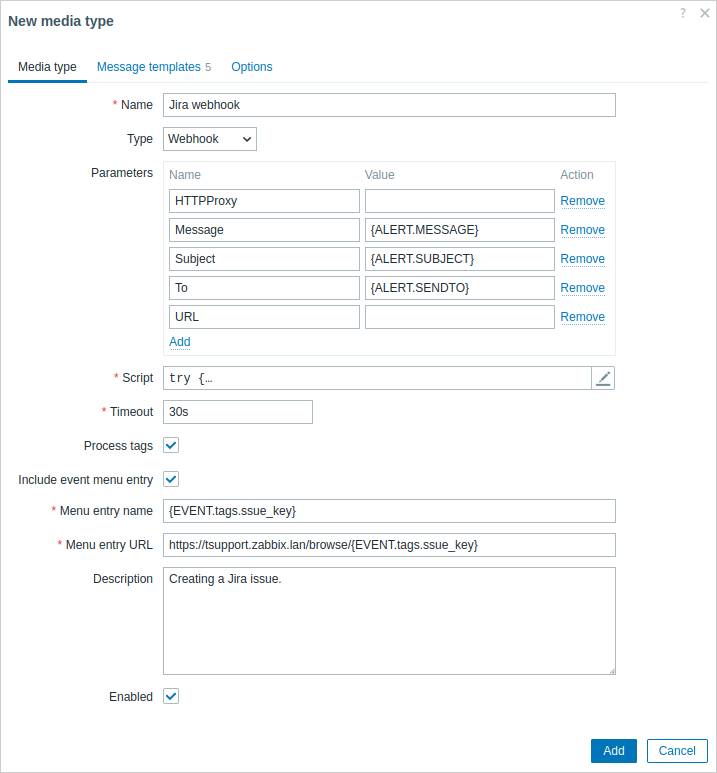
此脚本将创建一个 JIRA 问题,并返回一些有关已创建问题的信息。
try {
    Zabbix.log(4, '[ Jira webhook ] Started with params: ' + value);

    var result = {
            'tags': {
                'endpoint': 'jira'
            }
        },
        params = JSON.parse(value),
        req = new HttpRequest(),
        fields = {},
        resp;

    if (params.HTTPProxy) {
        req.setProxy(params.HTTPProxy);
    }

    req.addHeader('Content-Type: application/json');
    req.addHeader('Authorization: Basic ' + params.authentication);

    fields.summary = params.summary;
    fields.description = params.description;
    fields.project = {key: params.project_key};
    fields.issuetype = {id: params.issue_id};

    resp = req.post('https://jira.example.com/rest/api/2/issue/',
        JSON.stringify({"fields": fields})
    );

    if (req.getStatus() != 201) {
        throw 'Response code: ' + req.getStatus();
    }

    resp = JSON.parse(resp);
    result.tags.issue_id = resp.id;
    result.tags.issue_key = resp.key;

    return JSON.stringify(result);
}
catch (error) {
    Zabbix.log(4, '[ Jira webhook ] Issue creation failed json : ' + JSON.stringify({"fields": fields}));
    Zabbix.log(3, '[ Jira webhook ] issue creation failed : ' + error);

    throw 'Failed with error: ' + error;
}
Slack webhook(自定义)
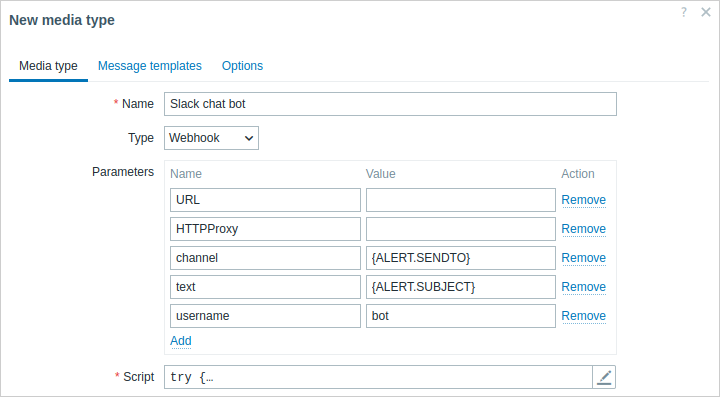
此 webhook 会将来自 Zabbix 的通知转发到 Slack 频道。
try {
    var params = JSON.parse(value),
        req = new HttpRequest(),
        response;

    if (params.HTTPProxy) {
        req.setProxy(params.HTTPProxy);
    }

    req.addHeader('Content-Type: application/x-www-form-urlencoded');

    Zabbix.log(4, '[ Slack webhook ] Webhook request with value=' + value);

    response = req.post(params.URL, 'payload=' + encodeURIComponent(value));
    Zabbix.log(4, '[ Slack webhook ] Responded with code: ' + req.getStatus() + '. Response: ' + response);

    try {
        response = JSON.parse(response);
    }
    catch (error) {
        if (req.getStatus() < 200 || req.getStatus() >= 300) {
            throw 'Request failed with status code ' + req.getStatus();
        }
        else {
            throw 'Request success, but response parsing failed.';
        }
    }

    if (req.getStatus() !== 200 || !response.ok || response.ok === 'false') {
        throw response.error;
    }

    return 'OK';
}
catch (error) {
    Zabbix.log(3, '[ Slack webhook ] Sending failed. Error: ' + error);

    throw 'Failed with error: ' + error;
}