
Esempi di script webhook
Panoramica
Sebbene Zabbix offra un gran numero di integrazioni webhook disponibili già pronte all'uso, potresti voler creare invece i tuoi webhook personalizzati. Questa sezione fornisce esempi di script webhook personalizzati (utilizzati nel parametro Script). Vedere la sezione webhook per la descrizione degli altri parametri del webhook.
Non utilizzare assegnazioni non dichiarate in JavaScript di preprocessing.
Usa var per dichiarare le variabili locali.
Gli eventi di ripristino (generati automaticamente o a seguito di una chiusura manuale) includono i tag dell'evento risolto (compresi i tag ereditati da template, host e trigger). Gli script webhook vengono eseguiti dopo la creazione dell'avviso; i tag restituiti da uno script webhook vengono quindi applicati dopo la creazione iniziale dell'avviso e potrebbero non essere presenti nell'avviso che ha attivato il webhook. Se un'integrazione richiede che i tag prodotti da un webhook siano presenti nella notifica iniziale, recupera i tag dell'evento dal server (ad esempio, usando l'API Event) oppure memorizza i tag prodotti dal webhook in un archivio persistente esterno e correlali lì.
Webhook Jira (personalizzato)
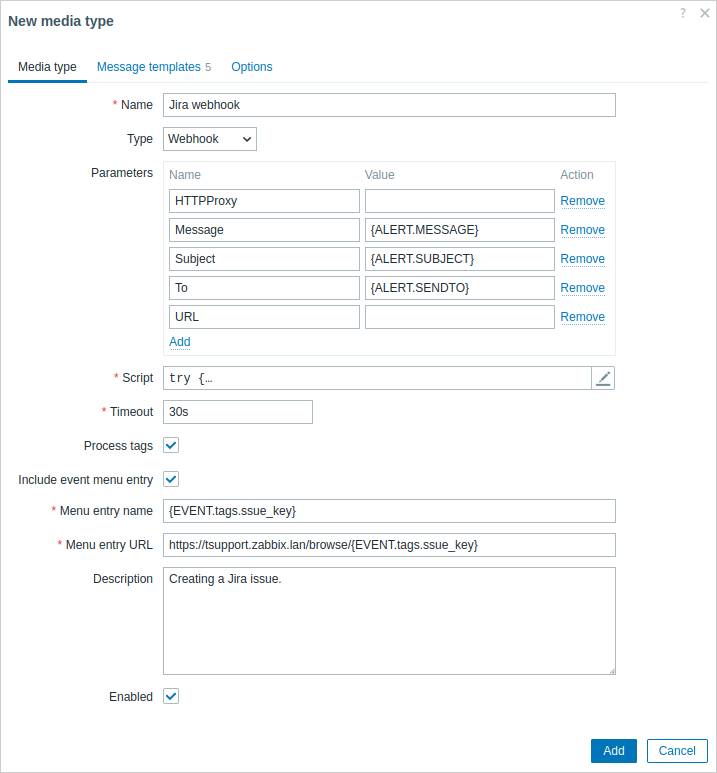
Questo script creerà una issue di JIRA e restituirà alcune informazioni sulla issue creata.
try {
    Zabbix.log(4, '[ Jira webhook ] Started with params: ' + value);

    var result = {
            'tags': {
                'endpoint': 'jira'
            }
        },
        params = JSON.parse(value),
        req = new HttpRequest(),
        fields = {},
        resp;

    if (params.HTTPProxy) {
        req.setProxy(params.HTTPProxy);
    }

    req.addHeader('Content-Type: application/json');
    req.addHeader('Authorization: Basic ' + params.authentication);

    fields.summary = params.summary;
    fields.description = params.description;
    fields.project = {key: params.project_key};
    fields.issuetype = {id: params.issue_id};

    resp = req.post('https://jira.example.com/rest/api/2/issue/',
        JSON.stringify({"fields": fields})
    );

    if (req.getStatus() != 201) {
        throw 'Response code: ' + req.getStatus();
    }

    resp = JSON.parse(resp);
    result.tags.issue_id = resp.id;
    result.tags.issue_key = resp.key;

    return JSON.stringify(result);
}
catch (error) {
    Zabbix.log(4, '[ Jira webhook ] Issue creation failed json : ' + JSON.stringify({"fields": fields}));
    Zabbix.log(3, '[ Jira webhook ] issue creation failed : ' + error);

    throw 'Failed with error: ' + error;
}
Slack webhook (custom)
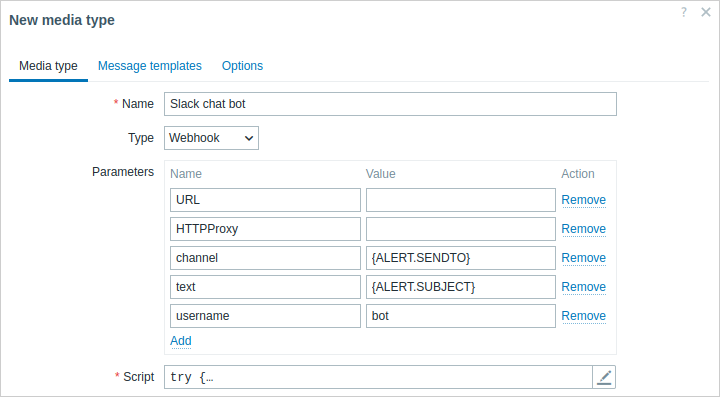
Questo webhook inoltrerà le notifiche da Zabbix a un canale Slack.
try {
    var params = JSON.parse(value),
        req = new HttpRequest(),
        response;

    if (params.HTTPProxy) {
        req.setProxy(params.HTTPProxy);
    }

    req.addHeader('Content-Type: application/x-www-form-urlencoded');

    Zabbix.log(4, '[ Slack webhook ] Webhook request with value=' + value);

    response = req.post(params.URL, 'payload=' + encodeURIComponent(value));
    Zabbix.log(4, '[ Slack webhook ] Responded with code: ' + req.getStatus() + '. Response: ' + response);

    try {
        response = JSON.parse(response);
    }
    catch (error) {
        if (req.getStatus() < 200 || req.getStatus() >= 300) {
            throw 'Request failed with status code ' + req.getStatus();
        }
        else {
            throw 'Request success, but response parsing failed.';
        }
    }

    if (req.getStatus() !== 200 || !response.ok || response.ok === 'false') {
        throw response.error;
    }

    return 'OK';
}
catch (error) {
    Zabbix.log(3, '[ Slack webhook ] Sending failed. Error: ' + error);

    throw 'Failed with error: ' + error;
}